Ery Mefri

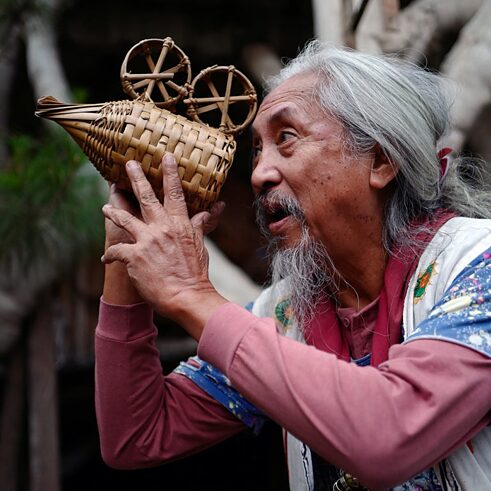
Ery MefriThe region of West Sumatra has contributed a number of choreographers to the development of contemporary dance, including Huriah Adam, Gusmiati Suid, Boi G. Sakti and Hartati. Ery Mefri is also a member of their ranks. Born in 1958 in Saningbakar, Solok, he grew up in an artistic family. His father, Jamin Manti Jo Sutan (now deceased), was a traditional dancer.

In 1983 Ery Mefri formed the Nan Jombang Group. The company's name is taken from their first choreographic piece, which also served as the basis for Mefri's subsequent work. It is a piece that is completely in the spirit of tradition. Nan Jombang's performances are exotic. Their movement repertoire and their dramatic structure are culled from West Sumatra's traditional arts. Thematically, they draw on situations from Minang society. Most of the focus is on the change and loss of tradition resulting from modernisation processes that are in fact often intended to enhance social cohesion. Because Ery Mefri repeatedly tackles this problematic, his approach is exemplary for the voice of West Sumatra in contemporary Indonesian dance.


Artist Statement

“I believe that the more we connect with modern forms and values, the greater the challenge we will face in directing our attention towards the roots of tradition. The integration of contemporary elements is an opportunity to enrich tradition without the two destroying one other. On the contrary, modernity and tradition complement each other. I am convinced that tradition must play an important role in a choreographic concept to attach it to everyday human movement.”
Ery Mefri


Portrait

Contemporary dance in Indonesia is rooted in tradition

Ery Mefri's family had a strong sense of tradition and instilled in him a deep connection to Minang culture. His father Jamin Manti Jo Sutan was a traditional dancer, and his mother Nurjanah worked as a gold weaver. Their son was not initially trained in traditional dance, but it soon become clear that he was a natural talent. Just by watching, he was able to learn and dance all on his own what is known as the Minang 'plate dance'. He was only three when little Ery saw others perform this dance and listened to his father accompany it. At the age of five, he simply started dancing at a Baralek event (a traditional wedding). His artistically minded parents encouraged this talent, which soon led to his wish to become a choreographer.

Daily life and nature

As an artist, Ery Mefri displays his profound knowledge of traditional Minangkabau art by using tradition as the foundation for contemporary pieces. He even integrates the Minang's approach to life into his dance philosophy –Alam Takambang Jadi Guru ("blossoming nature is our teacher"). Thematically, Mefri explores people's daily life and the natural world that surrounds them. The strong connection to tradition is obvious in all his pieces. The movements are based on West Sumatran dance, such as the 'horse position', typical of the Pencak Silat dance form.

Randai in modern dress

The integration of other Minang performance arts such as the popular theatre form Randai emphasizes the traditional aspects of the movement material. It is as if Ery Mefri's pieces are Randai in modern dress. As a popular theatre form, it brings together the Minang's Pencak Silat dance and folk story dialogues. Randai has a mystical and exotic effect. The actors are usually multi-talents who use singing, clapping and even thumping their bodies as a percussion accompaniment to the performance. The Randai elements are transformed in the contemporary portrayal. The dancers often change their roles, fitting for a popular theatre concept. Not only do they dance, they are simultaneously singers and musicians. They beat their chests like drums and on other body parts where they stretch taut their clothing, making music and creating a mystical and primitive impression.

Acrobatic music-making

In almost every performance the dancers wear Galembong, the traditional wide Minang pants. They are not just a costume; they are used to make tones in a variety of ways, usually with acrobatics. Sounds from beating on the pants' cloth are only audible when it is stretched taut, so the dancers spread out their legs, even in mid-air, at the same time the bending forward and drumming on the cloth.

The traditional approach of the choreographic pieces makes them technically very challenging for the dancers. Traditional Minang dance is full of difficult movements that mix martial arts with acrobatics, such as in the above-mentioned 'plate dance'. As the name here suggests, the dancer holds a number of plates while dancing. Viewed from Western culture, Ery Mefri's traditionally-based pieces probably look neither very modern nor contemporary. However, he is convinced that it is exactly this strong rootedness in tradition which represents the face of modern dance in Indonesia. /Dewi Ria Utari


Selected Works

Rantau Berbisik (2008)
Malin Kundang (2006-2007)
Karatau (2005)
Bisik Nan Jombang (2004)
Luluh (2003)
Sarikaik (2003)
Cangka (2003)
Ratok Piriang (2002)
Garis Ke Pintu (1998)