Nine Questions for ...

Jutta Gehrig on Belgrade: “Our guests are always thrilled”

Copyright: Sroown
Loud and lively: Serbia’s metropolis Belgrade (Photo: Sroown)

3 November 2009

What do the people in Belgrade love to do most of all?

Gehrig: To meet with their friends in the city. Morning, noon or night, there is always something going on in the cafés and it’s not just drinking coffee.

What concerns the people in Belgrade most right now?

The question whether the visa requirement for travelling to the Schengen states will be lifted on 1 January 2010. Then the people could finally travel more freely again – as long as they have enough money. Sadly, even if the visa is abolished, only a few will be able to afford a journey to Germany.

Copyright: Privat
Jutta Gehrig (photo: private)
What is your own favourite place in Belgrade?

My favourite place in Belgrade is my flat; because it’s the place I can relax the most with a view of the sky in the company of my dog and cat. Otherwise, I like a few places nearby Belgrade where you can take a walk along the river or sit in a café, like in Zemun or Grocka. Those are more quiet towns; the traffic, the loud music in many of the restaurants etc. often make Belgrade too loud for my taste.

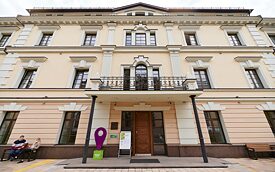
Who comes to the Goethe-Institut?

Young people, women and men who wish to marry their partners living in Germany and have to take a German test for that and tourists – the institute is situated on the city’s main promenade. Those are the people who just drop in. Our events at the Goethe-Institut are attended by very different audiences, depending on the subject matter. The more unusual the event, the younger the visitors are.

Why do Serbs learn German?

German skills are an advantage when looking for a good job; many companies have close business relationships with German firms. In addition, as I said before, those who wish to marry a partner who lives in Germany and people who are interested in Germany because they have relatives or friends there.

What question about Germany do you hear particularly often?

The question "Why do the Germans think so poorly of the Serbs?" That is perhaps more an opinion, perhaps even an experience, which goes back to the days of Milosevic. I then frequently reply that the image many people have is determined by the news reports about political problems, but that one shouldn’t judge the people of a country by the political situations there. The best way to get an impression is if there are opportunities for personal encounters. Our German guests are actually always thrilled by Belgrade.


Copyright: jorge11, lilit, backkratze Photo gallery: The many faces of Belgrade


What German book are people in Belgrade familiar with?

The Reader by Bernhard Schlink. The book has been translated into Serbian and the film was also shown here. Also Holm Sundhaussen’s History of Serbia, which was also translated into Serbian and hotly debated, partly because Sundhaussen dealt critically with the portrayal by some Serb historians.

What Serbian book should we be reading?

Aleksandar Tisma’s The Use of Man (published in 1980 and the German translation in 1991). The book describes the life of people in the second-largest Serbian city, Novi Sad. Until the Second World War, the Serbs, Hungarians, German-speaking “Swabians” and Jews there get along with one another there relatively peacefully. Yet, then war and brutality rule there and someone who was a friend yesterday is suddenly treated as an enemy. In the 1990s, this experience repeated itself for many.
I also recommend David Albahari’s book Gotz and Meyer about two SS officers who hauled away the inmates of the Belgrade concentration camp in a truck and killed them during transport by piping the exhaust fumes into the inside. Albahari is also a good example of the question of who can be considered a Serbian writer – Albahari was born in Peć in Kosovo, he is Jewish and today lives most of the time in Canada.

What experience will you never forget?

How a salesman at a marketplace stand gave me a whole sack of strawberries. I wanted to buy such a small amount he must have thought I didn’t have enough money for more.

Jutta Gehrig runs the Goethe-Institut Belgrade, which organizes projects and activities in Serbia, Kosovo and Montenegro.
Related links

Goethe aktuell:

Keep up with the latest from the world of the Goethe-Institut via RSS-Feed.

Goethe-Institut worldwide

News from the Goethe-Instituts: Follow us!

The Goethe Institut.
Reports Pictures Interviews

The full-colour magazine reports on the Goethe Institut’s work three times a year.