Quick access:

Go directly to content (Alt 1) Go directly to first-level navigation (Alt 2)
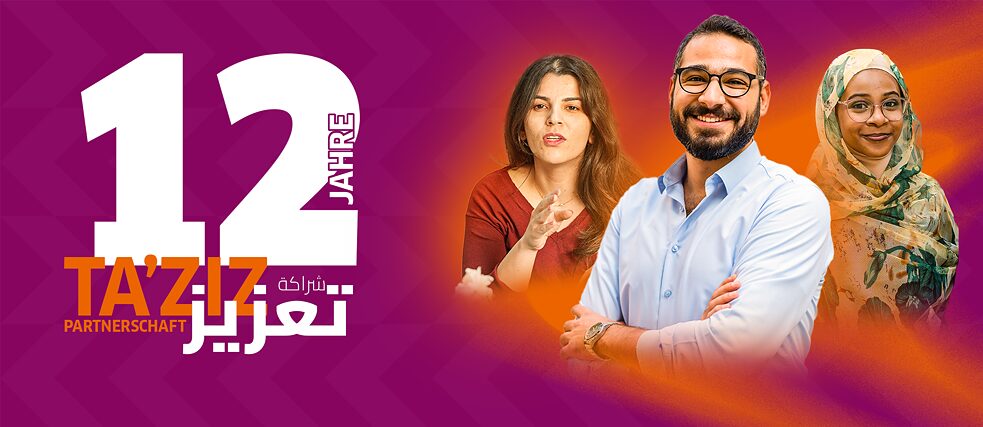
12 Jahre Ta'ziz Partnership© Goethe-Institut - Kairo

12 Years of Ta'ziz Partnership

Within the framework of the Ta’ziz Partnership, which has been operating under the new name ZANMO (Cooperation with Civil Societies in Africa, the Near and Middle East) since 2024, the Goethe-Institut has supported civil society actors in the Middle East and North Africa region since 2012 through cultural and educational projects in cooperation with local partner organizations. The project is funded by the German Federal Foreign Office.
The Arabic term Ta’ziz (تعزيز) means "strengthening" or "consolidation." In this spirit, the program aims to strengthen civil society structures and accompany societal processes in the project countries in a needs-oriented, cooperative, and sustainable manner. To achieve this goal, the Ta’ziz Partnership promotes the cultural and educational sector, qualifies young people and key actors, and connects them with one another as well as with actors from Germany and Europe. These initiatives are intended to create spaces for dialogue, creativity, innovation, and capacity-building, and to encourage social participation and exchange.
The Ta’ziz Partnership — previously known as the Transformation Partnership or Dialogue and Change — was established in 2012 in the wake of the so-called Arab Spring. Starting in 2024, the project scope will be extended to the Sub-Saharan Africa (SSA) region and will carry the new name ZANMO, representing cooperation with civil societies in Africa, the Near and Middle East. Existing projects continuing in 2024 will retain the old name, while all new projects from 2024 onward will be implemented under the new name "ZANMO."

12 Jahre TP Swapper© Goethe-Institut - Kairo

12 Years of Ta'ziz Partnership

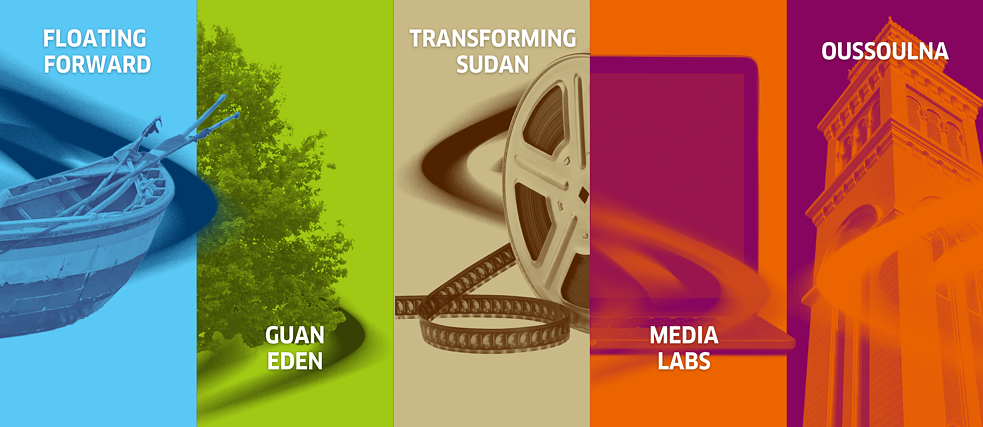
The five current projects include Floating Forward in Egypt, which combines environmental education with waste reduction along the Nile, and Guan Eden in Iraq, which promotes sustainable projects. In Libya, the Oussoulna project focuses on the protection and preservation of cultural heritage. For Sudanese civil society, the projects Media Labs and Transforming Sudan create transparency and offer a safe space for (creative) exchange between cultural practitioners and the broader community, including those living outside the country due to the war in Sudan.

As funding for projects in North Africa and the Middle East comes to an end this year, we reflect on their impact. Through innovative approaches and sustainable initiatives, these projects have demonstrated great potential to drive lasting positive change. They stand as exemplary models of the transformative power of education, culture, and community spirit. These initiatives are a testament to the importance of such projects – helping regions not only address challenges but also create new perspectives and opportunities. In times of global upheaval, challenges, and conflicts, such spaces for dialogue and exchange are essential for young people in the region. Therefore, continuing these projects in North Africa and the Middle East remains crucial for fostering these critical discussions and negotiation processes.

As the projects in the NANO region conclude, we can look back on a remarkable track record: over 150 projects have been implemented in the past 12 years. On the following pages, we reflect on this impressive success by presenting five projects from the NANO region carried out in 2024 and highlighting the people who shaped them.
Top