Cultivating Sustainable Futures 2025/2026

Through a series of decentralized public events with paneldiscussion, exhibitions, participatory creative workshops, and culinary experiences, the project aims to raise awareness of the inequalities embedded in food production and distribution and the importance of promoting sustainable and traditional food practices for a juster and more sustainable food system. By bringing together diverse voices and practices, it seeks to reimagine food systems in ways that are more equitable, resilient, and sustainable.
During August and December 2025, the Goethe-Institutin collaboration with local partners implemented seven events engaging through theoretical, practical,creativeand culinary formats the importance of promoting sustainable food systems and shedding light on current discussions, research outcomes and lived experiences.
These formats were supported and moderated through a viable and influential collaboration with Inolofatseng Lekaba, a knowledge worker with a colourful focus on epistemologies of the Global South, decolonial research and teaching methodologies, alliances between civil society and private property in creative placemaking.
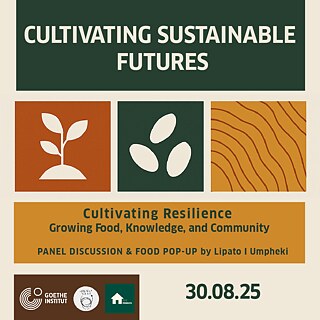
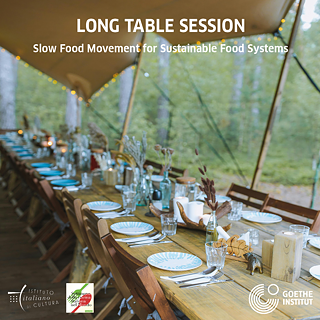
Long Table Session and Panel Discussion: “Cultivating resilience: Growing Food, Knowledge and Community”
August 2025
Under the theme “Cultivating Resilience: Growing Food, Knowledge, and Community” Lipato I Umpheki from Eastern Cape presented a Food Pop-Up with a curated Long Table menu and an exhibition, which was followed by a panel discussion with different experts under the same theme. The Food Pop-Up explored the transformative power of food-growing practices rooted in agroecology, community-led initiatives and indigenous knowledge. It brought together diverse voices and experiences to examine how cultivating food can serve as a form of resistance, healing, and resilience in the face of ecological and social crises.
The panel discussion was moderated by Inolofatseng Lekaba, who engaged with the invited speakers around topics like land and community, indigenous knowledge and agroecology, transdisciplinary practices as well as food security versus sovereignty. The final question highlighted the needed tangible actions that a community or an individual can do to ensure systems to change towards sustainability.


Invited speakers
-
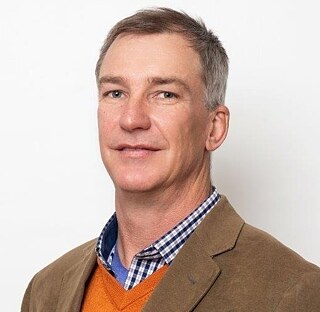
Dr. Naudé Malan
Dr. Naudé Malan is an academic and practitioner with wide practical and academic experience. Naudé is the Convener of iZindaba Zokudla, a multi-stakeholder engagement project that aims to create opportunities for urban agriculture in a sustainable food system. iZindaba Zokudla uses social innovation events to reach its aims which include food system transformation, sustainable enterprise creation, and the cultivation of communities of practice and innovation amongst participants in the food system in South Africa. Since 2022, he has been appointed Associate Professor at the College of Business and Economics and is the Head of the Diploma in Small Business Management.
-
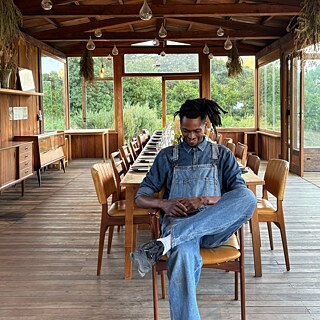
Lipato Shogole
Lipato Shogole, a multidisciplinary artist, umpheki | chef, and a cultural practitioner based in Msobumvu village in the Eastern Cape. Founder of Hae Emakhaya and Ukutya projects, two platforms rooted in celebrating and preserving African heritage through food, research and community projects. His goal is not to only feed people, but to awaken memory, create spaces for healing, learning and reconnection, and build futures that are rooted in our story.
-
Vho-Mphatheleni Makaulule
Lipato Shogole, a multidisciplinary artist, umpheki | chef, and a cultural practitioner based in Msobumvu village in the Eastern Cape. Founder of Hae Emakhaya and Ukutya projects, two platforms rooted in celebrating and preserving African heritage through food, research and community projects. His goal is not to only feed people, but to awaken memory, create spaces for healing, learning and reconnection, and build futures that are rooted in our story.


URBAN GARDENING WORKSHOP Cultivating Resilience: Activating Urban Green Spaces
October 2025
The workshop facilitated by Plenty Green and S.O.I.L constituted a more practical and hands-on event aiming to introduce participants to practical urban gardening techniques suited for small spaces. The workshop explored sustainable approaches such as permaculture, container gardening, and companion planting, equip participants with hands-on skills they can replicate at home and foster dialogue around greening cities, ecological sustainability, and cultural engagement.
Plenty Green is a garden consultancy offering regenerative farming, permaculture and edible landscaping solutions.
S.O.I.L is as green business active in farming and selling organic products. They focus is to promote indigenous ways of growing food using permaculture methods.


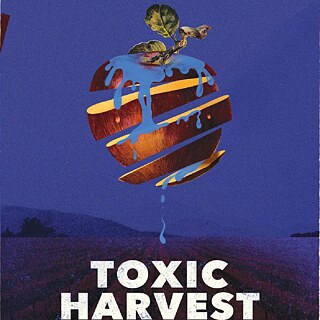
Toxic Harvest: The Hidden Truth about Pesticides Film Premier
October 2025
The screening of the documentary film “Toxic Harvest” was organized in partnership with the Rosa-Luxemburg Foundation, being the producer of the film as part of their Food Sovereignty Programme. “Toxic Harvest” a gripping documentary feature film that uncovers the devastating and far-reaching impacts of agrotoxins, highlighting the use of highly hazardous pesticides in South Africa. Shot with unflinching honesty, it reveals how agrotoxins poison the environment by contaminating the soil, the air we breathe, the water we drink and the food we eat affecting us all.
The film was followed by a short panel discussion with the co-producer from Rosa-Luxemburg Foundation, Siphiwe Sithole and Mariam Mayet.
Refiloe Joala is a researcher and programme manager specialising in African food systems. With over a decade in the development sector, she has led and contributed to numerous research projects and consultancies focused on agro-food system transformations in Southern Africa, food and land rights, and climate change.
Siphiwe Sithole is a versatile entrepreneur who left the corporate world to start African Marmalade, where she farms indigenous African produce and inspires other growers to follow her example. African Marmalade currently owns an extensive seed bank of both indigenous and non-indigenous organic seeds and planting material.
Mariam Mayet is an international leader in the sustainable food movement. She founded the African Centre for Biodiversity in 2003 and under her leadership, this research and advocacy organisation has played a catalysing role in the food sovereignty struggles on the African continent. The ACB works in coalition with groups on seed sovereignty policy, and in opposition to unsustainable food systems rooted in industrial agriculture, especially genetic engineering of seed and crops.


Panel Discussion: Building More Sustainable and Juster Food Systems
November 2025
The panel discussion centered around “Building more Sustainable and Juster Food Systems” was hosted at the Dibukafé in Braamfontain, an event space and library of the French Institut of South Africa.
The panel explored how South Africa can move toward a more sustainable and socially just food system, examining the concept of a Just Transition in relation to food production, nutrition, and land justice. Speakers discussed how climate change both impacts and is intensified by the current food system, highlighting the need for agroecology, indigenous crops, and regenerative practices. A central focus was on how structural inequalities—such as land dispossession, corporate monopolies, gendered food labour, and precarious agricultural work—shape food insecurity. The discussion also examined the role of the state, communities, and technology in transforming the system, asking what policy frameworks and grassroots actions are necessary to build equitable, climate-resilient food futures.


Speakers
-
Daliwonga Pantshwa
Daliwonga Pantshwa, a father, an Agroecologist, Gauteng Coordinator at the South African Food Sovereignty Campaign, co-founder of Down2Earth Living Soil NPC. His activism is rooted at the intersection of climate justice and food sovereignty. He’s often found in the gardens, learning & sharing on natural farming topics such as soil regeneration, seed saving, ecological garden design, e.t.c. He has a running guest lecturer gig at the University of Stuttgart, Germany, where he co-researches Traditional Ecological Knowledge and emerging technologies in Southern Africa.
-
Dr. Qinisani Nhlakanipho Qwabe
Dr. Qinisani Nhlakanipho Qwabe, fondly known as Dr. Q, is a dedicated researcher and advocate for sustainable agriculture and rural development. Holding a PhD in Sustainable Agriculture, his expertise spans agricultural extension, food systems, and ecological sustainability. Dr. Q’s research delves into indigenous food crops, underutilized plant species, and sustainable food systems. His contributions extend to international conferences and publications, reinforcing his role as a thought leader. Beyond academia, Dr. Q champions food security through campus food gardens, fostering self-sufficiency and addressing hunger. His mission is to build resilient, sustainable agricultural systems for future generations.
-
Hema Kesa
Prof Hema Kesa holds a Doctorate and a Master's degree in Food Service Management, with a specialization in Community Nutrition, as well as an MSc in Food and Nutrition Security. She is the Director of the Food Evolution Research Laboratory (FERL) at the University of Johannesburg. Her primary research interests lie in food and nutrition security, particularly in understanding the dynamics of Nutrition Transition, promoting South African indigenous crops, and managing food waste in both schools and the hospitality sector. In addition to her academic work, Hema serves as a council member for the Nutrition Society of South Africa (NSSA), contributing to the country’s nutrition policies and initiatives. Through her work, Hema aims to bridge gaps in food security, advocating for the integration of traditional food systems and sustainable practices. She is deeply committed to fostering a healthier, more informed society, where technology and indigenous knowledge come together to address critical nutritional and societal challenges.
-
Moderator: Inolofatseng Lekaba
Inolofatseng is a knowledge worker with a colourful focus on epistemologies of the Global South, decolonial research and teaching methodologies, alliances between civil society and private property in creative placemaking, urban renewal governance and politics of power and place. Their equally important side quests are on solidarity cities, food sovereignty, reclaiming the use value of land, peri-urban spatial transformation, organisational development, and art-led activism. Their practice centers advocacy for economic systems change, liberatory Afrikan economics, and pluriversal ways of knowing; mobilising research techniques for social movements in MEL and transdisciplinary co-production of knowledge; building and maintaining organisational systems that decentralise power amongst practitioners; curating, speaking and moderating discussions on aforementioned topics; collaborative governance in civil society; writing and editorial work; guerilla gardening in peri-and-inner Johannesburg; general agitation of the academic industrial complex; and caring for their nephew and cats.
Long Table session: Slow Food Movement for Sustainable Food Systems
November 2025
The Long Table was a collaboration with the Italian Cultural Institute of Pretoria and took place at the African Marmalade Farm in Laezonia, Gauteng. The culinary gathering stood under the topic Slow Food Movement and its role in promoting more sustainable and juster food systems. The culinary aspect of the Long Table Session was curated by Culinary Pantsula, a well-known chef bridging soul food experiences with indigenous and modern ingredients and a touch of conscious haute cuisine. The Long Table was moderated by Inolofatseng Lekaba who kept the discussion alive and invited our special guests Amanda Lorena Romero Ferrer, a member of the soul food movement, and Siphiwe Sithole from African Marmalade Farms to share about their work in the realm of Slow Food and alternative conscious farming.


Panel Discussion: Food, Art and Activism
December 2025
The panel discussion explored how artists, chefs, activists and cultural practitioners can challenge dominant narratives and reimagine food systems through art and storytelling. Speakers discussed how culinary creativity, artistic practice, and narrative work can catalyse community healing, amplify marginalised voices, and build movements for systemic change in the face of inequalities embedded in global and local food systems. The conversation highlighted food’s political potential - how it shapes identity, strengthens collective resilience, and contributes to more just and sustainable futures. The discussion highlighted how these practices amplify marginalised voices, foster community resilience, and inspire systemic change
The panel was yet again moderated by Inolofatseng Lekaba who engaged with three visitionary women.
Chef Noni is a culinary innovator and indigenous food activist who reconnects communities with ancestral food traditions through foraging, forgotten practices, and ritual. She leads Noni’s Fire Food Experience and founded Emandulo Livity, fostering healing and sustainability rooted in indigenous knowledge.
Madison Bannon is an activist, organiser, and storyteller who translates complex issues—from racial and gender justice to climate and neo‑colonial economics—into narratives that inspire collective action. She focuses on food sovereignty and advocates for radical systems change grounded in community care and sustainability.
Tammy Langtry is a Johannesburg-based curator and cultural producer whose work explores historical sense-making through memory, psychology, and cultural activism. She teaches at Wits University, edits for Ellipses Journal, and curates projects that examine critical histories, including indigenous grains and the colonial Durban System.
Same as abvoce. write as a review, incl. past tense and speakers


