لسة / not yet / still

An artistic image featuring the Arabic word “لسّه” (Still) against an orange sunset background with skyscrapers, a sun, and a planet on the horizon, and the Goethe-Institut logo at the top.

Concerning Liminality

Being in between entails not being there yet and still being somewhere else. The word لسة ("lissa") in Egyptian Arabic contains both meanings. It encompasses the idea of liminality, a threshold state that feeds from the instability of change and at the same time opens many directions to go to. Liminal spaces are places that exist between different states and realities. They become physically visible in the ever-changing urban fabric of today’s cities, and they are crucial to artistic production as well as artistic research.
This liminality of transition, this threshold state, is from where this projects develops: The Goethe-Institutes in North Africa and the Middle East, in cooperation with Zentrum für Kunst und Urbanistik in Berlin (ZK/U, Center for Art and Urbanistics) invite six participants for a residency program that asks them to dissect what it means to be in between – not yet or still.

Timeline

“لسة / not yet / still” is a regional project in the field of visual arts that offers three-month residencies at ZK/U in Berlin. Following the publication of the open call in March and April 2025 and the subsequent selection of participants by a jury, the project will proceed as follows:
  • Kick-off: September 2, 2025. All participants and cooperation partners meet online. Individual projects and initial thoughts on the topic of liminality are presented.
  • 1st residency: September 10 to December 3, 2025. Three artists move into the studios of ZK/U in Berlin and one artist participates online.
  • Workshop between residencies: December 4 and 5, 2025. All project participants meet in Berlin. A workshop on the residency theme and the work of the participating artists is organized.
  • Second residency: December 6, 2025, to February 28, 2026. Three more artists move into the ZK/U studios in Berlin.
  • Evaluation and feedback: March 2026. The results and experiences of the residency participants will be discussed in an online workshop.
All participating artists will be accompanied by Rula Ali, who will support their artistic practice and networking in Berlin as a mentor. The ZK/U also offers a supporting program of exchange and discourse among the artists and in dialogue with the public in Berlin.

The Artists

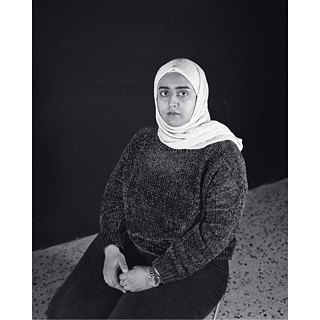
  • Abeer Aref

    Abeer Aref is an artist and architect based in Yemen. She is a recipient of the Prince Claus Seeds Award in 2024. Abeer uses photography to capture the beauty of everyday moments, drawing inspiration from her surroundings and culture. Her artistic practice delves into personal experiences while reflecting on broader themes of connection and distance. She explores the intersection of culture and identity, the relationships between people and their environments, and gender equality.
     

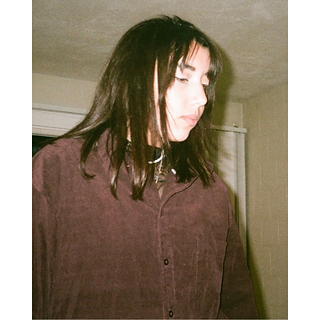
  • Aya Abdallah

    Aya Abdallah is a visual artist and architect based in Beirut. Working with text and image (moving and still), her current research examines the labor of mourning involved in reconstructing destroyed gravestones in the cemeteries of South Lebanon’s border villages, considering how rituals of grief become forms of dwelling. She holds an MFA in Digital+Media from the Rhode Island School of Design (2024) and was a fellow at Ashkal Alwan’s Home Workspace Program (2025). 
     

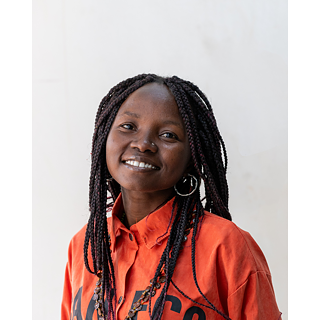
  • Esraa Rahma

    The Sudanese artist Esraa Rahma uses painting and research to explore issues of social justice, memory, and belonging. Her works are both open questions and attempts to find answers – particularly in the context of postcolonialism and experiences of crisis. She is interested in the intersections of the humanities and memory studies and asks how external changes influence our relationship to places and to life. Esraa's works are in private collections in Ghana, Uganda, and the Netherlands.

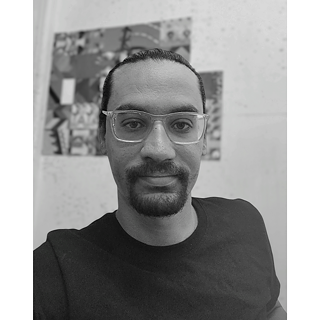
  • Mohamed Ismail

    Mohamed Ismail Shawki (Ismail) is a Cairo-based visual artist working at the intersection of art, activism, and public space. A graduate of Egypt’s High Institute of Cinema and co-founder of the street art collective Mona Lisa Brigades, he employs sculpture and installation to interrogate urban life, power structures, and neglected infrastructure. His practice recontextualizes everyday objects—such as street barriers—with humor and criticality, exposing themes of authoritarian urban planning, systemic neglect, and societal shame.
     

  • Rawan Maraqa

    Rawan Maraqa is a Jordanian artist and design graduate from the German Jordanian University, specializing in oil painting. Her work explores the landscapes of language, memory, and emotion, drawing inspiration from everyday Arabic phrases that offer comfort, humor, or quiet resilience. With bold colors and delicate detail, Rawan transforms familiar sayings like هانت“ ” (it’ll pass) and “ حصل خير ” (it happened for the best) into visual stories that reach beyond words. Her art invites viewers to pause, reflect, and find beauty in the ordinary.
     

  • Shadwa Ali

    Shadwa Ali is an independent multidisciplinary artist based in Alexandria. A graduate of the Faculty of Fine Arts at Alexandria University, her practice spans printmaking, installation, video, sound, and music. Shadwa's work explores societal issues and human psychology, with a particular focus on the chaotic rhythms of cities like Cairo and Alexandria and the impact of major events on collective memory and behavior. She draws attention to overlooked details and the absurdities of reality.
     

  • Ziad Naitaddi

    Ziad Naitaddi is a Moroccan artist who lives and works in Rabat. His practice often extends beyond the act of photographing itself. He revisits archives, collects written and oral testimonies, and even re-engages with his own photographs years after their development. He refers to this approach as “photographic exhumation” - a process that allows him to explore narrative possibilities beyond the camera. In his recent projects, he explores migration and its emotional complexities - viewing them as spaces of layered encounters

Mentor

Rula Ali

Rula Ali is a visual artist, textile artist and cultural manager, In 2021, Rula co-founded the Melon Seeds collective with her two sisters. They focus on feminist issues, activism, sustainability from a feminist, anti-colonial perspective, and cultural heritage.

Rula participated in several exhibitions in Germany and received several art residencies in Germany and abroad. In her work, she addresses socio-political issues of discourse, communication between different cultures and political borders. At the same time, she focuses on the space that is occupied and controlled by the fluctuation of power in politics.
 

Cooperation Partner

Zentrum für Kunst und Urbanistik - ZK/U (Center for Art and Urbanistics) is an artist-led independent art residency and project space in Berlin, Germany. It hosts a
multidisciplinary residency program, offering a living and working space for practitioners of all kinds (artists, researchers, activists, professionals of various fields) whose work or approach explores the dynamics and experiences of the city. The ZK/U residency program allows mutual learning, spontaneous collaborations, discussions and exchanges to emerge, enriched by the diversity of disciplines and profiles of the residents. The ZK/U building, a former train station building located in a dynamic public park, is a space for urban experimentation and cross-disciplinary collaborations.

Contact

In case you have any questions, please contact us via mail: Meret.Arnold@goethe.de.