Sprache. Kultur. Deutschland. - Now on Instagram! The Goethe-Institut goes online with an Instagram account in April 2017 and provides information about cultural highlights, language courses, tips for learning German, events, exhibitions and projects with artists, cultural exchange and dialog.
the spirit of GoetheOnMain Launch of Goethe-Institut Project Space (GPS)
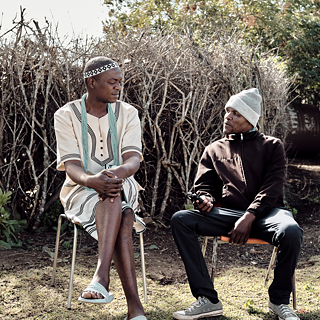
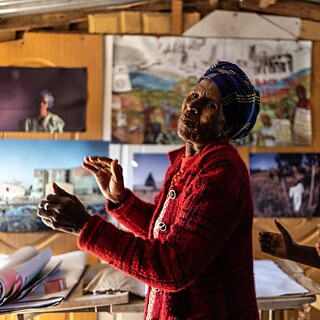
Goethe-Institut Project Space (GPS) is a funding program that has been focused on professional artists and cultural practitioners in South Africa, Lesotho and Eswatini since 2017. The aim of the program is to support creative projects that take place outside the major urban centers such as Johannesburg, Cape Town or Durban - i.e. in rural or peri-urban regions. It is not only about promoting art per se, but also about strengthening cultural exchange, collaborating with local communities and developing sustainable partnerships between artists and public or cultural spaces.
Artists and cultural practitioners from the three countries mentioned are eligible to participate, although commercial projects or projects with a purely social focus will not be considered. Instead, the focus is on innovative, site-specific artistic formats that open up new perspectives and incorporate local contexts.
Examples of funded projects in 2025 include “Karoo Kewpie” in the Western Cape province, “Reviving Umthilane” in Eswatini and “Peiso Ea Likhomo” in Lesotho. These projects demonstrate the diversity of artistic forms of expression and the importance of cultural work in less visible regions. At the same time, they promote access to art and culture in rural areas - far away from large institutions.
All projects can be viewed here.
Reading corners and comfortable lounge furniture invite you to read and spend time in the library. The soundproof Boothbox makes undisturbed phone calls possible.
The newly designed space consists of three integrated parts: the library, a gamebox and a hub. The bookshelves have castors and make the room multifunctional and flexible.
The hub is located in the gallery. It is equipped with workstations with an internet connection and a round table with a display for presentations. Funding for the hub program has expired, but the workstations can be used as a kind of co-working space for everyone.
The Gamebox is a room in the library where you can play games. There are various games consoles and virtual reality applications. The Gamebox is literally a box that can be opened up completely for events to extend the space into the library.
Cav’, a South African slang term meaning “I understand” or “check it out,” captured the spirit of a project supporting the cultural and creative industries (CCI) in six countries (South Africa, Kenya, Senegal, Lebanon, Jordan, and Iraq).
The project (2018-2023) implemented by GIZ and the Goethe-Institut on behalf of BMZ aimed to promote employment and income in the fields of music, fashion, design and animation - by strengthening creative, digital and entrepreneurial skills.
In South Africa, Cav’ Creative Economies featured two initiatives:
Cav’ Platform: Built networks and visibility through conferences, dialogue formats, a digital platform, and business support—strengthening collaboration across the CCI ecosystem, including the animation sector.
It seeks to address the lack of professional advice for entrepreneurs in the creative sector but also the lack of understanding and knowledge about the specific needs of creative entrepreneurs and how the creative sector could be strengthened.
Cav’ Townships: Tackled youth unemployment through creative entrepreneurship. In partnership with township hubs, it supported about 80 young creatives in four cohorts (20 each) —especially women—via market access and previously developed business toolkits, including the flagship Drone Divas initiative.
Together, these projects helped shape a stronger, more connected creative community.
The Henrike Grohs Art Award is established. It was donated by the Goethe-Institut and the Grohs family to commemorate Henrike Grohs, who was murdered together with 17 other people in a terrorist attack in Abidjan on March 13, 2016.
Henrike Grohs had been head of the institute in Abidjan since 2013 and was previously head of the Culture and Development Department at the institute in Johannesburg. She was 51 years old.
The prize is run through an open call process and is aimed at young artists who live and work on the African continent. It is awarded biennially to an artist or arts collective practicing in the field of visual arts. The award aims to support emerging artists in their careers, responding to the challenges of practicing on the African continent. Artistic quality is the most important criteria for the award.
The main prize is awarded by an international jury after a shortlist is compiled by a selection committee.
The winning individual artist or collective will receive a cash prize of 20.000€ and 10.000€ towards the production of a catalogue on the winner's work.Two artists or collectives will be selected as runners up and will be awarded a cash prize of 5.000€ each.
More about the award can be found here.
In November, the Goethe-Institut Johannesburg, in collaboration with A MAZE./Festival, hosted South Africa’s first-ever TRAIN JAM — a unique game development event aboard the Shosholoza Meyl train traveling from Johannesburg to Cape Town. Over the course of 27 hours, approximately 30 passionate participants — including game design students, professional developers, graphic designers, and even a musician — came together to create as many games as possible while on the move. The initiative celebrated creativity, collaboration, and the vibrant potential of South Africa’s game development community in an unforgettable setting.
The 27-hour journey turned into 33 hours. The air conditioning—and even worse, the electricity—often failed. The Jammers managed to develop a total of eleven games, which they presented at the Africa Games Week in Cape Town.
New friendships and networks were forged and the Goethe-Institut was able to position itself as a serious partner in the scene.
National German Teachers' Conference in Port Elizabeth Let's hear it! Learning on the move
From November 7-10, 2019, the DLV's National German Teachers' Conference and Annual General Meeting took place in Port Elizabeth.
85 participants from South Africa, Malawi, Mauritius, Namibia and La Réunion as well as six board members of the International German Teachers' Association (IDV) traveled from Freiburg for a interactive introduction under the direction of Leopold Kern and Herbert Wolfgang (Die Schönen) from the Musiktheater im E-Werk in Freiburg.
The conference was filled with reports from the German Teachers' Association, didactic presentations and entertaining workshops on “Learning in motion with selected texts” in preparation for the "Independent Board of Examinations”-school-leaving certificate in South Africa. Of course, there was also plenty of opportunity to exchange ideas with colleagues, which many teachers were particularly looking forward to.
However, the undisputed highlight of the conference was the evening at Masifunde Learner Development, a non-governmental organization that successfully pursues the goal of achieving greater educational equality and equal opportunities for children and young people in South Africa. All participants were particularly impressed by the children's choir and acting skills, which they demonstrated in a moving street performance.
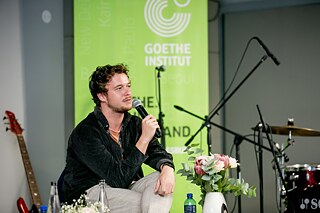
In November, the first three episodes of the “Library Jams” were recorded in front of a small audience in the library of the Goethe-Institut Johannesburg. Inspired by the “Tiny Desk Concerts”, South African bands perform 20-minute sets between bookshelves. The performances are professionally recorded and published via social media and the country portal.
The Library Jams have established themselves in the South African music scene and enjoy recognition from artists and audiences alike. The aim of the project is the production of high-quality artistic content and the targeted promotion of local musicians. They are given the opportunity to perform in a protected environment and generate an income in the process.
All Library Jams can be found here.
Multilingualism and Diversity International Motherlanguage Day
Due to its eleven national languages, South Africa has a diverse cultural and linguistic heritage to offer and is the country with the most official languages after Bolivia and India. Together with around 15 partner institutions, such as the Alliance Française or the Ambani language school, universities and schools in the partner network, the Goethe-Institut invites visitors to a colorful celebration of multilingualism and diversity.
There is information about language offers and an extraordinary program with culinary delicacies from food trucks, stories from a storyteller from Soweto, language crash courses from isiZulu to Ukrainian and South African sign language. Rhythms are provided by DJane Deniece Marz and other artists such as Lindo & the Jazz Cats. Polyglot Alex Rawlings from England gives an interesting talk about his experiences and methods for learning languages.
5,000 visitors and 44 information stands Career Expo 2023
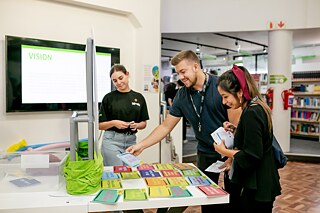
On November 4, 2023, the Goethe-Institut South Africa successfully held its first career expo. Close
to 5,000 professionals, students, university graduates, and schoolchildren from across the country
attended the career expo. 44 information stands, including companies such as DHL, SAP, BASF,
Mercedes Benz, BMW, Bosch, and the Swiss Red Cross, were represented and provided information
about training positions, job vacancies, internships, and scholarships. Presentations by the German
Embassy, the Swiss Embassy, and the Austrian Embassy, German crash courses, and career workshops
were among the other offerings that placed a stronger emphasis on careers and skilled professionals.
One of the highlights of the day was the panel discussion on “The relevance of German for career
opportunities in South Africa”, which was opened by German Ambassador Andreas Peschke. Moderator
Dr. Samia Chasi (Chair of the Board of the German International School Johannesburg) and prominent
panelists Yves Nono (Regional Manager at Bosch Africa Automotive Aftermarket and German alumnus),
Charity Kanyane (Department of Basic Education and Department of Higher Education and Training)
and Zola Mkumla (Managing Director, owner of a DSD school and German alumnus) competently explored
the question of the relevance of German for careers in South Africa, especially in the context of the more
than 600 German companies and 350,000 German tourists in South Africa each year. At the same time,
they explored the synergies that German companies could create in cooperation with the government,
educational organizations, and companies in South Africa in order to open up new career prospects. The
Department of Basic Education came to the meaningful conclusion that all key players (the Department
of Basic Education, German companies, tertiary institutions and the Goethe-Institut) must work closely
together to actively promote German in South Africa and create new career prospects for young persons.
As part of the Robots-in-Residence project, the Goethe-Institut is working with South African partners to promote greater equality, diversity and inclusion in the development of robotics and artificial intelligence. People from different ethnic, cultural and socio-economic backgrounds should be actively involved in the design of AI systems - in order to challenge existing prejudices and create more equitable technologies.
Some insights will be gained on the opportunities and limitations of artificial intelligence, machine learning and robotics in the African context. The need for more projects of this kind to diversify artificial intelligence has become clear. The integration of cultural symbolism - such as Zulu bead embroidery - into the programming of the NAO robot is particularly impressive. This not only improves image recognition, but also the communication of traditional stories and cultural meanings.
Project all around the world „Pre-integration – Living and Working in Germany“ (AMIF)
Since May 1, 2023, the Goethe-Institut South Africa has been part of the project: “Pre-integration - Living and Working in Germany”. The background: there is a shortage of skilled workers in Germany - the project aims to meet this need.
The offer is aimed at people who are determined to move to Germany - whether as a skilled worker, trainee or as part of family reunification. Even before they leave, they can take part in free courses in their home country to prepare them well for life in Germany.
These offers are diverse: there is information on visa applications, on applying for a job in the German labor market or on the dual training system. Training is also offered to help with learning German - for example speaking exercises, learning strategies, exam format or tutoring.
Participants can also take part in intercultural workshops shortly before their departure. These not only help them to adjust better to everyday life in Germany, but also build a bridge to the so-called welcome coaches at some Goethe-Instituts in Germany. In this way, arrival begins even before departure.
The institute supports people from 8 neighboring project countries who want to prepare for a new life in Germany.
In addition, it also supports the 9 other participating locations in the entire SSA (Sub-Saharan Africa) region.
The project is co-financed by the European Union and the Asylum, Migration and Integration Fund (AMIF).
More information and details of events can be found here.