“On the trail of
rumours”

How often do you question rumours you encounter online? Discover our new eight-part video series, highlighting East Asia's approach to disinformation and hate speech.
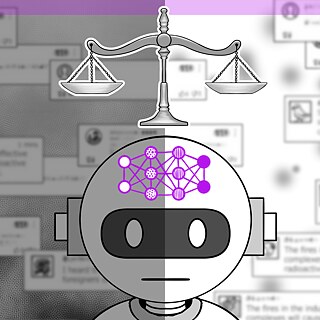
  • Training AI

    Ever wondered how well AI can tap into the emotional intelligence of its users? In this episode, you will gain insights into the world of artificial intelligence and its ability to engage in natural conversation. Iruda, the AI chatbot captivated South Korea in early 2021, seamlessly blending into online dialogue and communicating just like a Korean university student in her 20s.
     

    Image of AI Chatbot. © Yukari Mishima © Yukari Mishima

  • Message from Ray

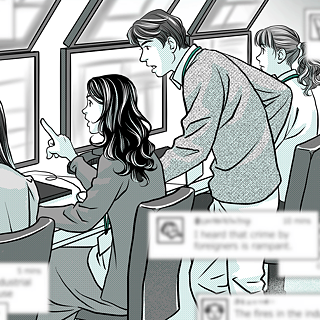
    How can a game teach you something about media literacy? In this episode, we follow a group of students as they develop a game to teach colleagues about media literacy and debunking rumours. The game’s main character, Ray, will have you acting like a detective - if you are lucky, he will even give you a call.
     

    Two individuals in detective clothes are engaged in looking at a smartphone, highlighting their interaction. © Yukari Mishima © Yukari Mishima

  • The Ban Festival

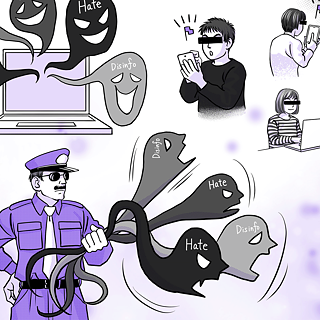
    How can collective action serve as a powerful antidote to the harmful spread of misinformation and hate? In this episode, we examine a troubling trend between 2009 and 2016 in Japan, where hate speech and rallies targeting Korean residents surged. 

    A cartoon of a police officer and people using the internet and facing hate speech. © Yukari Mishima © Yukari Mishima

  • Media Literacy 101

    What is the relationship between media literacy and levels of press freedom? At the University of Hong Kong, lecturer Masato recognized that media literacy was being taught using Western resources. In response, he founded ANNIE Asia, a news and information network dedicated to creating accurate, relevant materials tailored to the East Asian context.
     

    Cartoon scene featuring diverse individuals working on laptops, focused on a map opf East Asia, representing teamwork and digital communication. © Yukari Mishima © Yukari Mishima

  • Listening to Social Media

    Why do natural disasters in Japan lead to an increase in misinformation? Given its unique geographical condition, Japan frequently experiences natural disasters - can you imagine what happens when you couple them with rumours and misinformation? In this episode, we dive into the action taken by people on a mission to debunk online rumours.

    Illustration of a tsunami catastrophe in Japan © Yukari Mishima © Yukari Mishima

  • Face to Face

    Ever seen the pink vests in Taiwan’s parks, mountain trails or markets? The vests belong to the Fake News Cleaner, a grassroots movement run by 160 volunteers. They’re on a mission to teach citizens how to spot misinformation and scams. In this episode, you'll learn how they help older people protect themselves from online fraud! 
     

    Face to face © Yukari Mishima © Yukari Mishima

  • A helpful bot

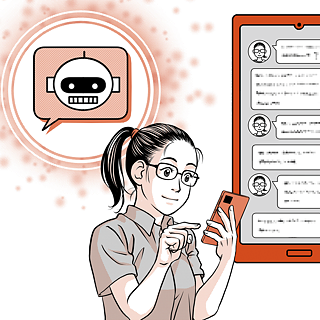
    How is Taiwan fighting anti-LGBTQ+ rhetoric? This Episode takes place in Taiwan in 2016, where anti-LGBTQ+ messages were spreading like wildfire. To counter this, Cofacts was born — a collaborative, open-source fact-checking platform.
     

    A helpful bot © Yukari Mishima © Yukari Mishima

  • On the trail of rumours

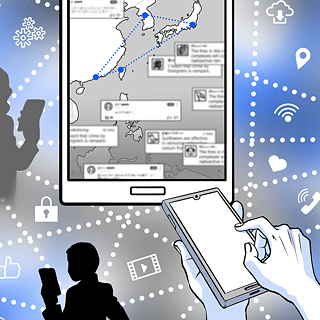
    Have you heard about super apps? API's? Kakao? What about the national security law in Hong Kong? In this episode, you will follow our navigator as they travel through Taiwan, Hong Kong, South Korea and Japan in search of false rumours, and learn all about the state of misinformation online.
     

    A visual representation of East Asia with blue line marking key areas. © Yukari Mishima © Yukari Mishima

Editorial team

“On the trail of rumours” is an eight-part series that sheds light on East Asia's approach to disinformation and hate speech. A production by Awe Studio on behalf of the Federal Agency for Civic Education/bpb and the Goethe-Institut.

Story: Hui-An Ho, Kaori Kohyama, Jason Liu, Roselyne Min; Illustration: Yukari Mishima; Script: Awe Studio; Animation: Awe Studio x Jorge Ramos; Music: Youjin Jeon; Production: Awe Studio; Post-production: Awe Studio x Jorge Ramos / Awe Studio; Editorship & Translation: bpb & Goethe-Institut (Translators: Eric Rosencrantz, Kathrin Hadeler, Young-Rong Choo, Alexandra Lottje); Scientific Advice: John W. Cheng, Tsuda University / Jeanette Hofmann, Wissenschaftszentrum Berlin für Sozialforschung

Cooperation partners

Follow us