Film Special: Rosa von Praunheim
Pioneer of Queer Cinema in Germany

Rosa von Praunheim

About the Film Special

The Goethe-Institut Tokyo is dedicating a special film series to filmmaker, artist, and LGBTQ activist Rosa von Praunheim, who passed away in 2025. A total of four films will be screened on 9 and 10 October: his groundbreaking early work It Is Not the Homosexual Who Is Perverse, But the Society in Which He Lives (1971), as well as the cult comedy The Bed Sausage (Die Bettwurst, 1971), both of which will be shown with Japanese subtitles for the first time, alongside Anita: Dances of Vice (1987) and the documentary Underground and Emigrants (1976).

In addition to the screenings, an accompanying program offers audiences the opportunity to engage with Rosa von Praunheim’s work from a variety of perspectives. Film and cultural journalist Jan Künemund will present an online lecture exploring the background, production history, and impact of It Is Not the Homosexual Who Is Perverse, But the Society in Which He Lives. The screenings will also be accompanied by introductions from film scholar Tetsuya Shibutani. Together, these events provide new insights into an artistic body of work that continues to shape public discussions on identity, visibility, and diversity to this day.

About Rosa von Praunheim

Rosa von Praunheim (born Holger Mischwitzky, 1942–2025) was a German filmmaker, writer, and one of the most influential gay rights activists in German-speaking Europe. His artist name Rosa refers to the pink triangle (rosa Winkel) that homosexuals were forced to wear in Nazi concentration camps. A central figure of New German Cinema and queer counterculture, he made more than 150 films over five decades, consistently combining art, provocation, and political activism. Throughout his career, Praunheim remained a fierce advocate for queer visibility, addressing topics such as AIDS, historical repression, gender nonconformity, and aging. His confrontational style made him controversial, but his influence on LGBTQ+ politics, media representation, and queer cinema is unmatched.


Movies

  • It Is Not the Homosexual Who Is Perverse, But the Situation in Which He Lives

    West Germany, 1971, 67 min., FSK 16, German with Japanese subtitles

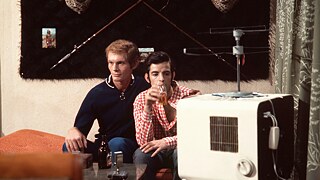
    Daniel and Clemens fall in love, move in together, and attempt to imitate the conventions of a bourgeois marriage. When their relationship ends after four months, Daniel becomes increasingly immersed into Berlin’s gay subculture. He takes a job at a gay café and frequents parks and public meeting places popular with gay men. Eventually, he meets Paul in a transvestite bar, who introduces him to a gay communal household where alternative models of gay life and identity are openly discussed.

    Praunheim’s scathing critique of the self-imposed invisibility of gay people in public life is one of the rare examples of a film that had a direct socio-political impact. Following its first screenings, more than fifty activist groups were founded, laying the groundwork for the modern German gay rights movement.

    Originally filmed without sound and later supplemented with an ironic voice-over commentary, the film blends fiction and documentary footage, manifesto and essay, culminating in a direct appeal for collective self-organization. Its experimental and open-ended form is as provocative and challenging as its wide-ranging critique.

    Director: Rosa von Praunheim
    Cast: Bernd Feuerhelm, Beryt Bohlen, Ernst Kuchling, and others

  • The Bed Sausage

    West Germany, 1971, 81 min., Color, FSK 16, German with Japanese subtitles

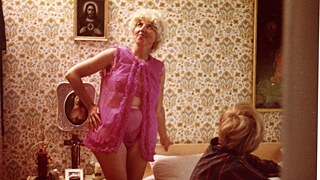
    Luzi and Dietmar meet and fall in love in the port city of Kiel. She is an older, lower-middle-class secretary; he is a young worker from Berlin. Together they reenact the rituals of respectable bourgeois life that they have absorbed through upbringing and the media. They go dancing at a local restaurant, she shows him her allotment garden and family photo albums, and after a night together he helps her with the housework. They celebrate Christmas and embrace the comforts of domestic life.

    Their idyll is abruptly disrupted when some of Dietmar’s former criminal associates arrive and kidnap Luzi to force him back into their illicit activities.

    In his second feature film, Praunheim employs the aesthetics of ‘camp’, a style that was still largely unknown in Germany at the time. Closely linked to the history of drag performance and, before that, to modern British gay subculture, camp is a parodic practice that embraces exaggeration and bad taste as tactics of queer resistance. By pushing the aesthetic and moral conventions of mainstream culture to their extremes, camp exposes and subverts them. The Bed Sausage is one of the earliest and most distinctive examples of this sensibility in German cinema.

    Director: Rosa von Praunheim
    Cast: Luzi Kryn, Dietmar Kracht, Steven Adamczewski, and others

  • Underground and Emigrants

    West Germany, 1976, 80 min., Color, German with Japanese subtitles

    In this film, Rosa von Praunheim travels to New York, a city he regards as both a place of longing and an alternative to what he saw as the “sterile German cultural establishment.” He documents his encounters with artists and personalities from New York’s underground scene, who, in Off-Off-Broadway theaters, clubs, and private apartments are creating an uninhibited and highly vital culture often under precarious conditions, free from conventional taboos.
    Among the film’s most prominent figures are William S. Burroughs, Andy Warhol, Fernando Arrabal, and Robert Wilson. The “emigrants” of the title are represented by German-speaking exiles and emigrant artists from the pre-war and wartime periods, including Greta Keller and Grete Mosheim, both living in New York. In this way, the film combines a portrait of the contemporary avant-garde scene with reflections on the experiences of German-speaking exile.

    Director: Rosa von Praunheim
    Screening courtesy: Underground Cinema Film Festival.

    The screening is held with an introduction by film scholar Tetsuya Shibutani.

    Underground and Emigrants © missing FILMs © missing FILMs

  • Anita: Dances of Vice

    West Germany, 1987, 87 min., FSK 16, German with Japanese subtitles

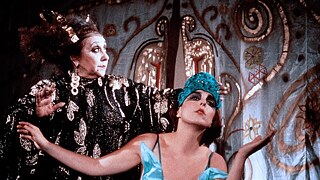
    In 1920s Berlin, the nude dancer Anita Berber became notorious for her eccentricity and uncompromising lifestyle. In retrospect, she has come to embody the turbulent era between war, inflation, sexual liberation, and drug-induced excess. Rosa von Praunheim frames his homage to this radical cultural icon through the story of an elderly woman who is admitted to a psychiatric hospital.
    The patient, played by cult actress Lotti Huber, believes herself to be Anita Berber. Her fantasies evoke the visual world of expressionist silent cinema and are brought vividly to life through the striking cinematography of Elfi Mikesch.

    Director: Rosa von Praunheim
    Cast: Lotti Huber, Ina Blum, Mikael Honesseau, Rosa von Praunheim, and others
    Screening courtesy: Eurospace

[09.10.2026, 18:00] Jan Künemund: Online Lecture to Rosa von Praunheim

Before the screening of Rosa von Praunheim’s iconic early work It Is Not the Homosexual Who Is Perverse, But the Society in Which He Lives, film and cultural journalist Jan Künemund will give a lecture on Praunheim’s cinematic oeuvre, with a particular focus on the film’s historical and social context, as well as the controversial debate it sparked in German society at the time of its release.

Filmography

(Selection)
1970 Die Bettwurst·Armee der Liebenden (Army of Lovers); documentary
1971 Nicht der Homosexuelle ist pervers, sondern die Situation in der er lebt; documentary
1976 Ich bin ein Antistar. Das skandalöse Leben der Evelyn Künneke; documentary
1978 Tally Brown, New York; documentary
1981 Unsere Leichen leben noch; documentary
1983 Stadt der verlorenen Seelen(The City of Lost Souls); documentary
1984 Horror Vacui
1985 Ein Virus kennt keine Moral
1987 Anita – Tänze des Lasters
1989 Überleben in New York; documentary·Schweigen = Tod (Silence = Death); documentary
1992 Ich bin meine eigene Frau (I Am My Own Woman); documentary
1996 Neurosia – 50 Jahre pervers
1999 Der Einstein des Sex (The Einstein of Sex)
2002 Tunten lügen nicht; documentary
2005 Dein Herz in meinem Hirn
2011 Die Jungs vom Bahnhof Zoo; documentary
2015 Härte
2022 Rex Gildo – Der letzte Tanz(Rex Gildo – The Last Dance); documentary
2024 Dreißig Jahre an der Peitsche (Twenty Years at the Whip); documentary
2025 Satanische Sau(Satanic Sow); documentary