Entrepreneurship theory has it that when human beings start living together, demand and supply immediately kick in as no family or individual is self- sufficient. Entrepreneurship is defined as the discovery, identification or creation of opportunities present in the environment by school of thought.
I am sure you and I have either read or heard stories of how the San people gave so much (livestock), for so little (mirror or matchstick) to Dutch Spice traders at the Cape Good Hope. As the world is about to celebrate Global Entrepreneurship Week, let’s be reminded that entrepreneurship in South Africa did not begin with colonialism.
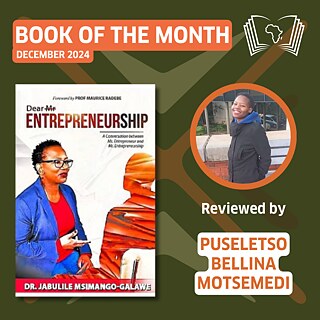
Dear Mr. Entrepreneurship by Jabulile Msimango is a brutally honest read in a world where we have lifestyle entrepreneurs, tenderpreneurs and influencers. The book takes the reader on a sobering adventure ride filled with dreams, desires, marriage of ideas, pitfalls of business partnerships and the hammering of deals for a practicing and aspiring entrepreneurs.
Often times, entrepreneurs who have made it then lost it all, and managed to not only bounce back but forward answer the popular question “how did you rise from the ashes after losing everything?” with “I just worked hard”. Which begs another question: “So, when you lost it all the first time, you didn’t work hard?” Are you saying entrepreneurs who are forced to shut down their business doors, spent their time sipping cocktails at golf courses instead of working “hard”?
Jabulile Msimango was and is still a smart and hardworking woman, who deservedly earned her stripes in Corporate SA because she had the Degree to back it up. Like most smart people who would boggle your mind when they make mind boggling decisions, she soon discovered that entrepreneurship does not care about her expensive paper. What matters is that an entrepreneur must constantly do their homework, as if it would go out of fashion.
Her willingness to use her heart instead of brains in running her business, set a chain reaction of business harm, because the heart proved to be very stupid when it came to balancing the balance sheet. Even though the Black Economic Empowerment legislation was implemented in 2003, I can bet a Dollar that the majority of black South Africans don’t actually understand the machination of BEE.
The book proves that point, as Jabulile Msimango signed a BEE deal without understanding what she was bringing to the business table. Even though the BEE legislation wanted to address the injustices of the past, the reality in South Africa is that whoever has the gold makes the rules in a BEE marriage.
Have you heard of the saying men lie, women lie but numbers don’t? Business is a numbers game that needs sales to stay alive however, record keeping keeps the entrepreneur in business. These are painful lessons that Jabulile Msimango had to learn as her business was teetering.
The book has taught me that, it’s simply not good enough to have a great business idea, because that idea needs to work financially and the only way to find out is for an entrepreneur to do their homework and have the ability to make business decisions quickly based on facts, not the heart.
Heart driven business decisions serves an entrepreneur nothing but trouble. In South Africa, suppliers or other stakeholders that benefit directly/indirectly from the business have the right to sue the owner of the business if it goes under due to recklessness from the owner. And you know what the kicker is? The supplier or other stakeholders can invite SARS as the friend of the court and should that happen, the jig is up.
Whilst you digest that, I am leaving you with this quote as you celebrate and run your businesses “A well-structured business is like a well-constructed building. Its foundations must be solid and its legality like concrete, provides support it needs to grow without collapse”
About the reviewer
Tonderai Chiyindiko
Tonderai Chiyindiko is a voracious reader who is addicted to the intoxicating smell of new books and loves attending book launches (because of the free-flowing wine, cheese and snacks). He lives and works in Johannesburg.
More information
This review is part of the Book of the Month series 2026 from the Goethe-Institut South Africa. A new review by South Africans for South Africans will be published every month, check back regularly.
All books can be borrowed from our library, the membership is free.
More information
This review is the eleventh in the Book of the Month series from the Goethe-Institut South Africa. A new review by South Africans for South Africans will be published every month, check back regularly.
All books can be borrowed from our library, the membership is free.
All "Book of the Month" reviews
Here you find all reviews of the series Book of the Month. All books are available in Goethe-Institute library in Johannesburg.
It’s simply not good enough to have a great business idea, because that idea needs to work financially. Do you have the ability to make business decisions quickly based on facts, not the heart?
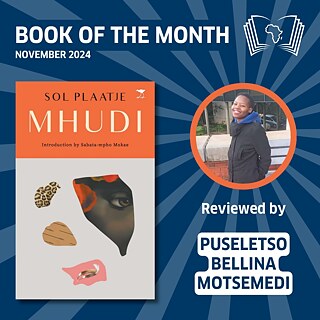
Mhudi is a historical novel set in the 1800s that tells the story of an African woman living during a war between the Barolong people, Matebele people and the Boers. Mhudi’s tribe, the Barolong, is attacked one evening by the Matebele. Amid the screams, bloodshed, and destruction—Mhudi escapes.
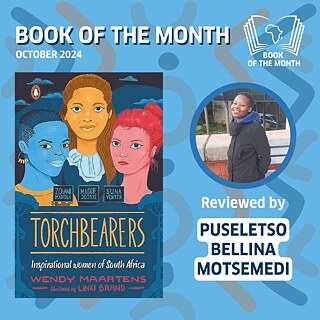
The women of 1956 marched to the Union building in unison because the pass laws that were oppressive. These women, from all backgrounds and races were torchbearers to a poet, social and legal advocates. These women, who are as colorful as their backgrounds and professions, share something common: the need to be somebody.
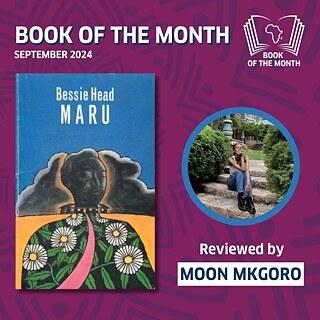
Maru is a story about a Masarwa woman, Margaret Cadmore, who was adopted and raised by a white woman during a time when the Masarwa people of Botswana were heavily discriminated against. Head writes “Masawra is the equivalent of ‘nigger’, a term of contempt which means, obliquely, a low filthy nation.”
As a young girl, during a drought in Zimbabwe, Elizabeth collapsed under a tree as a result of hunger and starvation. She was weak and in and out of consciousness. Moments later, a woman that Elizabeth did not recognise, gave her a meal.
Tshepo, a young student at Rhodes, has a difficult time keeping up with his own strange mind. He is absorbed in making sense of a traumatic past in a violent country and so when he finds himself at the Valkenberg mental facility it is perhaps not entirely due to “cannabis-induced psychosis”.
Carried by impeccable lyrical writing, the 2022 novel examines themes of queerness, grief, friendship, and family. Set in the United Kingdom with hints of Nigerian life, this enthralling book reads like capricious weather.
“The book brings the reader up to speed with land's lengthy and complicated process. Assessed interventionist measures on their efficacies that mainly amounted to nought.”
Penguin Random House South Africa | Tlou Meso
Penguin Random House South Africa | Tlou Meso
Review by Moon Mokgoro
Thirteen Cents - Book of the Month March
Books like Thirteen Cents are essential for social change.
They provide impetus for growth, change and the development of a caring and supportive society.
“It is all at the same time filled familiarity, warmth and danger, fear and opportunity – the myriad of contradictions that is Johannesburg, and South Africa itself.”