A not for the faint of heart masterpiece. Kabelo Sello Duiker paints a brutal picture of the new dispensation in the eyes of young people. Set around 1998, Kabelo sheds his skin through Tshepo; a private schooled, well-spoken Rhodes University student hailing from SOWETO, who “is feeling close to madness” in the beautiful city of Cape Town.
Tshepo eventually finds himself staring abuse in the face, which chillingly transcends his gender, educational background and social status. Negotiating with poverty at a position of weakness, he ends up selling flesh to keep hunger pangs and homelessness at bay. Separating himself only to become one with his profession, leads to the fluidity of sexuality that gives him the courage to love and sleep with men.
It is that courage that opens up exclusive enclaves, which only money can penetrate. Whilst money offer economic security, that does not shield him from the reality of racism in a racist city and country. Money can only buy tangible things but loneliness would always be lurking behind. The fundamental quest to be somebody and the need for self-acceptance, reveals to Tshepo a journey to spiritual destiny.
Kabelo Sello Duiker in your face storytelling about male prostitution, is also a major theme in his first book Thirteen Cents which is also based in Cape Town. It is apparent on the Quiet Violence of Dreams that Cape Town bruised the already injured Kabelo Sello Duiker, and in his book through Tshepo he is vulnerable and asking for help. Despite all the money in the world, he was alone and sad. The violent dreams were actually a spiritual gift, which felt like a curse for him because he would be intoxicated with a touch of madness.
His exploration of two worlds; English and Sotho, Cape Town and Joburg, Suburbia and Township left him feeling Schizophrenic as he couldn’t choose one over the other and in the end he was lost on all fronts. Unfortunately, his teenage demons of suicidal and psychopathic feelings, came to haunt his adulthood. His writing talent, spiritual gift and loneliness cooked a time bomb. As such, he did feel he was going to die young and he was ready to face his death because he sometimes fantasised about suicide. In the end, Kabelo Sello Duiker did die young through suicide.
About the reviewer
Tonderai Chiyindiko
Tonderai Chiyindiko is a voracious reader who is addicted to the intoxicating smell of new books and loves attending book launches (because of the free-flowing wine, cheese and snacks). He lives and works in Johannesburg.
More information
This review is the seventh in the new Book of the Month series from the Goethe-Institut South Africa. A new review by South Africans for South Africans will be published every month, check back regularly. All books can be borrowed from our library, the membership is free.
All "Book of the Month" reviews
Here you find all reviews of the series Book of the Month. All books are available in Goethe-Institute library in Johannesburg.
It’s simply not good enough to have a great business idea, because that idea needs to work financially. Do you have the ability to make business decisions quickly based on facts, not the heart?
Mhudi is a historical novel set in the 1800s that tells the story of an African woman living during a war between the Barolong people, Matebele people and the Boers. Mhudi’s tribe, the Barolong, is attacked one evening by the Matebele. Amid the screams, bloodshed, and destruction—Mhudi escapes.
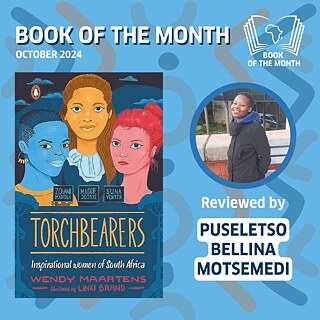
The women of 1956 marched to the Union building in unison because the pass laws that were oppressive. These women, from all backgrounds and races were torchbearers to a poet, social and legal advocates. These women, who are as colorful as their backgrounds and professions, share something common: the need to be somebody.
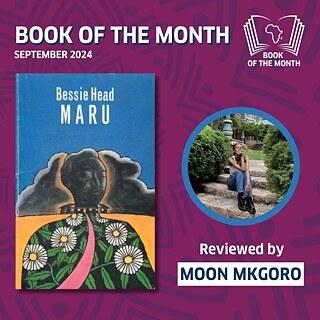
Maru is a story about a Masarwa woman, Margaret Cadmore, who was adopted and raised by a white woman during a time when the Masarwa people of Botswana were heavily discriminated against. Head writes “Masawra is the equivalent of ‘nigger’, a term of contempt which means, obliquely, a low filthy nation.”
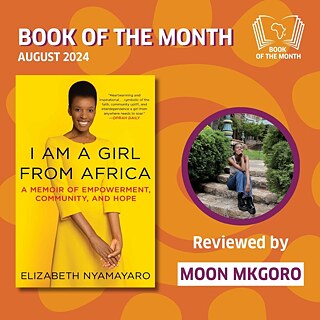
As a young girl, during a drought in Zimbabwe, Elizabeth collapsed under a tree as a result of hunger and starvation. She was weak and in and out of consciousness. Moments later, a woman that Elizabeth did not recognise, gave her a meal.
Tshepo, a young student at Rhodes, has a difficult time keeping up with his own strange mind. He is absorbed in making sense of a traumatic past in a violent country and so when he finds himself at the Valkenberg mental facility it is perhaps not entirely due to “cannabis-induced psychosis”.
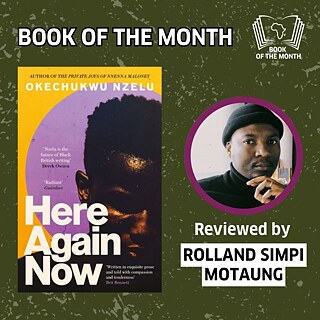
Carried by impeccable lyrical writing, the 2022 novel examines themes of queerness, grief, friendship, and family. Set in the United Kingdom with hints of Nigerian life, this enthralling book reads like capricious weather.
“The book brings the reader up to speed with land's lengthy and complicated process. Assessed interventionist measures on their efficacies that mainly amounted to nought.”
Penguin Random House South Africa | Tlou Meso
Penguin Random House South Africa | Tlou Meso
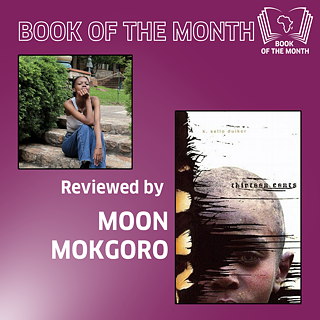
Review by Moon Mokgoro
Thirteen Cents - Book of the Month March
Books like Thirteen Cents are essential for social change.
They provide impetus for growth, change and the development of a caring and supportive society.
“It is all at the same time filled familiarity, warmth and danger, fear and opportunity – the myriad of contradictions that is Johannesburg, and South Africa itself.”