Afghanistan

Reopened in 2003, the Goethe-Institut Afghanistan supported the then still existing cultural scene in its reconstruction and promoted the emergence of new cultural practices. The institute was severely damaged by an attack in 2017 and subsequently had to cease operations. Since the Taliban took power in 2021, the current situation in Afghanistan is extremely difficult: the country is isolated and women are largely banned from public life. The return of the Taliban has also been devastating for artists.
Images of Taliban fighters burning musical instruments and artists destroying their own artwork out of fear went around the world. Cultural practitioners in Afghanistan and in the diaspora continue to try to be artistically active. While some cultural workers have managed to leave the country, others are still waiting for the opportunity to flee.
Images of Taliban fighters burning musical instruments and artists destroying their own artwork out of fear went around the world. Cultural practitioners in Afghanistan and in the diaspora continue to try to be artistically active. While some cultural workers have managed to leave the country, others are still waiting for the opportunity to flee.
The Goethe-Institut Afghanistan
The Goethe-Institut Kabul, founded in 1965, had to cease its activities in 1991 before the invasion of the Mujahideen. Until its closure, the Goethe-Institut Kabul was a well-known and popular place for meetings, exchange and cultural events.
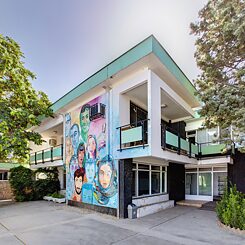
After the end of the first Taliban regime in 2001, the first on-site research for the resumption of work began in February 2002. In September 2003, the Institute was reopened in the former residence of the then GDR Embassy. With the occupation of its own building and the secondment of additional staff, the Institute resumed its activities in all areas o
The Goethe-Institut Afghanistan supported the then still existing cultural scene in its reconstruction and also promoted the emergence of new cultural practices – for example, the fields of contemporary literature, animated films and puppet theatre.
The institute was located on the grounds of the German Embassy. In an attack on it in 2017, the institute was severely damaged and had to stop work as a result. The Taliban have been in power again since 15 August 2021.

Exhibition review
Invisible Power – Striving for Femininity and Identity
From 8 December 2023 – 14 January 2024, the exhibition Invisible Power – Striving for Femininity and Identity, curated by Sara Nabil, was on display at the ACUD Galerie in Berlin. Take a look at the works by the artists Rada Akbar, Leila Mousavi and Mohsin Taasha.
Find out more about the exhibition here.


