A Creative Approach to Kutaisi
Creative Workshops and Urban Impact: Driving Change for Communities
Interview with Marc Andrews and Christian Degen
Marc Andrews and Christian Degen are graphic designers with a strong social focus. Both grew up near the German–Dutch border but started their careers in different directions. Christian worked in several design agencies, while Marc initially studied psychology before switching to graphic design and attending art school in the Netherlands. About 18 years ago, their paths crossed, and together they founded andrews°en, a visual design agency in Amsterdam that blends creativity with strategic thinking.

Christian Degen, Marc Andrews, Elina Valaite | Photo by Lilly Martha Seintsch
During this week-long social design workshop, 15 local creatives explored different districts of Kutaisi. They developed themes and concepts inspired by neighbourhood stories, personal observations, and the city’s architectural character.
The workshop culminates in a vibrant, multi-layered print and online magazine that highlights the creativity of every participant. It becomes a source of inspiration - inviting readers to dive deeper, discover new perspectives, and stay engaged. On the final day of the workshop, each participant presents their work to a local audience - sparking meaningful conversations and building connections between the creators and the community.

City walk, day 2 of the workshop - Mapping the City: A Creative Approach to Kutaisi | Photo by Luka Kvantaliani

City walk, day 2 of the workshop - Mapping the City: A Creative Approach to Kutaisi | Photo by Lilly Martha Seintsch
Marc: Our first workshop was with the Art Academy in Bucharest (2012), working with photographers. The magazine we produced then had a strong documentary focus, and it worked well. Later, for our third magazine in China, we spent three months teaching and decided to revisit the concept of “Mapping the City,” but this time with graphic designers. After the documentary approach, we realised we could add more personal voices to the project — and it worked. The designers had three months to develop their work, and even the teachers participated, which made the experience successful.
We’ve always been interested in design as a socially engaged practice. It’s not just about creating logos. When you visit a country, you experience its art scene and culture. In many design education systems, students mainly learn logo design and web design. We want to show them that creativity can also address social issues. Even if it’s just a vision, it opens conversations about these topics.
Often, older generations dominate in decision-making, and younger people don’t get a voice. Through these projects, we aim to change that.
More about Mapping the City project: mappingthecity.com
Christian: It’s also about the research aspect. When you work for a client, the concept phase is often very compressed because of time and budget constraints. You end up trapped in a design mindset where you already know what the client needs, leaving little room for freedom or exploration.
Our projects are different - they start with fieldwork. Teaching and collaborating with locals during this research phase are essential. The magazine we produce at the end is just a snapshot, a way to say - this chapter is complete. But really, it’s just a seed that can grow into something bigger. The process brings people together, lets them have fun, and encourages learning from us and from each other.
This kind of process is rare today because everything is so focused on final deliverables. Most research is done behind a computer - desktop research. We want to encourage people to step away from the screen, talk to others, and explore outside to find their own inspiration.
The workshop in Kutaisi was amazing. The results were incredibly diverse because we had such a varied group: musicians, art historians, graphic designers, and other engaged individuals. That mix of perspectives made the journey so rich and valuable.

Public presentation of the project - Mapping the City: A Creative Approach to Kutaisi. Workshop guests and participants: Gvantsa Todadze, Ana Machavariani, Tako Dzagania | Photo by Elina Valaite

Mapping the City: A Creative Approach to Kutaisi | Tatia Topadze & Kristina Kashibadze
Creative Ways to Connect with the Mental and Physical Landscape
Marc: When we walk around cities like Amsterdam, we often rush from one place to another and stop noticing the details. In German, there’s a word for this - Scheuklappen - like the blinders horses wear, meaning we only see what’s directly in front of us. We all have cultural blind spots and clichés. That’s why we encourage people to go out of their comfort zones, talk to others, and explore. Motivation is key - not just what we tell people but letting them choose their own interests and see things from different angles. We ask a lot of questions because design education is about questioning. Teachers shouldn’t be too pushy; instead, they should ask questions that stimulate new perspectives.

City walk, day 2 of the workshop - Mapping the City: A Creative Approach to Kutaisi | Photo by Lilly Martha Seintsch

Day 3 of the workshop - Mapping the City: A Creative Approach to Kutaisi | Photo by Christian Degen

City walk, day 2 of the workshop - Mapping the City: A Creative Approach to Kutaisi | Photo by Lilly Martha Seintsch

City walk, day 2 of the workshop - Mapping the City: A Creative Approach to Kutaisi | Photo by Lilly Martha Seintsch
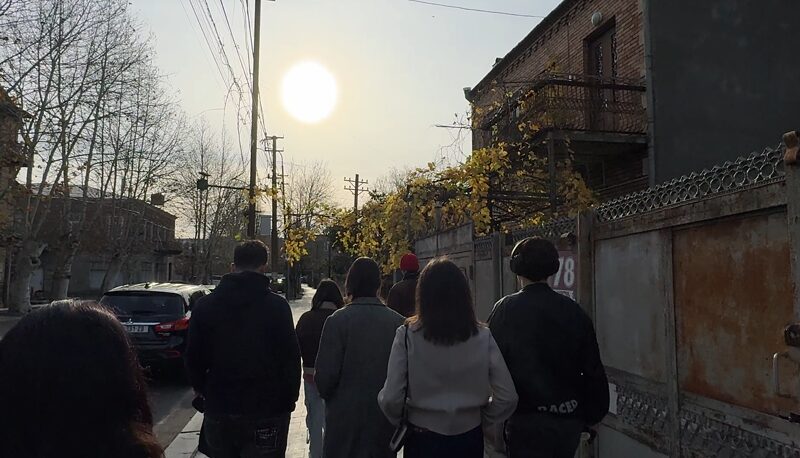
City walk, day 2 of the workshop - Mapping the City: A Creative Approach to Kutaisi | Video by Lilly Martha Seintsch
We constantly ask questions to open their minds: Why? How? Who? Are you sure? How can you show this? Sometimes we even confuse them a little, but we also let them stay on one topic longer so they can dig deeper and find answers. This creates more time for reflection and discovery.
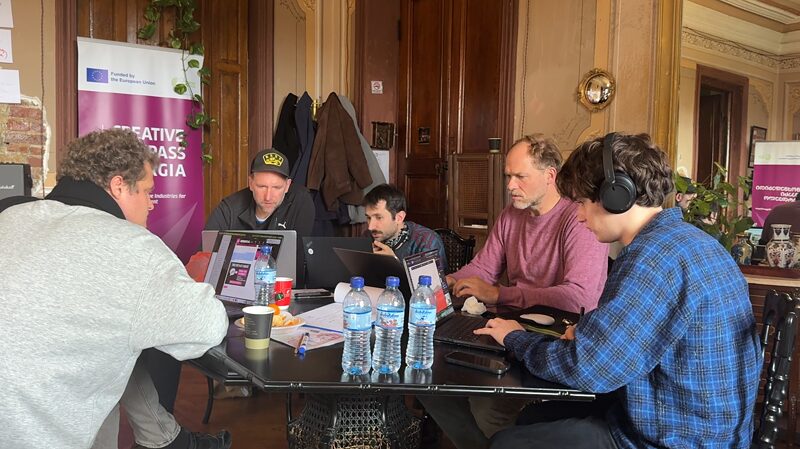
City walk, day 2 of the workshop - Mapping the City: A Creative Approach to Kutaisi | Video by Lilly Martha Seintsch
Christian: I think the most valuable aspect is the development of the participants - the project is mainly for them. Another important part is changing long-term thinking, especially about stakeholders and how to involve them. A participant who grows during this week and builds a new network already gains something very valuable. In smaller cities, people often don’t realise what others can contribute to their careers. This project creates a platform where people meet, collaborate, and learn from each other. From this perspective, that’s the biggest win.
We encourage small steps because even little things can lead to bigger developments.
We definitely went off the usual tracks. Instead of focusing on the city centre with its nice fountain, we explored neighbourhoods that tell real stories about the city. For many participants, this was new - seeing the city through a different lens.

City walk, day 2 of the workshop - Mapping the City: A Creative Approach to Kutaisi | Photo by Lilly Martha Seintsch

City walk, day 2 of the workshop - Mapping the City: A Creative Approach to Kutaisi | Photo by Lilly Martha Seintsch
Cityful Passing Away, Other Cityful Coming…*
Marc: When you work on a city-focused project, it’s always connected to the past and present. You don’t necessarily have to think about the future — but you can. In our workshops, we frame questions in different ways: sometimes about neighbourhoods, sometimes about personal experiences. Occasionally, we also look for problems where, as designers and as a group, we might want to propose solutions — though that’s not always necessary.
When you engage with a city and its life, you’re dealing with the status quo, but you also look backward and forward. The position you take depends on what the participant wants to express. We always ask: What is the story you want to tell?

City walk, day 2 of the workshop Mapping the City: A Creative Approach to Kutaisi | Photo by Lilly Martha Seintsch
Interviewed by Elina Valaite – PR and Event Manager at Creative Compass Georgia | Goethe-Institut Georgien.
Photos and videos by Lilly Martha Seintsch (Kulturweit volunteer at Creative Compass Georgia | Goethe-Institut Georgien), Elina Valaite (Creative Compass Georgia | Goethe-Institut Georgien), Luka Kvantaliani (workshop participant), and Christian Degen (designer, andrews & degen).
Cityful Passing Away, Other Cityful Coming…*
James Joyce, Ulysses

