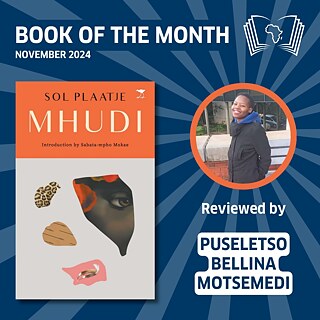
Sol Plaatje was a multifaceted man: an activist, writer, politician, linguist, journalist, and academic. Throughout the struggle for liberation, he played a significant role in advancing the cause of freedom and equality for Black South Africans. As a journalist and writer, Plaatje was deeply committed to elevating African culture and languages. His body of work is a clear demonstration of his belief in justice, equality, and the importance of African voices in shaping our own narratives and telling our own stories. Notably, he was the first Black South African to write a novel in English – Mhudi (1930). Plaatje strongly believed that the stories of Black people needed to be told from our own perspectives, in our own voices. Whether fictional or non-fictional, the key and most essential objective is to ensure that our stories are being told through our own voices, rather than through the voices of non-black people, particularly Europeans who were, and still are, the main writers of our stories.
The story
Mhudi is a historical novel set in the 1800s that tells the story of an African woman living during a war between the Barolong people, Matebele people and the Boers. Mhudi’s tribe, the Barolong, is attacked one evening by the Matebele. Amid the screams, bloodshed, and destruction—Mhudi escapes. For a while, she believes that she is on her own, a sole survivor until she meets and falls in love with Ra-Thaga, a Barolong man who also survived the attack. Eventually, they reconnect with other Barolong survivors and, in alliance with the Boers, fight to reclaim their homeland from the Matebele.
Mhudi is a story about love and the profound strength of love. It portrays the strength that love can offer in the face of struggle and adversity. In the face of fear and the need for survival. When hunting a lion, Ra-Thaga asks Mhudi, “Are you not afraid, Mhudi?” and she responds, “Why should I fear? Who would be afraid in your company, while fear is afraid of you? I feel ready to meet any number of lions as long as you are about.” Mhudi and Ra-Thaga shared a love built on resilience. They became one, dependent on each other for their survival. They faced not only the dangers of spears and lions but also the emotional wounds and trauma left in the aftermath of the Matebele attack. Their love became a source of healing and strength, empowering them to build a better life, a new life.
While partially rooted in love and portraying an immense, profound form of love, Mhudi is a commentary on many aspects of South Africa’s past – patriarchy, oppression, and colonisation. In patriarchal societies, women are marginalised, pushed aside, forced to remain background characters, denied leadership roles, and our voices are ignored and unheard. Simone de Beauvoir describes it as seeing women as “the other” and men as the “absolute,” making women and relegating them to being subordinates. Plaatje’s portrayal of a woman, an African woman, a woman who is a central figure, is powerful in that it writes Mhudi as a leader with a voice and power. It challenges norms and patriarchal ideas of who women are and what we are capable of. Plaatje's portrayal of this character shatters the notion that women are merely subordinates. Through Mhdui, Plaatje challenges these assumptions and highlights the power of African women as agents of change.
About the reviewer
Moon Mokgoro
Moon Mokgoro studies physics and mathematics and is a writer based in Johannesburg, South Africa. She is the founder of Protest Poster Project, a non-profit organisation focused on fighting against gender based violence and building a library/archive of activist, anarchist and feminist literature. She's written for the Are.na 2023 Annual and others as well as occasionally writing on her Substack. Archiving and documenting, collecting and remembering are what Moon aspires to do in all her work.
More information
This review is the eleventh in the Book of the Month series from the Goethe-Institut South Africa. A new review by South Africans for South Africans will be published every month, check back regularly.
All books can be borrowed from our library, the membership is free.
All "Book of the Month" reviews
Here you find all reviews of the series Book of the Month. All books are available in Goethe-Institute library in Johannesburg.
It’s simply not good enough to have a great business idea, because that idea needs to work financially. Do you have the ability to make business decisions quickly based on facts, not the heart?
Mhudi is a historical novel set in the 1800s that tells the story of an African woman living during a war between the Barolong people, Matebele people and the Boers. Mhudi’s tribe, the Barolong, is attacked one evening by the Matebele. Amid the screams, bloodshed, and destruction—Mhudi escapes.
The women of 1956 marched to the Union building in unison because the pass laws that were oppressive. These women, from all backgrounds and races were torchbearers to a poet, social and legal advocates. These women, who are as colorful as their backgrounds and professions, share something common: the need to be somebody.
Maru is a story about a Masarwa woman, Margaret Cadmore, who was adopted and raised by a white woman during a time when the Masarwa people of Botswana were heavily discriminated against. Head writes “Masawra is the equivalent of ‘nigger’, a term of contempt which means, obliquely, a low filthy nation.”
As a young girl, during a drought in Zimbabwe, Elizabeth collapsed under a tree as a result of hunger and starvation. She was weak and in and out of consciousness. Moments later, a woman that Elizabeth did not recognise, gave her a meal.
Tshepo, a young student at Rhodes, has a difficult time keeping up with his own strange mind. He is absorbed in making sense of a traumatic past in a violent country and so when he finds himself at the Valkenberg mental facility it is perhaps not entirely due to “cannabis-induced psychosis”.
Carried by impeccable lyrical writing, the 2022 novel examines themes of queerness, grief, friendship, and family. Set in the United Kingdom with hints of Nigerian life, this enthralling book reads like capricious weather.
“The book brings the reader up to speed with land's lengthy and complicated process. Assessed interventionist measures on their efficacies that mainly amounted to nought.”
Penguin Random House South Africa | Tlou Meso
Penguin Random House South Africa | Tlou Meso
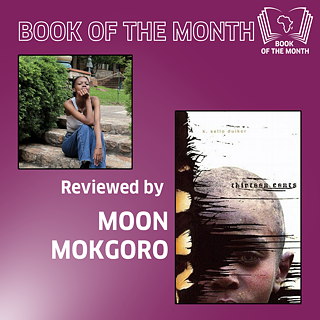
Review by Moon Mokgoro
Thirteen Cents - Book of the Month March
Books like Thirteen Cents are essential for social change.
They provide impetus for growth, change and the development of a caring and supportive society.
“It is all at the same time filled familiarity, warmth and danger, fear and opportunity – the myriad of contradictions that is Johannesburg, and South Africa itself.”