
Qualitätsversprechen 1 Lernerfolg am Goethe-Institut
Das Goethe-Institut ist Deutschlands bestes Sprachlehrinstitut!
Das hat eine repräsentative Verbraucherbefragung ergeben, die vom Marktforschungsinstitut ServiceValue im Auftrag des Handelsblatts durchgeführt wurde. Basierend auf den Erfahrungen der letzten zwei Jahre sehen die Kunden das Goethe-Institut als mit Abstand besten Anbieter unter den Sprachlehrinstituten.
Quelle: Handelsblatt, Nr. 174, 10.09.19, S. 43.
Zu diesem Ergebnis kommt auch eine Nutzer-Umfrage, die vom unabhängigen Marktforschungsinstitut Statista im Auftrag des stern durchgeführt wurde, um die besten Weiterbildungsangebote für Schüler und Erwachsene zu ermitteln. Die mit Abstand beste und zugleich wichtigste Bewertung kommt dabei unserer Lernqualität zu. Gleichzeitig finden die Kursteilnehmenden bei uns das beste Preis-Leistungs-Verhältnis.
Quelle: stern, Nr. 35, 22.08.19, S. 93.
Das Goethe-Institut ist Deutschlands bester digitaler Bildungsanbieter!
Neben der Auszeichnung als bestes Sprachlehrinstitut konnte sich das Goethe-Institut auch als bester digitaler Bildungsanbieter durchsetzen. Zu diesem Ergebnis kam das Marktforschungsinstitut ServiceValue im Auftrag der WirtschaftsWoche. Unter 10 digitalen Bildungsanbietern im Vergleich erlangte das Goethe-Institut den 1. Platz.
Quelle: WirtschaftsWoche, Nr. 46, 06.11.2020, S. 107.
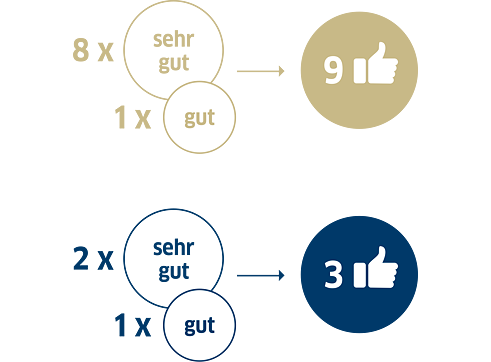
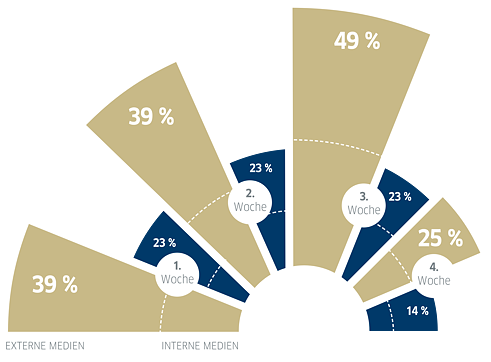
Neben den quantitativen Studien hat ein qualitativer Tagebuchtest mit Kunden und Wettbewerbskunden über vier Wochen ergeben: Unsere Kursteilnehmenden sind zufriedener als die anderer Sprachkursanbieter. Sie machen schnellere Lernfortschritte, erzielen größere Lernerfolge, sind motivierter und buchen häufiger weitere Kurse bei uns.
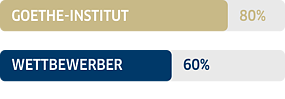
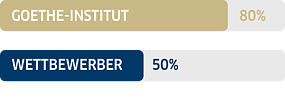
Dabei setzen wir auf fast 70 Jahre Erfahrung und Engagement: Wir arbeiten eng mit Wissenschaft und Forschung zusammen, sind Partner in wichtigen Sprachprojekten, vertrauen auf Erprobtes und setzen zugleich wichtige Impulse in der innovativen Sprachvermittlung. Mit unserem systematischen Qualitätsmanagement im Vier-Jahres-Zyklus sorgen wir für hohe Unterrichtsqualität, verlässliche Standards und die kontinuierliche Weiterentwicklung unserer Angebote.
Zudem ist die Weiterempfehlungsquote deutlich höher als bei unseren Mitbewerbern. Denn wir setzen auf das, was unseren Kursteilnehmenden wichtig ist: engagierte Lehrkräfte, kleine Kurse, eine anregende Arbeitsatmosphäre, fundierte Inhalte und Methoden sowie ein strenges Qualitätsmanagement. Das alles machen wir, damit Sie Deutsch lernen. Garantiert.
Qualitätsversprechen 2 Unsere Lehrkräfte

Unsere Lehrkräfte sind bestens qualifiziert




Qualitätsversprechen 3 Lernumgebung

Mediotheken
In unseren Mediotheken vertiefen Sie effektiv Ihre Sprachkenntnisse und tauschen sich mit anderen Kursteilnehmenden aus. Es stehen Ihnen kostenloses WLAN, PCs und eine reiche Auswahl an Medien für alle Sprachniveaus zur Verfügung – von Wörterbüchern über Belletristik bis zu aktuellen Tageszeitungen und Filmen.
Jede Mediothek besteht aus vier Zonen:

Qualitätsversprechen 4 Kursmodell

ERFORDERLICHE Kurse PRO SPRACHNIVEAU
Nach dem Gemeinsamen Europäischen Referenzrahmen für Sprachen
Die Anzahl der Unterrichtsstunden, die man in der Regel braucht um ein Niveau zu erreichen und das entsprechende Goethe-Zertifikat abzulegen, beruhen auf Erfahrungswerten. Individuelle Faktoren wie die Sprachlernerfahrung und die Muttersprache spielen dabei eine wichtige Rolle. Um einen optimalen Lernerfolg zu ermöglichen, werden Sie vor Kursbeginn von uns eingestuft.
Mit unserem bewährten, modularen Kursmodell lernen Sie Deutsch. Garantiert.


Die Goethe-Garantie
-
Individuelle Einstufung in die passende Niveaustufe (online oder vor Ort)
-
Freude am Lernen und Erfolgserlebnisse durch homogene Lerngruppen und intensive Förderung
-
Familiäre und sichere Atmosphäre durch optimale Kursgrößen mit max. 16 Teilnehmenden (18 Teilnehmende bei Online-Kursen)
-
Aktives Lernen mit allen Sinnen: Hören, Lesen, Schreiben und Sprechen
-
Anwendung der Sprache in vielfältigen Situationen in Alltag, Beruf und Studium durch kommunikative Aufgaben und Projekte
-
Lehrinhalte nach dem Gemeinsamen Europäischen Referenzrahmen für Sprachen