MediaCon
The journalism
we want
10-11 Oct 25

Gif über die Journalismustreffen MediaCon, die verschiedene Themen des Programms hervorheben. Design: Napperon © Goethe-Institut

GIF dedicated to the journalism talks MediaCon, highlighting the diverse topics of the programme. Design: Napperon © Goethe-Institut

On 10 and 11 October 2025, the second edition of the journalism talks MediaCon will take place at the Goethe-Institut in Lisbon. Under the motto The journalism we want, the aim is to provide food for thought on the current role of journalism in the age of disinformation.

The programme includes panel discussions, talks and masterclasses that offer the opportunity to reflect on the role of journalism in the current context and create possible paths towards ethically responsible quality journalism. At the same time, it also offers the opportunity to explore specific topics such as cultural critic, cross-border journalism or science communication in greater depth for a specialised audience. A Pecha Kucha for project presentations and a media fair round off the programme with free admission.
 

Panel discussion

  • 10.10 | 19:00 | Auditorium | PT/DE

    How technology favours the rise of populist movements in journalism

    The consolidation of large media groups has not only led to new opportunities for collaboration and new target groups, but has also contributed to greater uncertainty. From social networks to news aggregators and artificial intelligence: what challenges does technology pose for journalism today and how can they be met? A debate organised in collaboration with the Friedrich-Ebert-Stiftung Portugal with Joana Gorjão Henriques (Público), Marc Engelhardt (Correctiv) and Vania Baldi (OberCom), moderated by João Ribeiro (Shifter). 

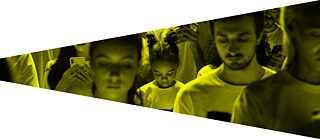
    Group in white shirts with obscured faces, tinted yellow, illustrating the relationship between journalism and populism.

  • 11.10. | 19:00 | Auditorium | PT/EN

    Media literacy in a world beyond the fact-check

    What is media literacy anyway? How can we think beyond the topic of the endless cycle of fake news and fact-checks and reach all sections of the population? A debate organised in collaboration with Creative Europe Portugal, with the participation of Alba Tobella (Verificat), Marta G. Franco (Laintersección) and Margarida Maneta (Universidade Lusófona, CICANT). Moderated by Carolina Franco (Público na Escola).

    Person taking a selfie with a smartphone, in a yellowish tone, symbolizing the importance of media literacy in the digital age.

Talks

  • 10.10 | 11:30 | Auditorium | PT

    Research Grants and Support for Journalism

    What impact do research grants have on supporting critical journalism? A conversation about the challenges faced by professionals working both inside and outside major newsrooms, and the opportunities created by the wide range of available grants and funding programs.

    Hand holding the strap of a black backpack against a yellow background, symbolizing journalists in search of research grants and opportunities in journalism.

  • 10.10 | 17h00 | Library | PT

    Content creators and access to information

    Access to the profession and precarious working conditions in an environment where attention and trust are increasingly shifting to individuals and new entrepreneurs. Should we continue down this path or should we reduce the distance between independent creatives and traditional news organisations to encourage innovative collaborations? A conversation with Joana Guerra Tadeu, Patrícia Barnabé and Ricardo Morais (CITCEM/LabCom), moderated by Catarina Carvalho (Mensagem de Lisboa),

    Sepia-toned profile image highlighting the eye and ear of a person aspiring to be a journalist.

  • 11.10 | 11:30 | Library | PT

    A current outlook on cultural criticism

    The time and attention devoted to the art of cultural criticism in the media is increasingly shrinking. How can criticism influence the work of artists and why are critical contributions in journalism increasingly being marginalised? A conversation with Cláudia Lucas ChéuFilipa Vaz Teixeira and José Paiva, moderated by Miguel Santos.

    Pencil on lined notebook in sepia tone, seen at an angle, suggesting reflective writing tied to cultural criticism

  • 11.10. | 15:00 | Library | PT

    How can regional journalism be saved?

    With the digital transformation, regional journalism has gained in audience and influence. However, despite the ever-increasing number of readers, it is losing more subscribers and advertising investment every year. Together with Patrícia Fonseca (Médio Tejo), Pedro Jerónimo (LabCom) and Nuno Francisco (Jornal do Fundão) will enter into dialogue and discuss the extent to which regional journalism can (still) be saved.

    A person holding a camera in a shooting stance, in sepia tone, embodying the world of photojournalism.

  • 11.10 | 17:00 | Library | PT

    The role of photography in the creation of narratives

    The visual character of every statement, every report or every piece of information has become increasingly relevant and closer to the reader. How can photojournalism intervene or offer resistance? What role does photography play in an era of rapid technological development? A conversation with Bárbara Monteiro (Associação Narrativa), Fátima Lopes Cardoso (ESCS) and Reinaldo Rodrigues (Diário de Notícias), moderated by Ana Sofia Paiva (ICNOVA / ObiMedia).

    Person holding a camera in a shooting pose, in sepia tone, evoking the world of photojournalism.

Masterclasses

  • 11.10 | 10:00 | Room 1 | PT

    Science communication: Bridges to the academic world

    This masterclass with Joana Lobo Antunes is specifically aimed at journalists and journalism students who want to deepen their knowledge of reporting on scientific topics and improve their interaction with the academic community.

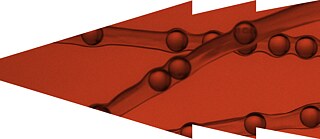
    Connected spheres on a red background, representing networks, science communication and journalism.

  • 10.10 | 14:00 | Room 1 | PT

    Cross-border journalism: What's next?

    Cross-border journalism can play an important role in promoting transparency and accountability of governments and institutions. What are the specificities of this type of journalism? How can investigations be carried out in a network? A masterclass with Paulo Pena.

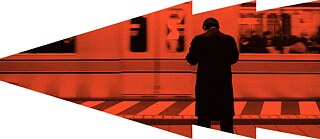
    Person on a platform with a moving train in red tones, evoking cross-border journalism and mobility.

  • 11.10. | 14:00 | Room 1 | PT

    How does the editorial office of a university radio station work?

    How is the editorial team of a university radio station organised today? What role can it play in critical education and in promoting a more pluralistic, participatory and public interest-orientated journalism? A Masterclass with Isabel Marques, news director at Rádio Universitária de Aveiro.

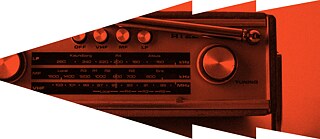
    Old radio in red tones with dial and buttons, representing a university radio nowadays

Side Programm

  • 10.10. | 15:00 | Library | PT

    Pecha Kucha

    Short presentations showcasing innovative projects in the field of journalism — from early-stage prototypes to well-established initiatives. In just 20 slides, we get to discover some of the most exciting projects driving journalism forward today.

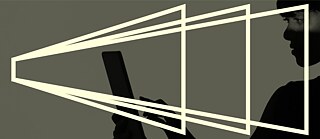
    A hand interacting with a tablet, inviting participation in a Pecha Kucha session showcasing independent journalism initiatives promoted by MediaCon.

  • 10.-11.10. | 10:00 - 18:00 | Foyer

    Media fair

    A media fair featuring independent journalism publications, bringing together a diverse range of editorial projects committed to critical and pluralistic information.

    Image of rolled-up newspapers with overlapping geometric shapes, evoking the atmosphere of a fair focused on independent journalism.

Organization

With the support of

Parceria Media

Follow us