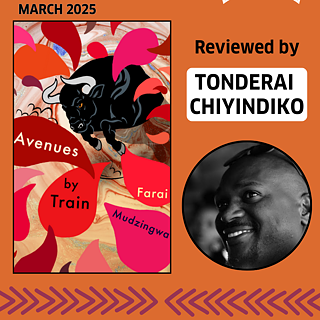
Farai Mudzingwa’s debut novel, Avenues By Train set predominantly present-day Zimbabwe, but with some parts of the narrative taking place in precolonial through to colonial times, is an ambitious and expansive novel which traces the country’s history through the central character of Jedza, his childhood friends Takunda and Dalitso, sister Natsai and several others who at one point or another interact with each other over the course of the story.
The story is not told in the beginning-middle-end structure which most novels follow, but rather fluidly oscillates between present day and the past, between the natural and supernatural worlds, between the realm of reality and dreams, in-between spaces inhabited by humans and other non-human characters such as njuzu, vadzimu and mashavi. This technique and subsequent structure of the novel allows the story to proceed in a non-linear way which further solidifies the idea that worlds are intertwined and therefore constantly clashing as evidenced by how characters consult either prophets, traditional healers or elders on matters of the day which often are connected to past events, which, unresolved, have an impact mostly negative on the trajectory of one’s life. These beliefs are not uncommon and form a key part of the social structure and dynamics within the Zimbabwean and by extension African societies and demonstrate how the divide between the living and the dead is not as in other cultures hence the stories of each of the characters are connected whether in present day or through some past encounters between their ‘ancestors’.
This world is often not fully understood and at times would even be referred to as occult, characterized by witchcraft and other malevolent forces which Mudzingwa weaves together to create a rich, compelling and colourful world of his novel.
The part of music
Mudzingwa draws upon and expertly utilizes the rich musical tradition of Zimbabwe from Thomas Mapfumo’s Chimurenga music to the more recent Zim-Dancehall (where he references the musician Killer T) which tells stories of the struggles of urban youths as they pursue dreams unfulfilled, to the township melodies of Tanga wekwa Sando, the sobering lyrics off Leornard Zhakata and many others. The traditional, deeply spiritual and cultural sounds of other prominent artists like Mbuya Stella Chiweshe typified by the mbira, marimba, ngoma and hosho give the story a powerful soundtrack as the lyrics often speak of social ills, connections or lack thereof to ancestors and those from the other realm as well as the cyclical nature of African life.
Avenues By Train a welcome addition to Zimbabwe’s literary milieu and showcases the talents of an author who is deeply engaged with his country and its society.
About the reviewer
Tonderai Chiyindiko
Tonderai Chiyindiko is a voracious reader who is addicted to the intoxicating smell of new books and loves attending book launches (because of the free-flowing wine, cheese and snacks). He lives and works in Johannesburg.
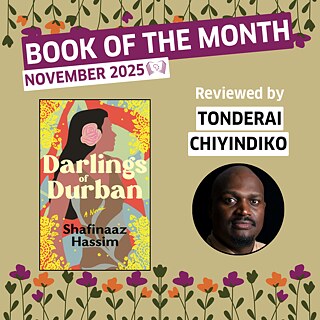
Darlings of Durban by sociologist-turned-author Shafinaaz Hassim follows the story of four women, who affectionately refer to themselves as the “darlings” as they navigate the complexities of family life, strict religious practices, suffocating cultural expectations, complicated relationships, broken marriages, debilitating financial struggles and many other challenges whilst belonging to and living in and among the Indian community of Durban.
Period Pain is an epistolary and intimate novel of a nation in crisis. It tells the story of Masechaba, a young black doctor struggling to survive in an under-resourced South African public health system while grappling with personal trauma, endometriosis, and living in a dysfunctional country.
The Comrade’s Wife by Barbara Boswell is a riveting tale of love, lust, marriage, politics, devotion, deceit, friendship, courage and so much more told though the eyes of our protagonist, Dr. Anita Fredericks.
Nervous Conditionsis a book that covers imperialism, colonisation, women's rights, and race. The story exposes us to these experiences through the lens of a young black woman from a colonised country.
The wind of Moya which is both real and in some ways a metaphor is omnipresent as through it lives are shaken, truths are unveiled and heavy chests are finally able to reveal.
The works and writings Mariama Bâ are critical and essential because of the unique and underrepresented perspective they give. Her beliefs and experiences are unveiled and communicated through this epistolary novel in the form of a letter.
Avenues By Train a welcome addition to Zimbabwe’s literary milieu and showcases the talents of an author who is deeply engaged with his country and its society.
Piggy Boy’s Blues is a tragedy, its self-discovery, its melancholy put into words. It is graphic. [...] What does it mean to be a man? What does it mean to love? Who do you transform into during moments of violation?