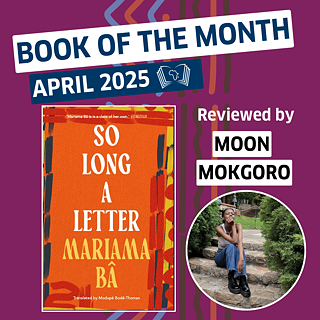
In this book so much is explored in very few words. Bâ writes about being a woman in Africa, polygamous marriage, grief, tradition, liberation, and gender roles. Ramatoulaye’s grief is particularly interesting to readers, especially those living by Western traditions because it unfolds and unravels itself within a deeply traditional and patriarchal society. When speaking about the book, Bâ said “It is first a cry from the heart of Senegalese women, because it talks from the heart of Senegalese women, women constrained by religion and other social constraints that wear them down. But it is also a cry that can symbolise the cry of women everywhere.”
So Long a Letter is an epistolary novel in the form of a letter from Ramatoulaye to her friend, Aissatou. She begins this letter by telling her friend that her husband, Modou, has passed – “My friend, my friend, my friend. I call on you three times. Yesterday you were divorced. Today I am a widow.” She continues by writing about her grief, her mourning period, her past life and her new life. She goes through having to endure and experience grief alongside the woman that her husband betrayed her with, being pursued by other men as soon as the opportunity arises for them – seen as an object devoid of her independence, and her new life as a widow.
Ramatoulaye writes about being a woman in society and in her world. She writes about her emancipation from this androcentric and suffocating world and her belief in the ability of women to free themselves from the constraints that have been forced upon them. The letter goes into Ramatoulaye’s experience of polygamous marriage; “What inner torment led Modou Fall to marry Binetou? And to think that I loved this man passionately, to think that I gave him thirty years of my life, to think that twelve times over I carried his child.” to her views on colonialism and the assimilation into Western culture; “the assimilationist dream of the colonist drew into its crucible our mode of thought and way of life.” And in her recollections about her friend Aissatou’s life, she writes of the stories that inspire her most. In one part, she writes of when Assiatou spoke of racism; “On the strictly physical plane, the white woman’s advantage over the black woman lies in the variety of her colour, the abundance, length and softness of her hair.” Ramatoulaye cherishes friendship; “friendship has splendours that love knows not. It grows stronger when crossed, whereas obstacles kill love. Friendship resists time, which wearies and severs couples. It has heights unknown to love.” She believes in the freedom and liberation of women through education, voting, and being given opportunities to lead; “Women are the nation’s primary, fundamental root, from which all else grows and blossoms.”
The Importance of the Book
The works and writings of African women are critical and essential because of the unique and underrepresented perspective they give. Mariama Bâ’s beliefs and experiences are unveiled and communicated through Ramatoulaye’s letters to Aissatou. She challenges dominant oppressive and traditional views. Stories, real and fictional, are told through her words. In Ramatoulaye's navigation through the world she lives in, the importance of resilience is evident and loud. So Long a Letter is a story and lesson about life. It is about women reclaiming their voices, and about women maintaining their agency. There are so many connections between race, gender, and colonialism and through this short piece of literature, Bâ takes the necessary journey of exploring these intersections.
About the Author
Mariama Bâ was a Senegalese author and is regarded as a feminist (she rejected being labelled a feminist as she felt it was too Western). Born in 1929 under French colonial rule in Senegal, Bâ grew up in a highly patriarchal, racist, and misogynistic society. She was a true "feminist". Her writing had significant undertones of feminism and was heavily influenced by womanhood, justice and gender roles in Africa. Outside of her writing, she founded Cercle Fémina, a feminist organisation. Bâ wrote about the plights of women – exploring and telling tales of their struggles and daily lives.
About the reviewer
Moon Mokgoro
Moon Mokgoro studies physics and mathematics and is a writer based in Johannesburg, South Africa. She is the founder of Protest Poster Project, a non-profit organisation focused on fighting against gender based violence and building a library/archive of activist, anarchist and feminist literature. She's written for the Are.na 2023 Annual and others as well as occasionally writing on her Substack. Archiving and documenting, collecting and remembering are what Moon aspires to do in all her work.
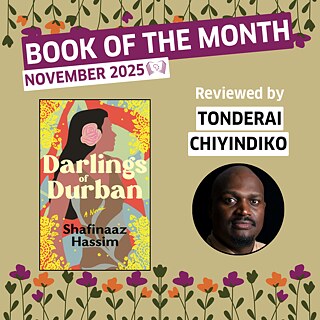
Darlings of Durban by sociologist-turned-author Shafinaaz Hassim follows the story of four women, who affectionately refer to themselves as the “darlings” as they navigate the complexities of family life, strict religious practices, suffocating cultural expectations, complicated relationships, broken marriages, debilitating financial struggles and many other challenges whilst belonging to and living in and among the Indian community of Durban.
Period Pain is an epistolary and intimate novel of a nation in crisis. It tells the story of Masechaba, a young black doctor struggling to survive in an under-resourced South African public health system while grappling with personal trauma, endometriosis, and living in a dysfunctional country.
The Comrade’s Wife by Barbara Boswell is a riveting tale of love, lust, marriage, politics, devotion, deceit, friendship, courage and so much more told though the eyes of our protagonist, Dr. Anita Fredericks.
Nervous Conditionsis a book that covers imperialism, colonisation, women's rights, and race. The story exposes us to these experiences through the lens of a young black woman from a colonised country.
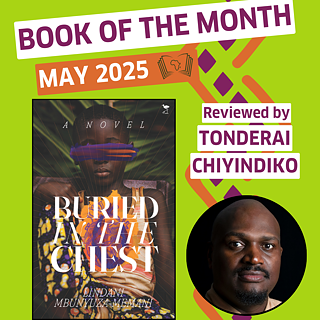
The wind of Moya which is both real and in some ways a metaphor is omnipresent as through it lives are shaken, truths are unveiled and heavy chests are finally able to reveal.
The works and writings Mariama Bâ are critical and essential because of the unique and underrepresented perspective they give. Her beliefs and experiences are unveiled and communicated through this epistolary novel in the form of a letter.
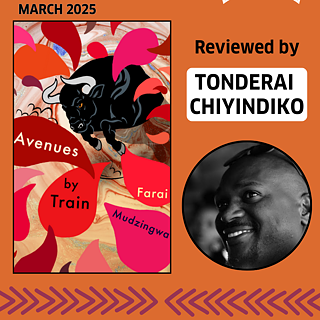
Avenues By Train a welcome addition to Zimbabwe’s literary milieu and showcases the talents of an author who is deeply engaged with his country and its society.
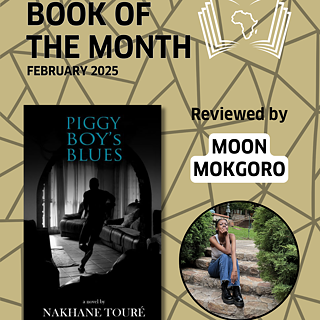
Piggy Boy’s Blues is a tragedy, its self-discovery, its melancholy put into words. It is graphic. [...] What does it mean to be a man? What does it mean to love? Who do you transform into during moments of violation?