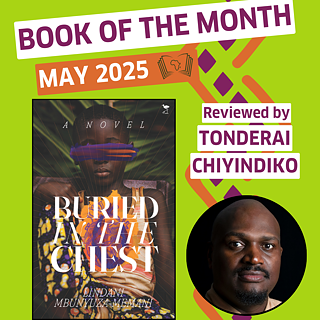
Buried In The Chest, the debut novel by author Lindani Mbunyuza-Memani which won the prestigious the 2024 Dinaane Debut Fiction Award organized by the Jacana Literary Foundation (JLF), is a layered and introspective novel which explores some heavy themes in a deeply personal yet profoundly humane way.
In creating this character-driven narrative, Mbunyuza-Memani unravels and explores what happens to a community, its inhabitants and by extension a country when what needs to be said is not and becomes a silent yet visible burden to those who carry that knowledge, which morphs into an excruciating longing for those who wish to know that truth.
Buried In The Chestis largely set in post-Apartheid South Africa and reflects on among other things the country-wide hearings of Truth and Reconciliation Commission (TRC) hearings which were chaired by the late Archbishop Desmond Tutu, and the triumphant release of Nelson Mandela to become the first democratically elected President of South Africa.
The novel is littered with anecdotes of burying, of things buried and of things hidden away from sight and from being known, and there is not a more prominent depiction of this as the following: "The people of Moya were who they were, lived how they lived. They buried their old in the ground and mothers in their chests."
Through the relatable, everyday man-on-the-street characters of Unathi, her childhood friend Bongeka, her estranged mother Mavis, Gogo, Mr. Buso, Ms. Mvezo and many others, the motif of things buried is a motif which runs though the novel as it is lived by and experienced by each of those characters in the world of the novel.
The Proximity Fiction and Reality
The brokenness of the community of Moya, where it is said mothers are not present for one reason or another, though fictitious in the novel is a lived experience and reality of the precarious lives of black people, men forced to the mines and mothers to the white suburbs to fend for their families. This displacement and destruction of the African family unit is something whose effects are still being felt today as a stubborn legacy of the Apartheid project.
The wind of Moya which is both real and in some ways a metaphor is omnipresent as through it lives are shaken, truths are unveiled and heavy chests are finally able to reveal what for years had lain hidden though this does not mean that all answers are given or welcome. It simply allows characters like Unathi and her new love Gerald some closure and a way to live without having to bury anything in their chests as those before them had done.
About the reviewer
Tonderai Chiyindiko
Tonderai Chiyindiko is a voracious reader who is addicted to the intoxicating smell of new books and loves attending book launches (because of the free-flowing wine, cheese and snacks). He lives and works in Johannesburg.
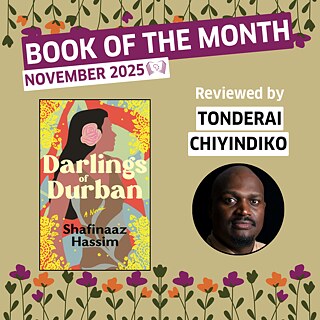
Darlings of Durban by sociologist-turned-author Shafinaaz Hassim follows the story of four women, who affectionately refer to themselves as the “darlings” as they navigate the complexities of family life, strict religious practices, suffocating cultural expectations, complicated relationships, broken marriages, debilitating financial struggles and many other challenges whilst belonging to and living in and among the Indian community of Durban.
Period Pain is an epistolary and intimate novel of a nation in crisis. It tells the story of Masechaba, a young black doctor struggling to survive in an under-resourced South African public health system while grappling with personal trauma, endometriosis, and living in a dysfunctional country.
The Comrade’s Wife by Barbara Boswell is a riveting tale of love, lust, marriage, politics, devotion, deceit, friendship, courage and so much more told though the eyes of our protagonist, Dr. Anita Fredericks.
Nervous Conditionsis a book that covers imperialism, colonisation, women's rights, and race. The story exposes us to these experiences through the lens of a young black woman from a colonised country.
The wind of Moya which is both real and in some ways a metaphor is omnipresent as through it lives are shaken, truths are unveiled and heavy chests are finally able to reveal.
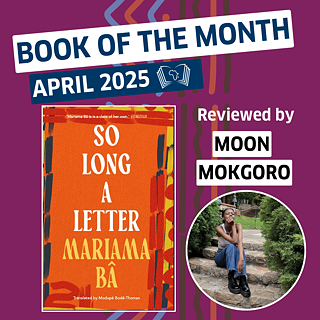
The works and writings Mariama Bâ are critical and essential because of the unique and underrepresented perspective they give. Her beliefs and experiences are unveiled and communicated through this epistolary novel in the form of a letter.
Avenues By Train a welcome addition to Zimbabwe’s literary milieu and showcases the talents of an author who is deeply engaged with his country and its society.
Piggy Boy’s Blues is a tragedy, its self-discovery, its melancholy put into words. It is graphic. [...] What does it mean to be a man? What does it mean to love? Who do you transform into during moments of violation?