Not A Hidden Treasure: The Heidelberg Bibliotheca Palatina Is Online

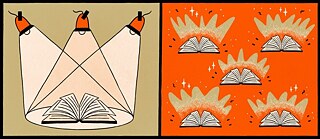
With the online version of the Heidelberg Bibliotheca Palatina, one of the finest collections of German manuscripts of the Middle Ages and early modernity has now been fully digitalized and made easily accessible on the Internet.
Only a few years ago anyone who wanted to have a look at one of the Palatina’s German manuscripts had to have a good reason – such as an urgent research objective. Only a few researchers were permitted to take one of the precious manuscripts from the air-conditioned vaults of the University Library of Heidelberg in order to inspect it more closely.
“Before, maybe twice a month a recognized scholar was given access to one of our manuscripts”, explains Maria Effinger, Head of the Department of Manuscripts and Rare Books of the online University Library of Heidelberg. Today, she says, the holdings are accessed over 8,000 times monthly. “Any researcher as well as any interested layman can now view all the marvelous details of the manuscripts at any time on any Web-connected computer.”
Sensitive valuables in the safe
The digitalization of the Bibliotheca Palatina began in 1999 with a project application to the German Research Foundation. “Back then it was still difficult to put through the idea of digitalizing manuscripts”, remembers Effinger. First, critics were concerned that the fragile codices could be harmed by the physical stress of digitalization and the influence of light. And then there was considerable mistrust of the new form of presentation.
“A lot of persuasion was needed to create a paradigm shift”, says Effinger. “Fortunately, today a medieval manuscript is no longer seen as property in a vault that remains invisible to the normal library user.”
Careful digitalization
Since mid-2009, the 848 codices of the Palatini germanici have been made accessible on the Internet. The famous collection of books provides rich source material for a variety of disciplines. It includes the Heidelberg Sachsenspiegel and the Codex Manesse, but also biblical texts, medical treatises and much more.
In a project funded by the Manfred Lautenschläger Foundation, in just three years a total of approximately 270,000 pages and approximately 7,000 miniatures were digitalized and prepared for online use. In the Heidelberg University Library Digitalization Center, two high-resolution digital cameras scanned the manuscripts page for page. The work was performed on camera tables following the “Grazer Model”. Using this method, manuscripts can be digitalized very carefully because the original remains untouched during scanning.
After digitalization, the images were converted into TIFF format, the technical standard for long-term archiving, and processed so that the colors corresponded as closely as possible to the original.
Presentation with attention to detail
The online presentation of the digitalized pages leaves little to be desired. A preview function allows rapid orientation within a manuscript. Each page can be magnified several times by a zoom function, so that all the details – such as those necessary for a detailed analysis of illuminations or barely legible text – become visible. Each page can be printed out, and each manuscript can be loaded as a pdf file to the user’s computer. The manuscripts are also accompanied by a scholarly description containing information about their structure, the scribe, their provenance and book decoration.
In addition, in the course of the project all 7,000 miniatures in the Palatina manuscripts were precisely described. Today they can be researched online – for example, according to key words, iconographic motifs, authors and text groups – using the Heidelberg image database HeidICON.
Visible in the whole world
The Heidelberg University Library stresses that its digital offering is well networked. Its manuscripts are integrated not only into the national research tool Manuscripta mediaevalia, but also into international projects such as MICHAEL (Multilingual Inventory of Cultural Heritage in Europe) and the European Digital Library EUROPEANA.
“It’s great that we’ve succeeded in bringing these treasures unharmed out of the vaults and into the light and made them available in such good quality to everyone”, says Maria Effinger. “The considerable amount of positive feedback we’ve received shows that scholars all over the world are enthusiastic that they can now explore our manuscripts without applications, without traveling and without gloves.”
is a freelance journalist living in Bonn.
Translation: Jonathan Uhlaner.
Copyright: Goethe-Institut Online-Redaktion
February 2010
Any questions about this article? Please write to us!
online-redaktion@goethe.de