|
7:00 PM
Colonial Architecture in Tianjin
Lecture|A Lecture by Dr. phil. PD habil. Michael Falser, in collaboration with the Austrian Consulate General in Hong Kong
-
Library, Goethe-Institut Hongkong, Hong Kong
- Language English
- Price Free admission. Registration required.

Goethe-Institut Hongkong is pleased to collaborate with the Austrian Consulate General in Hong Kong in inviting Dr. phil. PD habil. Michael Falser, Austrian architectural historian currently teaching in Germany, to give a lecture on "The whole world in China? The International Settlement of Tientsin/Tianjin and the Austro-Hungarian Concession then and now (1901-1917-2020)" at the Library of the Goethe-Institut on May 31, 2023 (Wed) at 7:00pm. Admission is free but registration is required.
REGISTER NOW: Talk: Colonial Architecture in Tianjin - Goethe-Institut Hong Kong (forms.gle)
Michael Falser researches and teaches theory and history of architecture and art at the Technical University of Munich and focuses primarily on global and colonial contexts. In his new publication "Habsburgs going global" (published by the Austrian Academy of Sciences), he examines the hitherto little-known participation of the late Imperial and Royal Monarchy in the "International Settlement" in the "International Settlement" of Tientsin (today Tianjin/China), where Austria-Hungary planned its own trading settlement ("concession") from 1900 onwards, before the First World War brought this episode to an abrupt end.
At the presentation at the Goethe-Institut Hongkong, Michael Falser will discuss the urban architectural concept and the implementation of the Austro-Hunganrian Concession. In addition, he will present the strategies of today's Tianjin city government, which is trying to value the architectural relics of the former imperialist era as Chinese cultural heritage.
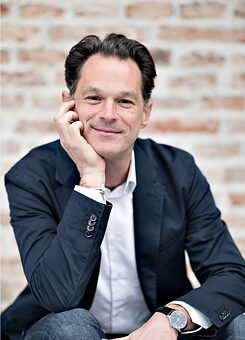
MICHAEL FALSER
Michael Falser studied architecture and art history in Vienna and Paris, and did his PhD on the political history of monument conservation in Germany at the TU Berlin. Until 2018, he was project leader at the Chair of Global Art History within the DFG-Cluster of Excellence "Asia and Europe in a Global Context" at the University of Heidelberg, where he habilitated on the transcultural history of heritage of the temple of Angkor Wat/Cambodia (De Gruyter 2020). After visiting professorships at the universities of Tokyo, Bordeaux, Paris-Sorbonne, Heidelberg and Vienna, he has been a DFG Heisenberg Fellow at the TU Munich since 2020 with a research project on German colonial architecture.
REGISTER NOW: Talk: Colonial Architecture in Tianjin - Goethe-Institut Hong Kong (forms.gle)
Michael Falser researches and teaches theory and history of architecture and art at the Technical University of Munich and focuses primarily on global and colonial contexts. In his new publication "Habsburgs going global" (published by the Austrian Academy of Sciences), he examines the hitherto little-known participation of the late Imperial and Royal Monarchy in the "International Settlement" in the "International Settlement" of Tientsin (today Tianjin/China), where Austria-Hungary planned its own trading settlement ("concession") from 1900 onwards, before the First World War brought this episode to an abrupt end.
At the presentation at the Goethe-Institut Hongkong, Michael Falser will discuss the urban architectural concept and the implementation of the Austro-Hunganrian Concession. In addition, he will present the strategies of today's Tianjin city government, which is trying to value the architectural relics of the former imperialist era as Chinese cultural heritage.
MICHAEL FALSER
Michael Falser studied architecture and art history in Vienna and Paris, and did his PhD on the political history of monument conservation in Germany at the TU Berlin. Until 2018, he was project leader at the Chair of Global Art History within the DFG-Cluster of Excellence "Asia and Europe in a Global Context" at the University of Heidelberg, where he habilitated on the transcultural history of heritage of the temple of Angkor Wat/Cambodia (De Gruyter 2020). After visiting professorships at the universities of Tokyo, Bordeaux, Paris-Sorbonne, Heidelberg and Vienna, he has been a DFG Heisenberg Fellow at the TU Munich since 2020 with a research project on German colonial architecture.
Location
Library, Goethe-Institut Hongkong
14/F Hong Kong Arts Centre, 2 Harbour Road, Wanchai
Hong Kong
China
14/F Hong Kong Arts Centre, 2 Harbour Road, Wanchai
Hong Kong
China