


“Etiology” questions the meaning of “heritage” from the perspective of a sound artist. Since heritage is not an innate quality but instead emerges from discursive practices, it is both a source of identity and a receptacle of the value, as bestowed by communities, institutions and people.
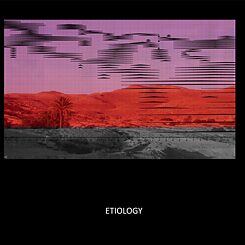
In “Etiology” Rehab Hazgui employs a track called “Ouyounik Soud عيونك سود” from the Tunisian sound archive, “Centre of Arab and Mediterranean Music (CAMM) / Ennejma Ezzahra.” The track features the powerful sounds of the gasba (an open-mouthed oblique reed flute), which, in popular practice across Tunisia, brings the villagers together in ecstatic dance. This ritual left a life-long impression on the artist, and has been a part of her memory since childhood.
In Etiology, Rehab Hazgui uses a personal approach, layering “Ouyounik Soud عيونك سود” with archival field recordings from southeastern Tunisia (Tatounise), taken by German ethnomusicologist Wolfgang Laade in 1960. Laade’s recording is a gasba improvisation accompanied by vocals and the bendir (a percussive instrument), all played over the rhythm “Bounawara.” Bounawara is a popular rhythm that has been ingrained in Tunisian memory and is usually accompanied by a dance with the same name. As such, this recorded improvisation brings together the three basic components of popular (folk) Tunisian songs: vocals, instruments, and rhythms, all accompanied by dance.
Mesmerized by the repetitive, structured and often danceable sounds of the gasba (reed instrument), Hazgui also adds synthetic horn, inspired by Pierre Schaffer’s “sound marks.” This hints at Western music and creates a transition into another atmosphere.
Duration: 3:11
Producer: Rehab Hazgui
Field Recordings: Wolfgang Laade
Instruments: gasba, bandir, synthesizers, vocals
Date of original composition/work: Field recordings from 1960
Recorded: August 2021
Lyrics: n/a
The Why Behind the Music
For me, “heritage”, the concept that was at the heart of this musical exploration, is loaded with unpleasant connotations. This is due to the word’s almost mythical status. Referring to traditions, roots, and folk, the term has a broad and malleable use. Anyone can claim heritage for themselves, as one person’s “heritage” may be another’s “pop song.”
In this project, I took a personal approach, exploring what the term means through music, especially because I believe that individual heritage differs from that of the group. The personal experience of the concept can be just as valid, as it is lived through family memories, space, place, and practice. It manifests through music production, instrumentation, methods of performance, and deeper concepts related to sounds. All of these aspects involve interactions and experiences. Hence, for me, heritage is something you make, and it is constantly changing and evolving.
In some countries ”authentic” musical heritage is perceived to be under threat, because of the ongoing changes being experienced. However, the idea of a work’s “authenticity” acquires a fetishistic quality, in comparison to the basic sense of being faithful to the idea of self within culture. Heritages are built on interactions between the self, place, time, experiences, and people. Sound helps to capture and communicate these complexities, and to bring forward the unique characteristics that emerge when these various aspects and elements are joined. This puts us as sound-artists on a wider cultural and sonic continuum.
My approach for this project is built on fluidity and on openness to the changing nature of sounds, heritage, and the role of the individual within the group. My two works build on Tunisian vocal heritage, as vocal music can be both the voice of the culture it relates to and the voice of the individual who is singing.
November 2021