Nervous Conditions is a book that covers imperialism, colonisation, women's rights, and race. The story exposes us to these experiences through the lens of a young black woman from a colonised country. An important point of view, particularly for this kind of story, as she faces sexism, racism and hatred. It elicits necessary questions in the reader's mind. It forces us to sit with the idea, and possibly fact, that we have been told and instructed on who to be and how to be.
It is a coming-of-age story about Tambudzai, a girl in 1960s Rhodesia. She believes that education will be the key to escaping the poverty and oppression she, as a young black girl, faces – oppression and imperialism in a racist and patriarchal society. The death of her brother, an event that she informs us of at the beginning of the book with “I was not sorry when my brother died,” leads to the rest of Tambu’s life and the journey she faces alongside her cousin Nyasha. Nyasha exposes Tambu to ideas and concepts that were concealed from her through growing up in the way that she did. Tambu faces many challenges, as does Nyasha. Both are experiencing traumas like the shattering of a world you knew and understood, and psychiatric illness. Through her new life, Tambudzai challenged racist and patriarchal views –
“My mother said being black was a burden because it made you poor, but Babamukuru was not poor. My mother said being a woman was a burden because you had to bear children and look after them and the husband. But I did not think this was true.” Tambu was curious and passionate. She wanted to be free.
What we can learn from the story
Tsitsi Dangarembga shows us that patriarchal, colonial concepts, beliefs and ideas have been ingrained into us. We unknowingly subscribe to these concepts, and we accept them and at times, desire them as we want to fit in. She writes, "It’s bad enough when a country gets colonised, but when the people do as well! That’s the end, really, that’s the end."
The Author
Dangarembga is a Zimbabwean writer, activist, and filmmaker. She’s won multiple awards, including the “Commonwealth Writers Prize” for Nervous Conditions. Through her activism and writing, Dangarembga has been thought of as one of the most influential writers of our current times.
About the reviewer
Moon Mokgoro
Moon Mokgoro studies physics and mathematics and is a writer based in Johannesburg, South Africa. She is the founder of Protest Poster Project, a non-profit organisation focused on fighting against gender based violence and building a library/archive of activist, anarchist and feminist literature. She's written for the Are.na 2023 Annual and others as well as occasionally writing on her Substack. Archiving and documenting, collecting and remembering are what Moon aspires to do in all her work.
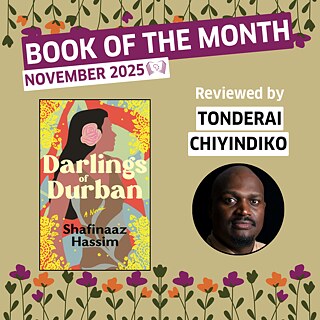
Darlings of Durban by sociologist-turned-author Shafinaaz Hassim follows the story of four women, who affectionately refer to themselves as the “darlings” as they navigate the complexities of family life, strict religious practices, suffocating cultural expectations, complicated relationships, broken marriages, debilitating financial struggles and many other challenges whilst belonging to and living in and among the Indian community of Durban.
Period Pain is an epistolary and intimate novel of a nation in crisis. It tells the story of Masechaba, a young black doctor struggling to survive in an under-resourced South African public health system while grappling with personal trauma, endometriosis, and living in a dysfunctional country.
The Comrade’s Wife by Barbara Boswell is a riveting tale of love, lust, marriage, politics, devotion, deceit, friendship, courage and so much more told though the eyes of our protagonist, Dr. Anita Fredericks.
Nervous Conditionsis a book that covers imperialism, colonisation, women's rights, and race. The story exposes us to these experiences through the lens of a young black woman from a colonised country.
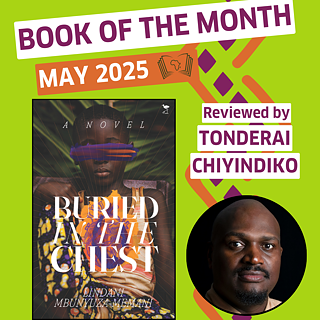
The wind of Moya which is both real and in some ways a metaphor is omnipresent as through it lives are shaken, truths are unveiled and heavy chests are finally able to reveal.
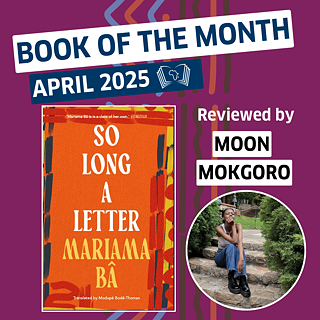
The works and writings Mariama Bâ are critical and essential because of the unique and underrepresented perspective they give. Her beliefs and experiences are unveiled and communicated through this epistolary novel in the form of a letter.
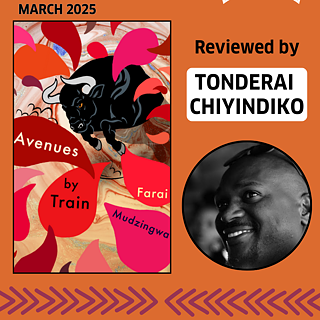
Avenues By Train a welcome addition to Zimbabwe’s literary milieu and showcases the talents of an author who is deeply engaged with his country and its society.
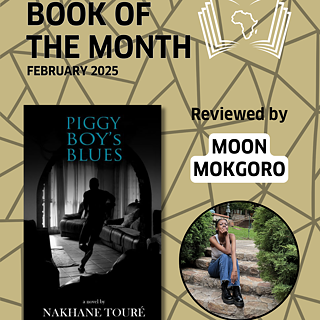
Piggy Boy’s Blues is a tragedy, its self-discovery, its melancholy put into words. It is graphic. [...] What does it mean to be a man? What does it mean to love? Who do you transform into during moments of violation?