Collective Forms of Care

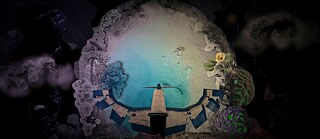
Dam and Hofit © Gali Blay, Leila Zelli

In a world increasingly marked by divisive and offensive language amplified by public figures and social media, an important question is how targeted communities respond: by resisting discrimination, imagining more equitable futures, fostering empathy, sharing their lived struggles, and countering division. This selection of works encourages thoughtful reflection on such hostility.

Curatorial essay

In an increasingly divided world where racist, sexist, and offensive language have returned to the public sphere in the posts and speeches of public figures, politicians, and anyone with a social media account that can easily gain popularity precisely by using inflammatory language, a key question is how communities whose bodies and identities are often targeted have and continue to: (1) oppose discrimination; (2) propose alternatives to build more equitable worlds; (3) call us to develop empathy; (4) share their struggles to coexist in worlds that oppress them for who they are; and (5) counter the divisiveness we experience online and offline these days. This selection of works invites reflection on a hostile world in a productive way. As a racialized woman who immigrated to Montreal twenty years ago, I have personally found comfort from strangers and friends alike, especially during tough times. People have shown me solidarity when I least expected it, so thinking about this, I ventured into finding work by artists based in Germany to explore how they care for each other and build communities.
 

Erandy Vergara-Vargas, Curator
 
Erandy Vergara-Vargas

Erandy Vergara-Vargas | © Émilie Tournevache

Erandy Vergara-Vargas (MX/CA)

curates, teaches and writes on contemporary and media arts. She is Assistant Professor in the École des médias, UQAM. Her main research interests include climate responsibility, equity, internet cultures, human-machine interactions, and widespread bias in algorithms. She earned a MA at Concordia University and a PhD in Art History at McGill University. Recent shows include Through Secrets: The Art of Creating Spaces Between the Lines (Maison de la culture Côte-des-Neiges, 2022-23); Eco(Systems) of Hope (MTL Connect exhibition at Anteism Books, 2022) and Eva and Franco Mattes: What Has Been Seen (Fondation Phi pour l’art contemporain, 2020).

https://erandyvergara.art/


The works and the artists

  • Artist: Sondi | From June 15 to July 5, 2026

    "Home 404"

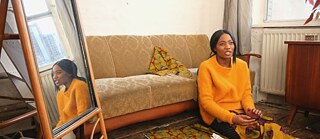
    The video installation Home 404 is an imaginative and visual memoir of “home” suggesting it could be a non-space that is dynamic and in flux, constructed by history, language, culture, music, time, and, above all, memory.

    Home 404 by Sondi © Sondi | Courtesy of the Artist © Sondi | Courtesy of the Artist

  • Artist: Isaiah Lopaz | From July 6 to July 26, 2026

    "Wake Up"

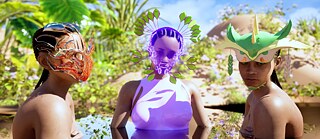
    Wake Up, is the result of a collaboration between artist Isaiah Lopaz and New Past, a collective of sound artists. The song consists of a complex layering of instrumentation, including bass, drums, piano, organ, percussion, synth bass, trumpet, and vocals.

    "Wake Up" by Isaiah Lopaz (Music by New Past) © Isaiah Lopaz | Courtesy of the Artist © Isaiah Lopaz | Courtesy of the Artist

  • Artist: Nnena Onuoha | From July 27 to August 16, 2026

    "Rituals"

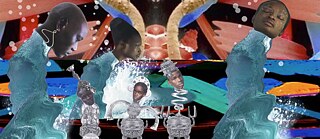
    Centering the embodied experiences of Black and queer folks, Nnenna Onuoha’s Rituals examines care as a vital tool for community growth and strength.

    Nnenna Onuoha: "Rituals" Courtesy of the artist Courtesy of the artist

  • Artists: Gali Blay & Leila Zelli | From August 17 to September 6, 2026

    "About Dam and Hofit"

    About Dam and Hofit is the story of the forbidden friendship between Dam, the tip of mount Damavand in Iran and Hofit, an air force plane from Israel. Their unexpected encounter dares them to reimagine a friendship against all odds.

    "About Dam and Hofit" by Leila Zelli and Gali Blay | 2300 x 1000 px © Gali Blay & Leila Zelli | Courtesy of the Artists © Gali Blay & Leila Zelli | Courtesy of the Artists