Elemental Imprints
Bio Design Lab South Asia

Elemental Imprints – Bio Design Lab South Asia © Goethe-Institut

About The Project

Biodesign recognizes life as an interconnected web and encourages design practices that work with ecological systems rather than exploiting them. By viewing materials as part of living, dynamic systems, the project promotes creative approaches that value symbiotic relationships between nature, technology, and culture, aiming to support balanced and respectful coexistence with the environment.

Elemental Imprints: Bio Design Lab South Asia addresses pressing environmental, economic, and social challenges across South Asia by exploring sustainable, non-extractive uses of undervalued local resources such as invasive plants, agricultural byproducts, algae, and industrial waste. Through a multidisciplinary collaboration involving designers, scientists, craftspeople, engineers, architects, and humanities scholars, it seeks context-specific solutions rooted in local cultures and ecosystems while informed by global perspectives. Its objectives include transforming overlooked resources into valuable materials, building collaborative networks between South Asian and international experts, fostering innovative design processes, and establishing a Resource Center to share knowledge through a public material library, prototypes, and publications.

A project initiated by Goethe-Institut South Asia in collaboration with the Bio Design Lab at the Karlsruhe University of Arts and Design (HfG) and conducted in Sri Lanka in partnership with the Department of Integrated Design, University of Moratuwa and Kälam.
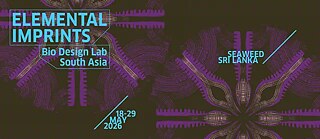
THE SRI LANKA LAB — SEAWEED


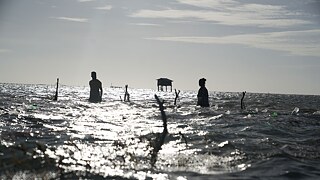
Seaweed is far more than a simple marine vegetation abundantly growing in the seas around Sri Lanka — it is a powerhouse of unique properties with immense potential. Unlike land plants, seaweed requires no freshwater, fertilizer, or fertile soil to thrive, growing faster than terrestrial crops. Its natural ability to absorb carbon dioxide and excess nutrients makes it a vital tool for mitigating ocean acidification and eutrophication. Rich in bioactive compounds like alginates, seaweed has many underutilized healing properties.  From regenerating marine ecosystems to replacing fossil-based materials, seaweed’s versatility makes it a promising blue resource to explore further. The lab invites participants to work with seaweed at the intersection of biology, design, and architecture. Through hands-on experimentation — growing, molding, observing, and co-creating with seaweed systems — participants will explore what it means to design alongside a living organism that does not follow instructions. What kinds of forms, structures, and ways of thinking become possible when growth itself is the method and structure? What happens when the material has agency? What kinds of designs emerge when control is shared with a living system?

Working with local partners, the lab will examine how seaweed networks can support circular, low-impact production and regenerative material systems. It will also open broader questions about material agency, ecological thinking, and alternative design philosophies grounded in the evolving relationship between humans and living matter.
What Guides The Lab


The following principles are not rules — they are the shared ground from which the lab operates.

  • Process over product. The lab values experimentation, negotiation, and honest failure as outcomes. What is learned in the making matters more than what is produced.
  • Listening before intervening. Seaweed grows on its own terms. So does a community, an ecosystem, a knowledge system. The lab begins with careful observation.
  • Non-extractive collaboration. The lab enters relationships based on agreement, mutual learning, and shared responsibility — with local communities, knowledge holders, and the material itself.
  • Material-led thinking. Seaweed is not a blank medium to be shaped to our ends. It is an agent that will shape the imagination, ethics, and form of what participants make.
  • Collective authorship. Outcomes are shared. Individual credit is secondary to the integrity of the collective inquiry.
  • Designing with time. The lab embraces change, growth, and the afterlife of materials. Permanence is not the goal.

What The Lab Offers

  • An immersive, field-based research environment working directly with seaweed and local substrates.
  • Hands-on experimentation: growing, molding, testing, and prototyping with living seaweed systems.
  • Structured mentorship from regional and international practitioners in bio design, seaweed, and material science.
  • Collaborative inquiry alongside designers, scientists, architects, craftspeople, and humanities scholars.
  • Field visits and conversations with local stakeholders and ecological communities.
  • Contribution to a shared body of material samples, prototypes, and research documentation that may inform the Travelling Resource Centre and related public outputs in 2027.

Pollinators

  • Violaine Buet

    Violaine Buet is a multidisciplinary designer with a background in humanities. After earning her diploma in industrial design, she developed a deep passion for textiles, which led her to spend several years immersed in traditional craft communities.This hands-on experience strengthened her belief that the true beauty of any design lies in the harmony and respect shared between all the hands involved in its creation. Upon returning to France, she continued her exploration of materials and textiles, eventually focusing her research on seaweed and macro-algae. Today, she runs her own studio dedicated to the creative development of algae-based materials. Violaine collaborates with a network of researchers, experts, and artisans, aiming to transform these ancient marine plants into innovative applications for fine arts, haute couture, scenography, decoration, and industry.
     

    Violaine Buet © Pirainila Krishnarajah © Pirainila Krishnarajah

  • Dr. Kamal Wasala

    Dr. Kamal Wasala is a Senior Lecturer at the Department of Integrated Design, University of Moratuwa. He has a strong interest in seaweed, seeing it as a promising resource that could bring significant economic benefits to Sri Lanka. His research explores seaweed’s properties for developing bio-based materials with good thermal conductivity and heat capacity, particularly for creating wearable thermal clothing. He also wonders how advanced technologies can be used with seaweed. Beyond that, Kamal enjoys working with micro-controllers, product design, human robot interactions, especially their potential for emotional level interactions.
     

    Dr. Kamal Wasala © Pirainila Krishnarajah © Pirainila Krishnarajah

Participants

  • Kanil Dias Abeyagunawardene

    Kanil Dias Abeyagunawardene is a maker, designer and entrepreneur with a current focus on seaweed as a versatile and sustainable resource in product design and making. His exploration with seaweed looks to use it as a composite material specifically in paper-based production, by applying improvised methodology. His goal is to convert seaweed as a base biomaterial in composites that can be used to create everyday objects and products that can be easily integrated into users’ lives, while allowing for the methodology to become open source; particularly for communities involved in seaweed ecosystems as an affordable and easily adoptable process.
     

    Kanil Dias Abeyagunawardene © Pirainila Krishnarajah © Pirainila Krishnarajah

  • Mary Abisha

    Mary Abisha is a seaweed cultivator from Valaippadu who works alongside her family in seaweed farming as their primary livelihood. Through years of experience, she has gained first-hand knowledge in the large-scale growing, harvesting, processing, and distribution of seaweed. She is interested in seeing seaweed used in the production of food products and confectionery through seaweed-derived materials such as agar and carrageenan. Abisha hopes these developments will create greater opportunities for local communities engaged in the industry
     

    Mary Abisha © Tharmapalan Tilaxan © Tharmapalan Tilaxan

  • Shahdia Jamaldeen

    Shahdia Jamaldeen is an architect and artist specializing in modular structures, design-based solutions and creative documentation. Her work explores how explorative material knowledge can translate into meaningful spatial experiences, moving beyond visuals to become an active, integrated part of architecture and design. She is particularly drawn to seaweed and its processed forms, investigating their potential in everyday applications, from architectural elements and functional textiles to sculptural formations. Through hands-on testing of their material properties, she seeks practical ways through design thinking to embed seaweed-based solutions into daily life.
     

    Shahdia Jamaldeen © Pirainila Krishnarajah © Pirainila Krishnarajah

  • Sanali Jayalath

    Sanali Jayalath comes from a background in biomaterial research, with hands-on experience in bacterial fermentation, PHA (polyhydroxyalkanoates) production, and waste valorization, transforming biomass waste into valuable bioplastics. Her research background was guided and inspired by Sr. Professor Ajith de Alwis, an expert in sustainable process engineering and circular economy solutions. She sees science as a fundamentally creative practice, where rigor and imagination work as one. Her work explores biofilms, bioleather biopolymer research, environmentally responsible downstream processes, and biodegradable plastic material innovation. She is especially interested in exploring seaweed as a renewable resource for biopolymer production, including the use of seaweed hydrolysates for PHA-producing bacteria. Her approach also focuses on closed-loop systems that turn waste into worth valorizing residues, reducing extraction pressure, and replacing extractive logic with circular regeneration. Sanali is deeply fascinated  by nature’s intelligence, microbial, ecological, and evolutionary systems, and how humanity can learn from these processes to restore and repair environmental damage created by them. She is particularly motivated to contribute toward addressing two urgent global environmental challenges: plastic pollution and climate change, while exploring how seaweed-based systems may help mitigate them to some extent. She is also interested in the long-term carbon sequestration potential of seaweed, where the movement of seaweed-derived biomass into deep ocean systems can contribute to stable, long-lasting carbon storage.

    Sanali Jayalath © Pirainila Krishnarajah © Pirainila Krishnarajah

  • T. Krishnapriya

    T. Krishnapriya is a visual artist born and raised in Jaffna, surrounded by rich traditions, textures, and visual culture that naturally shaped her artistic sensibilities from a young age. Her practice explores processes such as drawing, staining, soaking, pressing, and imprinting, reflecting her interest in how materials can carry traces of memory, place, and lived experience. Deeply drawn to natural pigments, Krishnapriya is particularly interested in extracting colour from seaweed and experimenting with how these pigments can be integrated into her artistic practice. Through the workshop, she hopes to further explore the possibilities of transforming seaweed into fibre while learning more about sustainable pigment extraction from practitioners working closely with the material.
     

    T. Krishnapriya © Pirainila Krishnarajah © Pirainila Krishnarajah

  • Sivaram Kulendran

    Sivaram Kulendran is a biotechnologist, agribusiness professional, and pioneer of seaweed aquaculture in Sri Lanka working at the intersection of sustainability, blue economy innovation, and community development. With over 15 years of experience in agribusiness, export development, and sustainable aquaculture, he has led multiple seaweed farming and value-addition initiatives across Sri Lanka in collaboration with government institutions, NGOs, and coastal communities. He is independent consultant of several ventures focused on seaweed cultivation, seaweed value added products, sustainable livelihoods, and marine bioresource innovation. His work explores the potential of seaweed in food systems, biomaterials, agriculture, climate resilience, and circular economy applications. Sivaram has represented Sri Lanka at international seaweed & agriculture forums and is passionate about developing scalable, community-centered blue economy solutions for the future.

    Sivaram Kulendran © Pirainila Krishnarajah © Pirainila Krishnarajah

  • Sanjai Madushanth

    Sanjai Madushanth  is a landscape architecture graduate whose work engages with the intersection of ecological systems, community practices, and material innovation, with a particular focus on vulnerable coastal environments. Grounded in observations from Valaipadu, a coastal village in northern Sri Lanka, his research identifies a critical gap between short-term, production-driven livelihoods and the broader understanding of dynamic coastal ecologies, resulting in recurring exposure to climate-related risks. Moving beyond conventional “defensive” strategies such as hard infrastructural barriers, his approach advocates for a shift toward adaptive landscape systems that work with, rather than against, natural processes. Within the Bio Design Lab framework, he seeks to explore how bio-based materials such as seaweed can be integrated into a multi-scalar design methodology, linking territorial resilience with localized material production. His contribution aims to reinterpret coastal resources as active agents in shaping socio-ecological resilience, bridging macro-scale landscape strategies with micro-scale material experimentation to propose a more responsive and regenerative model for living coastal systems.

    Sanjai Madushanth © Tharmapalan Tilaxan © Tharmapalan Tilaxan

  • Anushka Shinde

    Anushka Shinde is a product designer from India who works across living materials, visual culture, publication, play, and provocation. She is particularly interested in how biodesign can become democratic, memorable, and open new possibilities. Her practice centers on biomaterial experimentation, translating and revealing the hidden potential of materials by developing products from scratch. She enjoys working at the intersection of disciplines as it provides a macro perspective to the ecosystem. Anushka is especially drawn to seaweed as a material, applying her knowledge directly through accessories, wearable products, and visual translations that bring the material’s qualities into compelling, tangible forms.

    Anushka Shinde © Pirainila Krishnarajah © Pirainila Krishnarajah

  • Tashini Vithanage

    Tashini Vithanage is a Sri Lankan marine biotechnologist who has been transforming seaweed into high-value, sustainable solutions through her marine innovation company TESHVO BIOTECH. Tashini is an experienced researcher specializing in several species of seaweed, with a strong focus on value addition across four key sectors: food, plastics, fertilizers, and cosmetics. She approaches seaweed as a dynamic and transformative material, exploring its potential as fibre, gel, texture, surface, and residue. Driven by a passion for innovation, Tashini aims to elevate Sri Lanka onto the international stage through groundbreaking inventions derived from seaweed.

    Tashini Vithanage © Pirainila Krishnarajah © Pirainila Krishnarajah

  • Sanjani Wijekoon

    Sanjani Wijekoon is a service designer and systems thinker with a deep curiosity about how value, power, and resources flow through communities, not just through products.Though she is particularly passionate about seaweed cultivation communities, her focus lies in understanding the entire ecosystem: from cultivation and harvesting to the demand and supply chains that shape them. She explores ways to strengthen local livelihoods, support small industries, and ensure that the communities who grow and harvest seaweed are the ones who benefit most from it. Guided by a strong ethical lens, Sanjani believes in meeting growing demand for seaweed while actively preventing exploitation of both people and natural resources. Her work aims to create fairer, more regenerative systems where economic opportunity and community wellbeing grow together.

    Sanjani Wijekoon © Pirainila Krishnarajah © Pirainila Krishnarajah

  • Gayumi Wijewardana

    Gayumi Wijewardana is a product and industrial designer who explores the vast potential of seaweed as a sustainable material through rigorous testing, modular thinking, and hands-on prototyping. Fascinated by the journey from careful observation to practical application, she conducts small-scale experiments focused on form, attachment, drying, and cultivation. Her work extends beyond bioplastics into natural dyeing, sustainable packaging, seaweed-based composites to replace fiberglass in marine structures, and the development of seaweed-derived threads for textiles and fabrics. Through iterative experimentation, she transforms abundant ocean resources into functional, everyday materials, creating regenerative and environmentally responsible design solutions.

    Gayumi Wijewardana © Pirainila Krishnarajah © Pirainila Krishnarajah