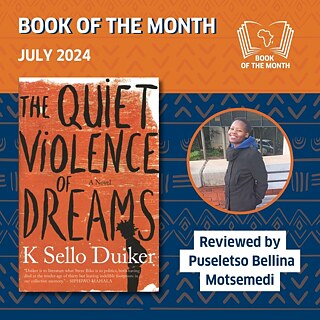
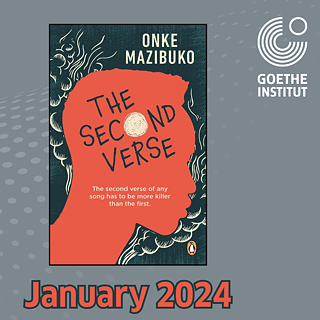
Bokang (meaning praise in English) the protagonist lives an imperfect pristine suburban life whilst juggling adolescent, the coming of age as a Xhosa boy who is recognized as a man of the house that already has a King, in the form of his father Ernest. The weight on his developing shoulders makes him feel caught in the middle whilst being introduced to the fundamentals of fickle teenage love affair.
Bokang's existence in the suburb, that has French sounding street names, is a far outcry, to what people perceive must be a tranquil environment with birds chirping, naturalness that produce clean air. Parents who drive their mini me's to good schools. Those schools that teaches good articulation in English, that the alumnae get access to social goods, that comes with the perks of speaking good English.
However, Bokang’s essay about suicide in a school that jealousy guards it's image, sends shudders around the enclave that has a psychologist. That essay peels Bokang's life which is layered like an onion with precision. If the walls of his home could talk, they would tell tragic lullabies whilst guest try to digest a tepid soup made with broken love, because the evaporation of finances have harboured a secret treasure chest bubbling with alcohol and experimentation of drugs.
All this drama in Bokang's life inspired Kendrick Lamar to pen Swimming pools part 2, featuring the protagonist who can spit serious bars as Supreme Khon.
Penguin Random House South Africa
IMPRESSIONS
This book is worth reading, to understand what it might feel like, if your life is not perfectly in line. To get to know how people become what they become, and it is not always their own fault. Being relegated to the trash cans of poverty due to gambling, alcohol and drug addictions is not easy and it invites humiliation and attracted vultures, who see a family home as a business opportunity. To endure the hidden costs of an emotionally absent father figure, who barked orders from his throne, and when the jig was up, picking up the pieces and saving every coin to recognize the corridors of higher education, is reality to more people than you think. It’s mine as well.
WARNING
This book is written in a very strong language, that makes it authentic for a generation that grew up with the notoriety of all eyes on me.
About the reviewer
Puseletso B. Motsemedi
Puseletso B. Motsemedi has always loved reading from a young age. Coming from a religious background, she enjoyed reading the Bible and as she got exposed to American culture, she savoured comic books. Currently she pores over home and food magazines (a terrible cook, so she's making an effort, let's park it there). A staunch Thunder Cats and Boondocks fanatic who has love interests in STEM, Finance, yoga, beauty and fast cars. She dreams of being a passenger in a Dodge Viper or Ford Shelby (alongside Charles LeClerc). In her spare time you'll find her watching 48 hours or Medical detectives, listening to podcasts on Spotify, eating out or shopping for anything but clothes because she hates ironing with passion.”
More information
This review is from the Book of the Month series 2024 from the Goethe-Institut South Africa.
A new review by South Africans for South Africans will be published every month, please check regularly.
All books can be borrowed from our library.
All "Book of the Month" reviews
Here you find all reviews of the series Book of the Month. All books are available in Goethe-Institute library in Johannesburg.
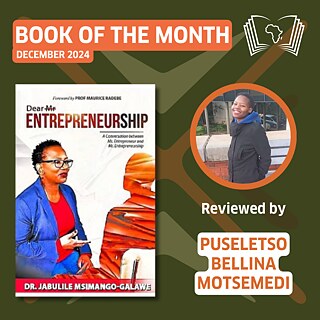
It’s simply not good enough to have a great business idea, because that idea needs to work financially. Do you have the ability to make business decisions quickly based on facts, not the heart?
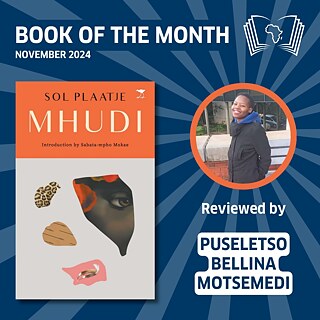
Mhudi is a historical novel set in the 1800s that tells the story of an African woman living during a war between the Barolong people, Matebele people and the Boers. Mhudi’s tribe, the Barolong, is attacked one evening by the Matebele. Amid the screams, bloodshed, and destruction—Mhudi escapes.
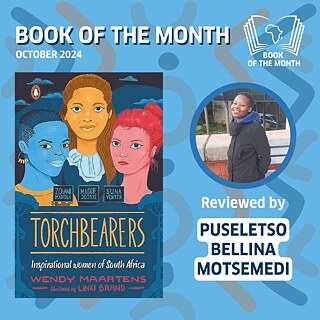
The women of 1956 marched to the Union building in unison because the pass laws that were oppressive. These women, from all backgrounds and races were torchbearers to a poet, social and legal advocates. These women, who are as colorful as their backgrounds and professions, share something common: the need to be somebody.
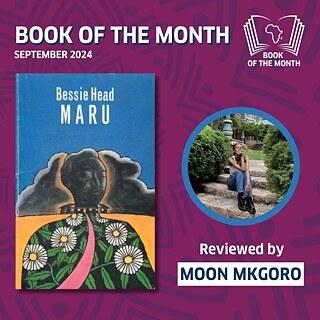
Maru is a story about a Masarwa woman, Margaret Cadmore, who was adopted and raised by a white woman during a time when the Masarwa people of Botswana were heavily discriminated against. Head writes “Masawra is the equivalent of ‘nigger’, a term of contempt which means, obliquely, a low filthy nation.”
As a young girl, during a drought in Zimbabwe, Elizabeth collapsed under a tree as a result of hunger and starvation. She was weak and in and out of consciousness. Moments later, a woman that Elizabeth did not recognise, gave her a meal.
Tshepo, a young student at Rhodes, has a difficult time keeping up with his own strange mind. He is absorbed in making sense of a traumatic past in a violent country and so when he finds himself at the Valkenberg mental facility it is perhaps not entirely due to “cannabis-induced psychosis”.
Carried by impeccable lyrical writing, the 2022 novel examines themes of queerness, grief, friendship, and family. Set in the United Kingdom with hints of Nigerian life, this enthralling book reads like capricious weather.
“The book brings the reader up to speed with land's lengthy and complicated process. Assessed interventionist measures on their efficacies that mainly amounted to nought.”
Penguin Random House South Africa | Tlou Meso
Penguin Random House South Africa | Tlou Meso
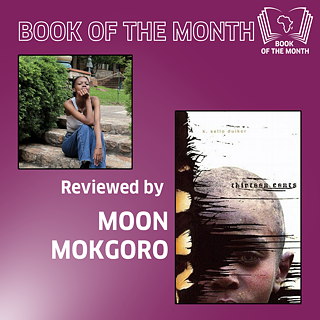
Thirteen Cents - Book of the Month March
Books like Thirteen Cents are essential for social change.
They provide impetus for growth, change and the development of a caring and supportive society.
“It is all at the same time filled familiarity, warmth and danger, fear and opportunity – the myriad of contradictions that is Johannesburg, and South Africa itself.”
The AFRO-Freedom Book Club is a public book club that focuses on African writers to inspire dialogue and civic engagement in the community. We strongly believe in the voice of Africans and the importance of telling our own stories. Everyone is invited to join our circle!
Silent Book club is about meeting other like-minded readers, chatting about what other people are reading and then reading together in companionable silence.