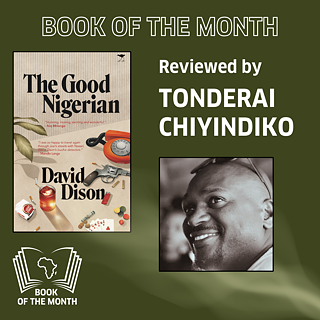
Set in modern Johannesburg or eGoli, which is isiZulu for “the place of gold” David Dison’s book, The Good Nigerian, for those familiar with “Jozi” - is akin to a love letter to the city. It is all at the same time filled familiarity, warmth and danger, fear and opportunity – the myriad of contradictions that is Johannesburg, and South Africa itself.
In naming his book “The Good Nigerian”, Dison ‘mischievously’ and directly takes on problematic tropes of representation as they pertain to the so-called other. Interestingly, The Good Nigerian isn’t about Nigerians at all – quite far from it in fact. However in choosing such a title he immediately grabs the reader’s attention as the story unravels.
THE STORY
In Jerome Nossel (also featured in other works by David Dison namely Death in a New Republic and The Boxer), the private investigator one encounters someone with the tired “European-colonialist-expatriate attitude” – who has “fallen in love” with “Africa”, and who is still ‘fascinated’ by what he encounters each day unlike the locals!
In Ngozi, who happens to be Nigerian, Dison portrays a person who is neither a victim nor damsel in distress through she ‘works the city’ - strong, alluring, even when surrounded by a motley crew of characters, dangerous men with questionable backgrounds - she exhibits and retains a certain grace throughout and runs the plot with Jerome Nossel.
The Good Nigerian is fast paced, and reads like an action movie, complete with car chases as gangster and pimp Yuri Kramerov’s goons play a dangerous game of cat and mouse with Nossel and Ngozi. The story lays bare the city’s inner and not-so-hidden workings especially those of its underworld. Crime bosses, pimps, prostitutes, drug dealers, politicians, private investigators, corrupt police, and nationals from different countries are all thrown together in this hodgepodge.
CONCLUSION
In an literacy podcast with David Batzofin Dison said about the book, that it is about familiar places like Doornfontein, Houghton, Hyde Park, Alexandra and Hillbrow. In this rollercoaster of a story "the key character is the city: Johannesburg."
About the reviewer
Tonderai Chiyindiko
Tonderai Chiyindiko is a voracious reader who is addicted to the intoxicating smell of new books and loves attending book launches (because of the free-flowing wine, cheese and snacks). He lives and works in Johannesburg.
More information
This review is from the Book of the Month series 2024 from the Goethe-Institut South Africa.
A new review by South Africans for South Africans will be published every month, please check regularly.
All books can be borrowed from our library.
All "Book of the Month" reviews
Here you find all reviews of the series Book of the Month. All books are available in Goethe-Institute library in Johannesburg.
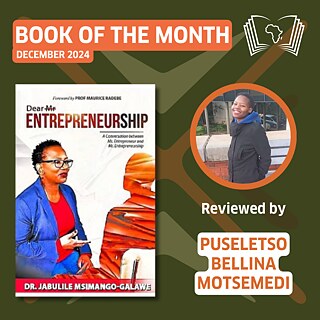
It’s simply not good enough to have a great business idea, because that idea needs to work financially. Do you have the ability to make business decisions quickly based on facts, not the heart?
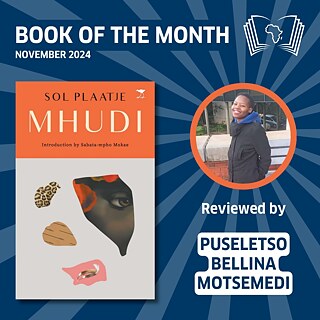
Mhudi is a historical novel set in the 1800s that tells the story of an African woman living during a war between the Barolong people, Matebele people and the Boers. Mhudi’s tribe, the Barolong, is attacked one evening by the Matebele. Amid the screams, bloodshed, and destruction—Mhudi escapes.
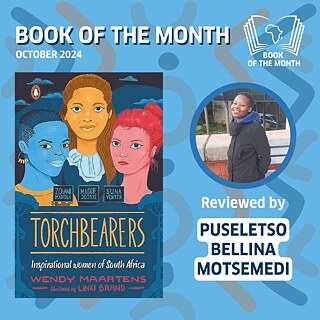
The women of 1956 marched to the Union building in unison because the pass laws that were oppressive. These women, from all backgrounds and races were torchbearers to a poet, social and legal advocates. These women, who are as colorful as their backgrounds and professions, share something common: the need to be somebody.
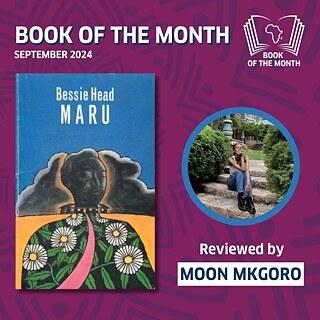
Maru is a story about a Masarwa woman, Margaret Cadmore, who was adopted and raised by a white woman during a time when the Masarwa people of Botswana were heavily discriminated against. Head writes “Masawra is the equivalent of ‘nigger’, a term of contempt which means, obliquely, a low filthy nation.”
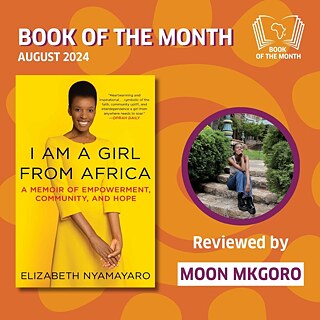
As a young girl, during a drought in Zimbabwe, Elizabeth collapsed under a tree as a result of hunger and starvation. She was weak and in and out of consciousness. Moments later, a woman that Elizabeth did not recognise, gave her a meal.
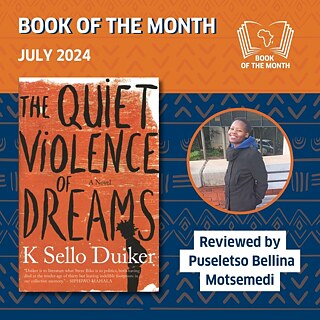
Tshepo, a young student at Rhodes, has a difficult time keeping up with his own strange mind. He is absorbed in making sense of a traumatic past in a violent country and so when he finds himself at the Valkenberg mental facility it is perhaps not entirely due to “cannabis-induced psychosis”.
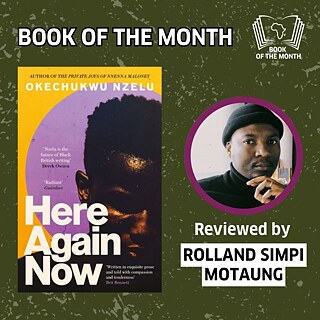
Carried by impeccable lyrical writing, the 2022 novel examines themes of queerness, grief, friendship, and family. Set in the United Kingdom with hints of Nigerian life, this enthralling book reads like capricious weather.
“The book brings the reader up to speed with land's lengthy and complicated process. Assessed interventionist measures on their efficacies that mainly amounted to nought.”
Penguin Random House South Africa | Tlou Meso
Penguin Random House South Africa | Tlou Meso
Thirteen Cents - Book of the Month March
Books like Thirteen Cents are essential for social change.
They provide impetus for growth, change and the development of a caring and supportive society.
“It is all at the same time filled familiarity, warmth and danger, fear and opportunity – the myriad of contradictions that is Johannesburg, and South Africa itself.”
The AFRO-Freedom Book Club is a public book club that focuses on African writers to inspire dialogue and civic engagement in the community. We strongly believe in the voice of Africans and the importance of telling our own stories. Everyone is invited to join our circle!
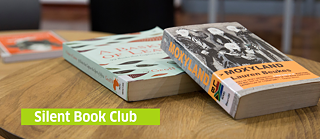
Silent Book club is about meeting other like-minded readers, chatting about what other people are reading and then reading together in companionable silence.