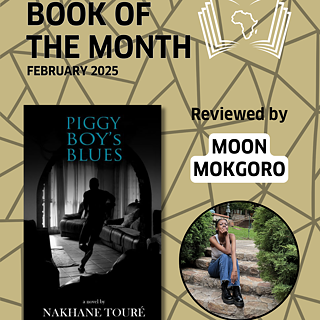
My first introduction to Nakhane Touré was through music. Locally and internationally Nakhane is known as an incredible musician with a gentle but captivating voice. It was only years later when I discovered that they* are a writer too. They studied literature and fell into music perhaps through fate, chance, destiny. They did, however, continue to pursue literature by writing a book – Piggy Boy’s Blues.
In Piggy Boy’s Blues, Touré tells the story of Davide. Davide’s story is complex. His life seems like a convoluted web that is desperate to be untangled. Davide carries sadness, shame, loneliness, and a heavy history on his shoulders. At the beginning of the book, he returns to his hometown, Alice in the Eastern Cape. The book starts as your average book would, building a new world and introducing us to the key characters – Davide, his uncle (Ndimphiwe), and the man his uncle lives with (Gray). It’s light and modest. However, over time, the chapters start to feel heavier. The story, of course, becomes more intense and the characters’ behaviours trigger an anxiety that something awful may slowly be making its presence known. Sentences like “nauseous with melancholy,” and “nothing is manageable” sit with you in preparation. And it shows up – tragedy takes over.
That something special
Touré’s ability to capture emotion is what makes the book most beautiful to me. Their comparisons give a glimpse into not only their mind but the essence of each character. Sentences like “He turned to Davide, who was whacking scorched shrubs with a twig. Their dead leaves disintegrated like ash.” give us an insight into the feel of the book. Comparisons are often indicative of the mindset of the writer or the way the writer perceives their characters – Touré’s of dead leaves to ash, crying to a guest begging to enter a room filled with laughter, or the feeling of emotions overpowering you to you being approached with “a friends familiarity.” My response to these comparisons and words could reflect Touré’s emotions and mindset or they might actually reveal more of my own. This duality being partly why writing is an art form and though a story has already been told, words are still open to interpretation.
“The strangest scenes are at play in my mind. They are most biblical, but do not exist in the text. These are scenes that I have created in my imagination: the after scenes, parts that always left a question mark in my mind. And they are quite simple.” This short paragraph in the book is, to me, a perfect “description” of the entire story.
Piggy Boy’s Blues is a tragedy, its self-discovery, its melancholy put into words. It is graphic. It has descriptions of rape, of bodies being stung by the cold, of emptiness. The story also tells us about patriarchal and traditional definitions of masculinity, weakness, and the different forms of suffering. What does it mean to be a man? What does it mean to love? Who do you transform into during moments of violation?
Nakhane Touré has written a masterpiece. A classic.
*Nakhane Tourés pronouns are they/them.
About the reviewer
Moon Mokgoro
Moon Mokgoro studies physics and mathematics and is a writer based in Johannesburg, South Africa. She is the founder of Protest Poster Project, a non-profit organisation focused on fighting against gender based violence and building a library/archive of activist, anarchist and feminist literature. She's written for the Are.na 2023 Annual and others as well as occasionally writing on her Substack. Archiving and documenting, collecting and remembering are what Moon aspires to do in all her work.
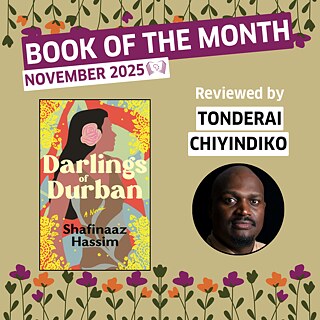
Darlings of Durban by sociologist-turned-author Shafinaaz Hassim follows the story of four women, who affectionately refer to themselves as the “darlings” as they navigate the complexities of family life, strict religious practices, suffocating cultural expectations, complicated relationships, broken marriages, debilitating financial struggles and many other challenges whilst belonging to and living in and among the Indian community of Durban.
Period Pain is an epistolary and intimate novel of a nation in crisis. It tells the story of Masechaba, a young black doctor struggling to survive in an under-resourced South African public health system while grappling with personal trauma, endometriosis, and living in a dysfunctional country.
The Comrade’s Wife by Barbara Boswell is a riveting tale of love, lust, marriage, politics, devotion, deceit, friendship, courage and so much more told though the eyes of our protagonist, Dr. Anita Fredericks.
Nervous Conditionsis a book that covers imperialism, colonisation, women's rights, and race. The story exposes us to these experiences through the lens of a young black woman from a colonised country.
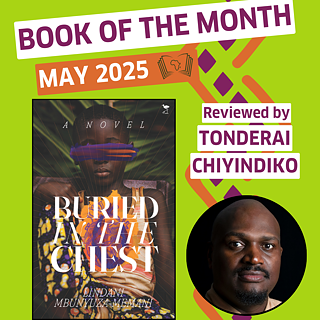
The wind of Moya which is both real and in some ways a metaphor is omnipresent as through it lives are shaken, truths are unveiled and heavy chests are finally able to reveal.
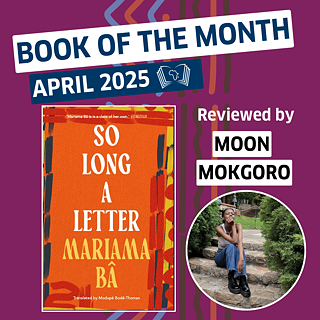
The works and writings Mariama Bâ are critical and essential because of the unique and underrepresented perspective they give. Her beliefs and experiences are unveiled and communicated through this epistolary novel in the form of a letter.
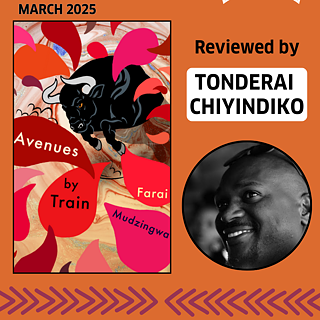
Avenues By Train a welcome addition to Zimbabwe’s literary milieu and showcases the talents of an author who is deeply engaged with his country and its society.
Piggy Boy’s Blues is a tragedy, its self-discovery, its melancholy put into words. It is graphic. [...] What does it mean to be a man? What does it mean to love? Who do you transform into during moments of violation?