Translated by: Jen Calleja
The Pine Islands
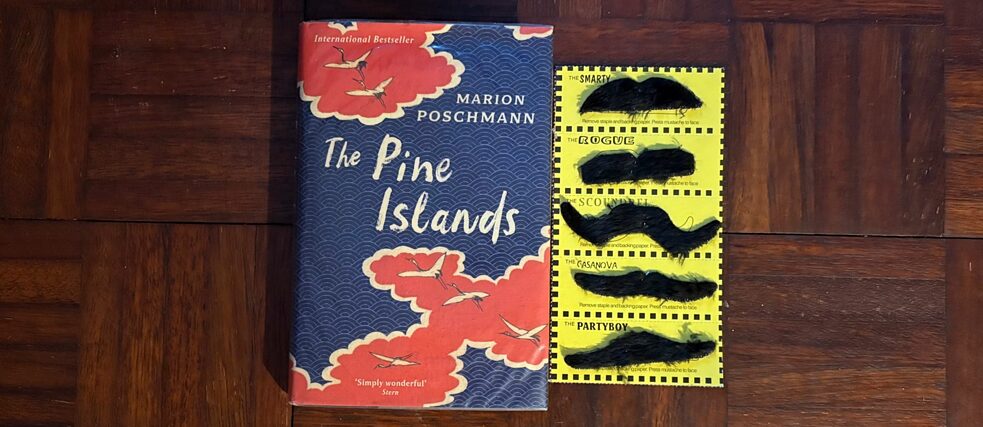
By Cee Ehlers
Although Gilbert Silvester, Poschmann’s protagonist, would most likely be horrified to be likened to a rebellious teenager (and Holden Caulfield, in turn, be disgusted by the comparison with a stuffy academic), both characters are led by dreams and literature, and both are shown to have been led astray, caught up by what they were attempting to escape.
Pine Islands (2019) is the third novel by German poet and author Marion Poschmann; the first to be published in English, it was rightfully short-listed for the International Booker Prize in Jen Calleja’s translation.
We follow Gilbert Silvester, a mid-range academic specialised in the symbolics of beard styles in film. In response to a dream of his wife cheating on him he embarks on a (by him entitled) “project of abandonment”: he escapes to Japan, a “tea nation”, coveted as a travel destination not by him but his wife, seemingly without purpose. Only when landed in Tokyo does he craft an agenda for his visit; he decides to follow in the footsteps of the poet Bashō on a journey to the famous Pine Islands in Japan’s North. Before Gilbert can begin his journey, he inadvertently disrupts Yosa, a young (bearded) Japanese man’s suicide attempt at a train station and convinces him to come along to the Pine Islands, under the guise of finding a more “dignified” spot to end his life.
The novel is filled with gorgeous imagery that makes you aware of Poschmann’s and Calleja’s poetic roots. This is sharply and humorously contrasted by the third person narrator’s subtly sardonic reflection of Gilbert’s self-pity and self-serving academic ramblings, which is no small feat in translation. As you might be able to tell, I think Gilbert Silvester is a detestable, prejudiced man, entirely unaware of his own flaws and the abstrusity of his flight, unempathetically coercing a suicidal young man into the roles of tour guide and devoted student. However, the protagonist’s flaws do not detract from the reading experience, enjoyment to be found in Calleja’s beautifully translated prose (and haikus!) and Gilbert’s disappointments. I also found enjoyment in the meta-ness of following a man’s journey (Gilbert) who is following a man’s journey (Bashō) who is following a man’s journey (Saigyō). You could even stretch the meta and say we are following Calleja following Poschmann following Gilbert...
Admittedly, this novel does not contain vast measures of character development, so readers who want to see Gilbert changing his ways should beware. I also think it’s important to note that, in line with the protagonist’s lack of empathy, the theme and imagery of suicide are not always discussed sensitively. Overarchingly, however, I think the novel is an amusing exploration of the male ego, framed by Calleja’s poetically rendered language.
I was already fond of Poschmann’s poems (for readers of German, I strongly recommend ‘Gnadenanstalt’) before encountering Pine Islands and I remain a fan of her gorgeous imagery and sharp humour. Hopefully Poschmann’s poetry will find its way into the English market soon, until then: get reading!
Reading Time: 2 minutes, 35 seconds