The project "Weather Glass or Crystal Ball? Mapping the Weather in Arts and Science" explores the multiple correlations between weather, humans and climate change. The participants of the "Conversations about Climate" address the question of how we relate to the world in light of the climate crisis and what narratives enable us to find the strength to undertake the necessities. Moderated by Svante Helmbaek Tirén, the three conversations revolve around the climate as an emotional, as a holistic and as an artistic narrative. The event will conclude with the artistic performance "Can we talk about the weather?" by Alison Scott.
"Climate as an emotional narrative":
Conversations about climate are often very emotional, not least because we quickly reach the point of what individual countries or individuals should or should not do. News of weather disasters such as droughts and floods also trigger strong emotions, but fear makes us weak. How can we face the frightening reality of climate change and at the same time find the strength for a new beginning?
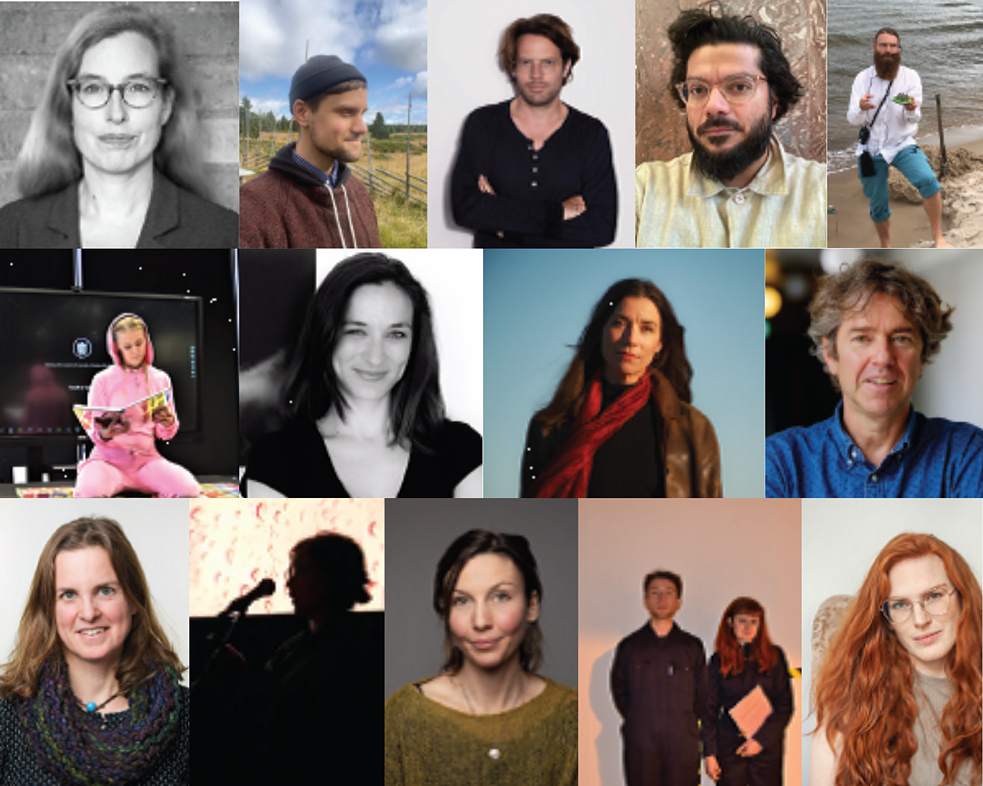
Panellists:
Anke Fischer, University of Agriculture, Uppsala
Kata Nylén, psychologist, author and co-founder of Klimatpsykologerna
"Climate as a Holistic Narrative":
We live in a world whose rhythm is hardly determined by nature, but by the demands of the global economic and consumer society. Most of our environment is now man-made or at least significantly influenced by humans and designed for the optimal use of nature as a resource. Could a holistic understanding of nature and the world help us find a way out of the climate crisis?
Panellists:
Friedrich von Borries, University of Fine Arts Hamburg
Isabel Löfgren, Södertörn University of Applied Sciences
Janna Holmstedt, National historical museums
Moa Sandström, Umeå University
"Climate as an artistic narrative":
Art gives us the opportunity to see the world through different eyes, to discover new spaces of experience and expression that would otherwise have remained hidden from us in everyday life. Art is polyphonic, its strength lies in its openness. How can it contribute to people reconsidering their attitude towards the world? How can it reach out to individuals and inspire them to get involved in a common cause?
Panellists:
Leonie Licht, University of Applied Arts, Vienna
Daniel Urey, think tank LABLAB
Andres Veiel, film director
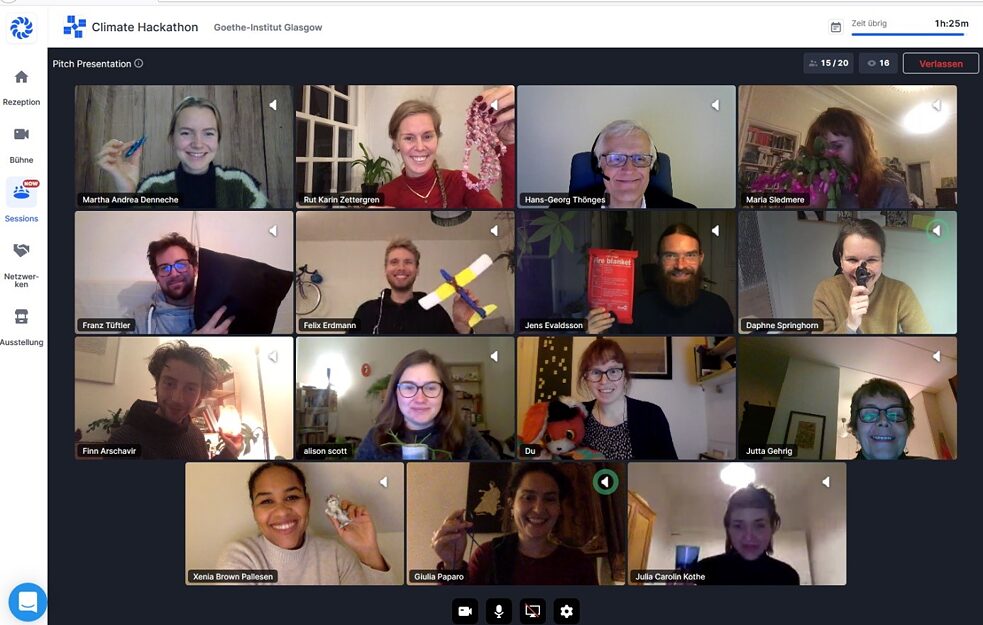
Jens Evaldsson, Rut Karin Zettergren, Finn Arschavir ( Artists of the regional project)
 © Goethe-Institut