Everywhere you look
German-American Sites in San Francisco
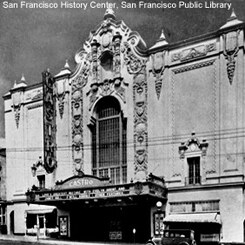
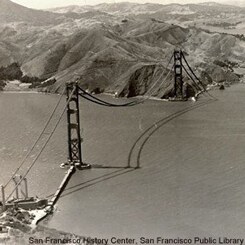
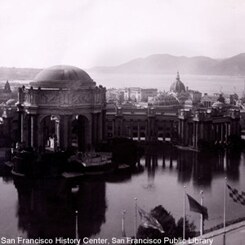
The Goethe-Institut is located in the heart of San Francisco, adjacent to the Gate to Chinatown. In the past decades the city has grown by a multiple, but approximately 200 years ago, the present site of the Goethe-Institut was located at the city’s very origin, at that time called “Yerba Buena”. The diverse cultural influences have always converged on the West Coast thus giving distinction to San Francisco’s cityscape. German immigrants could also prove their talents and know-how during the foundation and further expansion of the city. Their influence can still be seen in many places in the architecture and construction of important landmarks. The Goethe-Institut invites you to a historical search of traces of German culture and architecture in San Francisco.


Architecture
San Francisco’s openness made this city to a Mekka of innovative architecture. This openness was already apparent at the end of the twentieth century, when German architects found new opportunities to realize their architectural visions right here in San Francisco.
Art
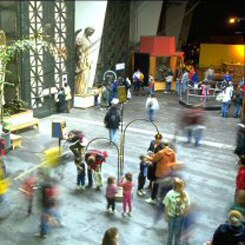
Especially for German photographers, San Francisco became a new home and creative outlet.
Thanks to:
Original Web Production:
Chantal Buard
Original Web Design:
Glows in the Dark Studios
Jon Betts
Photos:
Chantal Buard
Research, texts and translations:
Jessica Kraatz Magri
Hans-Christian Mennenga
Madeleine Cornu Catero
Ulrike Hack
Webmaster Goethe-Institut San Francisco:
Madeleine Cornu Catero
Special Thanks to:
Bernd Brunner
Everywhere You Look is a project of Goethe-Institut Washington for the United States and Canada.
General Editor:
William Gilcher, Goethe-Institut Washington