German and Germany in the education system

Six institutes in the U.S. in Boston, New York, Washington D.C., Chicago, Los Angeles, and San Francisco are commited to working together with local, state, and federal partners to ensure high quality standards in the teaching and learning of German.  Our educational programs for German learners cover the entire range of a learner`s biography: From early childhood education in kindergarten, to middle- and high school, to higher education in colleges and universities. We also provide curriculum and study tour experiences relevant to contemporary Germany for specific multiplier groups in North America, including social studies educators, STEM educators, and workforce development professionals. 
German in Schools

  • PASCH Initiative

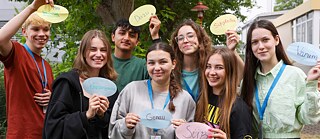
    The initiative ‘Schools: Partners for the Future’ (PASCH) comprises a worldwide network of schools with special ties to Germany.

    PASCH-Schüler*innen lächeln in die Kamera und halten bunte Zettel mit deutschen Wörtern nach oben. ©PASCH-net/Anne Essel ©PASCH-net/Anne Essel

  • SPARK for German

    SPARK for GERMAN provides professional development for future German instructors and enables students across the United States to start learning German at an early age.

    Children © Colourbox © Colourbox

  • German(Y) for Non-German Teachers and Decision Makers

    Transatlantic Outreach Project (TOP)

    TOP is a leading provider of curriculum and study tours relevant to contemporary Germany for social studies educators, STEM educators, and decision makers.

    TOP Banner © Goethe-Institut / Bernhard Ludewig © Goethe-Institut / Bernhard Ludewig

Partnership

The American Association of Teachers of German (AATG) and the Goethe-Institut are expanding their collaboration through a Memorandum of Understanding to strategically strengthen German as a foreign language in the United States and provide targeted support to teachers.

Fundamentals

  • German Bilingual Programs

    Resources, expertise, and networking opportunities for educational institutions seeking to establish, strengthen, or strategically develop bilingual German programs.

    Apfel Apple Photo: Colourbox.de Photo: Colourbox.de

  • Language Frameworks

    A comparison of the CEFR and ACTFL: In-depth guidance on the similarities, differences, and potential applications of both frameworks in teaching, curricula, and educational policy contexts.

    Day of Languages Logo Foto Ausschnitt: © Council of Europe Foto Ausschnitt: © Council of Europe

  • Language Magazine

    Practical tips and specialist articles for trainers, teachers, and students. Current focal topics include language teaching and didactic trends in foreign language research, language and education policy, AI, and diversity.

    Schülerinnen und Schüler in einem Klassenzimmer © Colourbox © Colourbox

  • Why learn German?

    German opens up career opportunities: As the language of a leading global economy, it strengthens career paths in technology, business, medicine, and more—both in the U.S. and internationally.

    Woman smiling at her laptop © Goethe-Institut © Goethe-Institut

  • Why teach German?

    Teaching German means shaping the future: Teachers nurture young talent, overcome daily challenges, and, with dedication and strong support, help shape the future of German language learning in the U.S.

    Teaching German © Colourbox © Colourbox

Contact

For further information or if you have any questions, please contact a partner at a Goethe-Institut near you.