Deshi Karushilpo

-
-
-
-
-
-
-
-
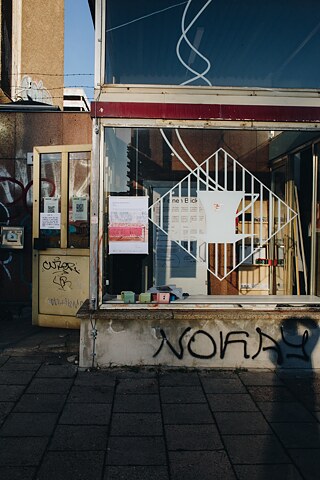


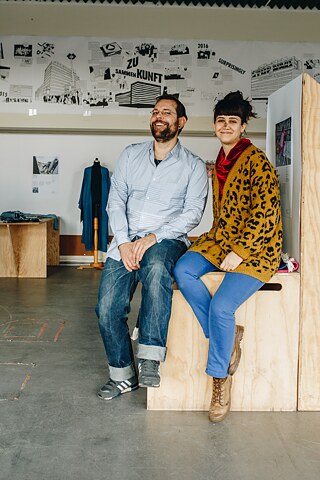
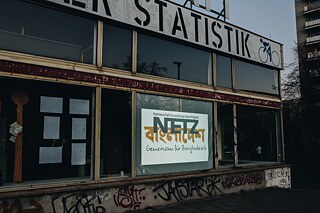
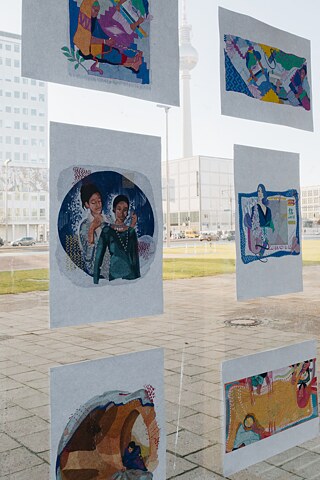
Goethe-Institut Bangladesh, National Crafts Council of Bangladesh (NCCB), and NETZ Bangladesch along with nine collaboration partners brought together intangible knowledge of Bangladeshi crafts and artisanal heritage to Berlin. Deshi Kārushilpo কারুশিল্প Bangladeschi Handwerkskunst took place at the Werkstatt of the Haus der Statistik on December 19, 2020. The curators Thomas Kilian Bruderer, Simone Simonato, and Samira Syed have focused on five textile crafts: kantha, shatranji, indigo, jamdani, and jute.
#Indigo


Bengal’s #INDIGO dye production originates in the late 18th century. During the East India Company's rule, the indigo planters persuaded peasants to plant indigo instead of food. As demand for indigo increased in Europe, Dhaka became the main industrial centre. The oppression by the indigo planters sparked the Indigo Revolt in 1859. After the invention of synthetic indigo dye, the demand of natural dye decreased, which put an end to indigo cultivation in the Bengal region.
Indigo leaves are processed through fermentation and oxidation which causes the color shift from green to blue. The sediment is then boiled and dried for four days. Finally, the resultant flakes are used for dying. In the 1990s, the Mennonite Central Committee revived the Indigo cultivation and extraction in Bangladesh. Now, the social enterprise, Living Blue and Friendship are the two largest indigo dye producers with over 6,000 farmers.
#Kantha


#KANTHA refers to a form of quilt traditionally made from used saris and dhotis. Kantha was first recorded 500 years ago. It is particularly interesting, because it is a historical example of upcycling. The decorated and embroidered versions of the Kantha known as Nakshi Kantha (embroidered quilt) is a later addition to this craft. This is the most famous indigenous folk embroidered textile from Bangladesh. The technique represents a type of quilts that are made from patching and stitching layers of old sari cloth and then creating elaborate narratives by using various motifs embroidered with colored threads drawn from old sari borders. Traditionally, it is a folk art practiced by women in a domestic environment. Kantha making is a handed-down tradition from mother-to-daughter in a context of social interaction and artistic self-expression. However, presently, the practice and application of Nakshi Kantha has expanded vastly resulting in the creation of various lifestyle and fashion products.
#Jamdani


#JAMDANI is the poetry of threading. The weaving is one of the best surviving handloom textiles in the world, and it is the only surviving variation among more than 30 kinds of muslin. Historians say Jamdani has evolved and reached its pinnacle of excellence during the Mughal rule. At that time, it was called Jamdani muslin. It is also called 'figured muslin' as weavers create designs while weaving the fabric. Jamdani motifs have an abstract look, these are the creative and geometric transformations of nature's elements like leaves, flowers, animals, and so forth. Since the motifs are influenced by the surroundings of the weaver, the names of different motifs differ according to the respective weaver. Jamdani is still weaved in the Sonargaon, Rupganj, and Siddhirganj areas of Narayanganj District. In 2016, Bangladesh obtained the Geographical Indication Status of Jamdani. The traditional art of Jamdani weaving has been inscribed on Unesco's representative List of Intangible Cultural Heritage of Humanity in 2013.
#Jute


Bengal’s #JUTE is an indigenous crop. It was exported by European countries from the 17th century, beginning with the building of large scale mills during the time of the British East India Company. It became one of the biggest industries in the region. After sowing the seeds, jute takes around five months to harvest. The fiber is then collected by peeling the jute stick. Following, the famous bundles are made. Finally, they are kept under water to rest, which takes up to twelve days. Jute was a cheap option for the construction and military industries. The most famous product is perhaps the jute coffee bag. Since the 1970s, jute cultivation in Bangladesh has heavily declined. Exports have fallen as other countries grew jute and alternate products like plastic. In 2018, Bangladesh produced 33 percent of the total worldwide production of jute.
Galerie Satranji


#SHATRANJI, a type of handloom tapestry used as rugs, is a heritage textile from the Rangpur district of Northern Bangladesh. With "Shat" meaning a hundred and "Ranji" meaning color in Bengali, the word "shatranji" means one hundred colors. Patterns found on Shatranji are mostly geometric. Shatranji were woven with all natural dye and used yarns, like cotton, jute, and wool. However, in present times a vast array of human-made yarns like chenille and acrylic, as well as various types of fiber-blends are utilized. Nowadays, the craft increasingly uses garment-industry waste as material, making it one of the champions of up-cycling ready-made-garments waste. Traditionally woven by women on a handloom, the art of making good quality Shatranji depends on the expertise of the artisans. Originally it was the artistic endeavor of the weaver to choose the colors, patterns and shapes of the Shatranji. Today it is made mostly according to the buyer’s specification.


