ethical consumption
New from the front
Some time ago I had a talk with two nice people, namely Federica Tessari, senior editor at "Scomodo" and expert on civil law and social issues, and Stefano Liberti, journalist and writer focusing on the environment and food supply. I tried to clarify the many questions running through my mind. Instead of finding answers, I ended up with more questions than before, but that is precisely the beauty of such conversations.
Ethical consumption?
These local struggles can remain hidden because the working-class people involved usually don't have friends with appropriate professional backgrounds - in the media, in government and in academia - who could help draw attention to their work. This contributes to the illusion that environmentalism is the domain of the middle class.
Karen Bell
Explain that to my grandmother
Many so-called green jobs are not available to unskilled and working-class people. (...) Market-based and individual responses, from changing light bulbs, to carbon trading and patentable 'techno fixes', have dominated the public discourses on solutions to environmental problems. These strategies have had minimal impact and little, if any, meaning for working-class people.
Federica Tessari
Shades of grey
When we talk about environmental activists, we think of people like Greta Thunberg, who became famous through the internet. We don't think of activists like Isra Hirsi, who fought for Flint, Michigan, to get access to clean water.
Federica Tessari

News from the front
Citizens of poorer countries, where there is a threat of loss of resources through environmental degradation, often have a particularly strong environmental awareness.
Stefano Liberti
I talked to Federica and Stefano about a whole range of other issues also: Geopolitics, climate refugees (did you know that by 2050 there will be 300 million such refugees at the current rate and that you could be one of them? Now there’s a source of stress!), and emissions in developing countries.
If I had packed all that into this article however, it would have turned into a paper you would never have read to the end. If you are interested, however, you can listen to the whole conversation at (insert podcast)(in Italian).
"If we can't be good consumers, we can at least be good correspondents from the front. And that is no mean feat!”
Stefano Liberti
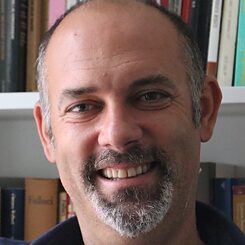 Foto: © privat
Stefano Liberti is a journalist and writer who covers agriculture and food supply chains. He writes for Italian and foreign media, including Internazionale, Repubblica, Le Monde diplomatique, Al Jazeera English, and El país semanal. In 2009 he was awarded the Indro Montanelli Prize for his book A sud di Lampedusa. Cinque anni di viaggi sulle rotte dei migranti (Minimum Fax, 2008.) His book Land Grabbing. Come il mercato delle terre crea il nuovo colonialismo (Minimum Fax, 2011) has been published in ten countries (English version: Land Grabbing: Journeys in the Neocolonialism. Verso, 2013). His most recent books are I signori del cibo. Viaggio nell'industria alimentare che sta distruggendo il pianeta (Minimum Fax, 2016), in which he traces the global supply chains of four food products, and Il grande carrello. Chi decide cosa mangiamo (Laterza, 2019, with Fabio Ciconte), in which he explores the workings of the organized wholesale trade. Published in September 2020, Terra bruciata. Come la crisi ambientale sta cambiando l'Italia e la nostra vita (Rizzoli), is a first field study on the effects of climate change in Italy. Liberti has also worked as a director for Rai 3 and has made several documentaries, including L'inferno dei bimbi stregoni (2010), Mare chiuso (2012, with Andrea Segre), Container 158 (2013, with Enrico Parenti), Herat Football Club (2017, with Mario Poeta), Soyalism (2018, with Enrico Parenti).
Foto: © privat
Stefano Liberti is a journalist and writer who covers agriculture and food supply chains. He writes for Italian and foreign media, including Internazionale, Repubblica, Le Monde diplomatique, Al Jazeera English, and El país semanal. In 2009 he was awarded the Indro Montanelli Prize for his book A sud di Lampedusa. Cinque anni di viaggi sulle rotte dei migranti (Minimum Fax, 2008.) His book Land Grabbing. Come il mercato delle terre crea il nuovo colonialismo (Minimum Fax, 2011) has been published in ten countries (English version: Land Grabbing: Journeys in the Neocolonialism. Verso, 2013). His most recent books are I signori del cibo. Viaggio nell'industria alimentare che sta distruggendo il pianeta (Minimum Fax, 2016), in which he traces the global supply chains of four food products, and Il grande carrello. Chi decide cosa mangiamo (Laterza, 2019, with Fabio Ciconte), in which he explores the workings of the organized wholesale trade. Published in September 2020, Terra bruciata. Come la crisi ambientale sta cambiando l'Italia e la nostra vita (Rizzoli), is a first field study on the effects of climate change in Italy. Liberti has also worked as a director for Rai 3 and has made several documentaries, including L'inferno dei bimbi stregoni (2010), Mare chiuso (2012, with Andrea Segre), Container 158 (2013, with Enrico Parenti), Herat Football Club (2017, with Mario Poeta), Soyalism (2018, with Enrico Parenti).Federica Tessari
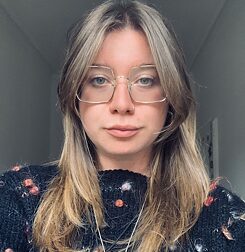 Foto: © privat
Federica Tessari studied International Cooperation at the University of Turin. After earning a degree in Political Science, she decided to delve deeper, both academically and personally, into the most disadvantaged areas of the world. She developed a critical understanding of the issues and found her voice as a journalist through her involvement with India and the situation on the Greek island of Samos. Tessari came across Scomodo while working for Médecins Sans Frontières (MSF) in Rome and when the magazine opened an editorial office in Turin, she wasted no time deciding. Today, she is one of the senior editors of Scomodo at national level, responsible in particular for the Il Plus section (where topics are explored in depth through an interdisciplinary as well as multidisciplinary approach). Tessari developed and produced Scomodo's first photo reportage: Senza stringhe. Her personal areas of interest are civil law issues, conflicts and socio-political topics.
Foto: © privat
Federica Tessari studied International Cooperation at the University of Turin. After earning a degree in Political Science, she decided to delve deeper, both academically and personally, into the most disadvantaged areas of the world. She developed a critical understanding of the issues and found her voice as a journalist through her involvement with India and the situation on the Greek island of Samos. Tessari came across Scomodo while working for Médecins Sans Frontières (MSF) in Rome and when the magazine opened an editorial office in Turin, she wasted no time deciding. Today, she is one of the senior editors of Scomodo at national level, responsible in particular for the Il Plus section (where topics are explored in depth through an interdisciplinary as well as multidisciplinary approach). Tessari developed and produced Scomodo's first photo reportage: Senza stringhe. Her personal areas of interest are civil law issues, conflicts and socio-political topics.