June: The House of Hunger

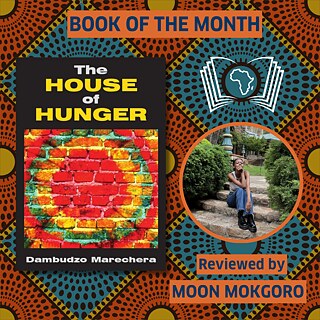
The House of Hunger by Dambudzo Marechera (1978) © Dambudzo Marechera

by Dambudzo Marechera (1978)

Review by Moon Mokgoro

The House of Hunger
by Dambudzo Marechera (1978)

Dambudzo Marechera (1952-1987) was a Zimbabwean novelist, poet, and short story writer. The House of Hunger, published two years before Zimbabwe gained independence, is a collection of short stories that drift between memories, violence, politics, and psychic fragmentation. It won the Guardian Fiction Prize in 1979 and remains a classic of African literature.

Marechera's writing is combative and brutal, driven by a contempt for authority that he had no interest in concealing. It is boldly political. He was fearless. This fearlessness is shown in his writing, and through the stories he chooses to tell. Though he lived a troubled life, and died a terrible death, Marechera was a man who stood firm in his beliefs and The House of Hunger shows this – it shows a writer with an uncontainable spirit whose words were an act of defiance.
In The House of Hunger, Marechera writes of life under violent oppression. “Arrests became so much a part of one's food that no one even turned a hair when two guerrillas were executed one morning and their bodies later displayed to a group of schoolchildren.” He writes of geurillas and resistance often, forcing us to bear witness to the oppresive regime he lived under.

He writes of self-hatred, and fear. Fear of change, acceptance. In “Black Skin What Mask,” he writes of his skin “It is like a silent friend: moody, assertive, possessive, callous – sometimes” and later goes on to say “I had such a friend once” – a friend who turns out to be a character that takes his life.
He writes of internal discomfort – “This eternal gnawing in the gut. Racking, always, one’s brain in the doorway.”

Reading these stories is a turbulent journey through highly intense experiences. The stories are disorienting, and aggressive, and yet refreshing and honest. Each story records more than the chosen narrative; it take us into the psyche of its characters, and holds up a mirror in which readers are forced to see themselves and the structures around them.

Marechera belongs alongside writers like K. Sello Duiker and Ayi Kwei Armah: authors whose work demands that you release the part of yourself that needs comfort and safety. Writing like this is necessary. Stories like the ones told in The House of Hunger are necessary – necessary for change and transformation, internal and external.

About the reviewer

Moon Mokgoro

Moon Mokgoro studies physics and mathematics and is a writer based in Johannesburg, South Africa. She is the founder of Protest Poster Project, a non-profit organisation focused on fighting against gender based violence and building a library/archive of activist, anarchist and feminist literature. She's written for the Are.na 2023 Annual and others as well as occasionally writing on her Substack. Archiving and documenting, collecting and remembering are what Moon aspires to do in all her work.

Moon Mokgoro sitting on natural stone steps in front of an old Art Nouveau house surrounded by bushes.

More information

This review is part of the Book of the Month series 2026 from the Goethe-Institut South Africa. A new review by South Africans for South Africans will be published every month, check back regularly. 

All books can be borrowed from our library, the membership is free. 

Book of the Month reviews 2026

  • Debbie Go Home - Book of the Month February

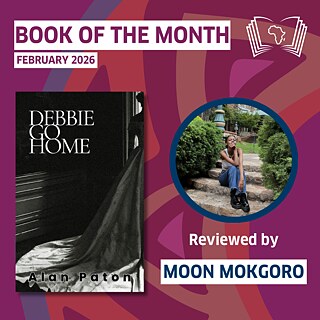
    Published in 1961, “Debbie Go Home” is a short-story collection by Alan Paton (1903-1988). Alan Paton was a South African writer and anti-apartheid activist. He believed in a peaceful fight against the injustices of apartheid. 

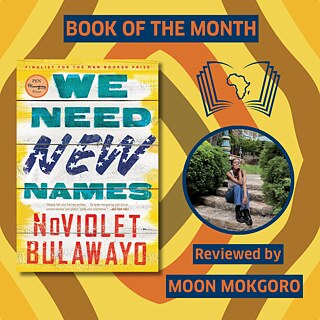
    Promotional graphic reading “Book of the Month, February 2026,” featuring the book cover Cry, the Beloved Country by Alan Paton and a circular photo of the reviewer, Moon Mokgoro. © Alan Paton © Alan Paton

  • The Hidden Star - Book of the Month March

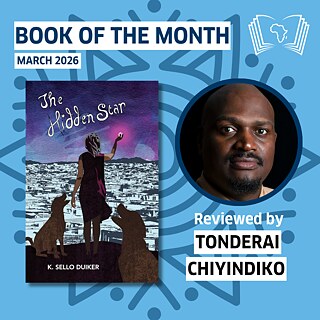
    The Hidden Star, enigmatic and little-celebrated South African author K. Sello Duiker’s last published novel existed as a rough and unedited manuscript when he untimely passed away on the 19th of January 1995. He was only 30 years old.

    Promotional graphic reading “Book of the Month, March 2026,” featuring the book cover The Hidden Star by K. Sello Duiker and a portrait of the reviewer, Tonderai Chiyindiko. © K. Sello Duiker © K. Sello Duiker

  • The Beautyful Ones Are Not Yet Born - April

    Ayi Kwei Armah is a Ghanaian writer, essayist and poet, well known and loved for his intense writing. He began his writing career with poems and short stories before writing his first novel, “The Beautyful Ones Are Not Yet Born,” published in 1968.

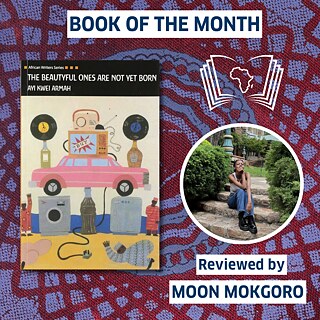
    Book of the Month graphic featuring The Beautyful Ones Are Not Yet Born by Ayi Kwei Armah, alongside a circular photo of the reviewer, Moon Mokgoro, on a patterned background. © Ayi Kwei Armah © Ayi Kwei Armah

  • Fabrics of Love - Book of the Month May

    a poignant multigenerational novel that follows the Ntoi women as they navigate love, family, identity, faith, and survival in a deeply patriarchal society.

    Book of the Month May 2026: Fabrics of Love by Lebo Mazibuko © Lebo Mazibuko © Lebo Mazibuko

Click to see all 2025 reviews

  • Darlings of Durban - Book of the Month November

    Darlings of Durban by sociologist-turned-author Shafinaaz Hassim follows the story of four women, who affectionately refer to themselves as the “darlings” as they navigate the complexities of family life, strict religious practices, suffocating cultural expectations, complicated relationships, broken marriages, debilitating financial struggles and many other challenges whilst belonging to and living in and among the Indian community of Durban.

    Darlings of Durban - Book of the Month November © Shafinaaz Hassim © Shafinaaz Hassim

  • Period Pain - Book of the Month October

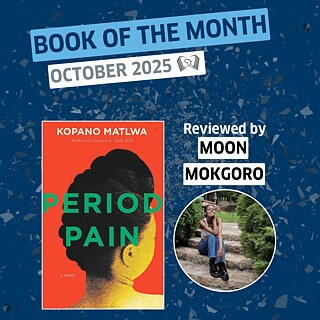
    Period Pain is an epistolary and intimate novel of a nation in crisis. It tells the story of Masechaba, a young black doctor struggling to survive in an under-resourced South African public health system while grappling with personal trauma, endometriosis, and living in a dysfunctional country.
     

    Buchcover von „Period Pain“ von Kopano Matlwa, das das Profil einer afrikanischen Frau von hinten auf orangefarbenem Hintergrund mit Titel zeigt. © Period Pain by Kopano Matlwa © Period Pain by Kopano Matlwa

  • The Comrade’s Wife - Book of the Month September

    The Comrade’s Wife by Barbara Boswell is a riveting tale of love, lust, marriage, politics, devotion, deceit, friendship, courage and so much more told though the eyes of our protagonist, Dr. Anita Fredericks.

    Book cover of The Comrade's Wife by Barbara Boswell, showing a woman's shadowed profile on an orange background, with title, subtitle, and a quote from Pumla Dineo Gqola. © The Comrade's Wife by Barbara Boswell is Jacana Media © The Comrade's Wife by Barbara Boswell is Jacana Media