








Quick access:

Go directly to content (Alt 1) Go directly to first-level navigation (Alt 2)
Achtung Buch with Marie-Pierre© Laura Laakso

BookTube
Achtung Buch!

Are you interested in German literature but don't really know where to start? As part of our "Achtung Buch!" series, Marie-Pierre would like to share with you her favorites from our e-library. Whether it's contemporary literature, comics or children's books, she is happy to share her recommendations with you.


The Videos

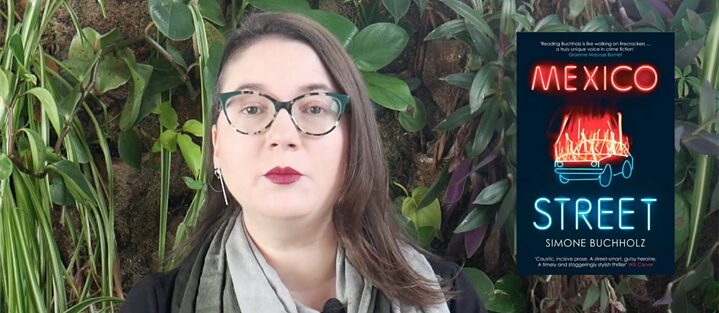
Achtung Buch! #14 Mexico Street, by Simone Buchholz © Goethe-Institut, Orenda Books

Achtung Buch! #14
"Mexico Street", by Simone Buchholz

Watch Marie-Pierre's take on the novel Mexico Street by Simonje Buchholz in the newest episode of our Booktube series, Achtung Buch!

Achtung Buch! #13 Big Bad Wool, by Leonie Swann

Achtung Buch! #13
"Big Bad Wool" by Leonie Swann

Watch Marie-Pierre's take on Leonie Swann's novel Big Bad Wool in the newest episode of our Booktube series, Achtung Buch!

Achtung Buch! #12 Identitti, by Mithu Sanyal © Astra House

Achtung Buch! #12
"Identitti" by Mithu Sanyal

Watch Marie-Pierre's take on Mithu Sanyal's novel Identitti in the newest episode of our Booktube series, Achtung Buch!

Bonne Lektüre mit Marie-Pierre © Laura Laakso

Booktube in French
Bonne Lektüre ! avec Marie-Pierre

Our French-language booktubing project. Same concept, same presenter, but in French! Zut alors!

Booktubing

A portemanteau of Book and YouTube, BookTube is a term used for bookish videos found on the YouTube platform. Such videos started appearing on the platform around 2010, made by book lovers worldwide. BookTube videos can consist of book presentations, reviews (with or without spoilers), bookshelf tours, readalongs, discussions, etc. Many genres are represented in the BookTube community (Young Adult, classics, science-fiction, comics, non-fiction, etc.). The community has grown exponentially in recent years, and is often cited as a source of growth for the book publishing industry.
 

Our vlogger

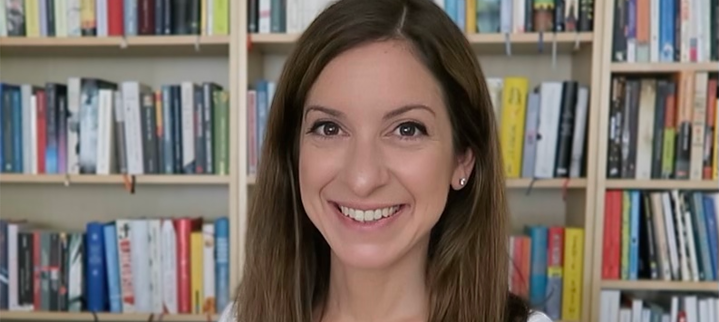
Marie-Pierre has been the librarian at the Goethe-Institut Montreal for over 10 years. An avid reader since childhood, she explores a wide variety of literary fields with great curiosity. Of course, German literature is a particular focus of interest for her. After studying the classics as part of her Bachelor's degree in German Studies, she turns to contemporary German literature in her BookTube channels Achtung Buch! (in English) and Bonne Lektüre (in French). She lives in Montreal.

More about German literature

Fliegende Seiten © Shutterstock

Focus
Current Literature in Germany

The literary scene in Germany is as diverse and colorful as the population. Be it groups of young writers or magazines in very small, self-published editions, find out more about exciting things from the German literary scene!

Regards Croisés © Thomas Bethge/Shutterstock

Letter exchange
Crossed Glances

We present one of the correspondences between Quebec and European Writers that were organized as part of the Festival international de la littérature (FIL), this year the one between the authors Catherine Mavrikakis from Quebec and Pierre Jarawan from Germany.


Book of the week

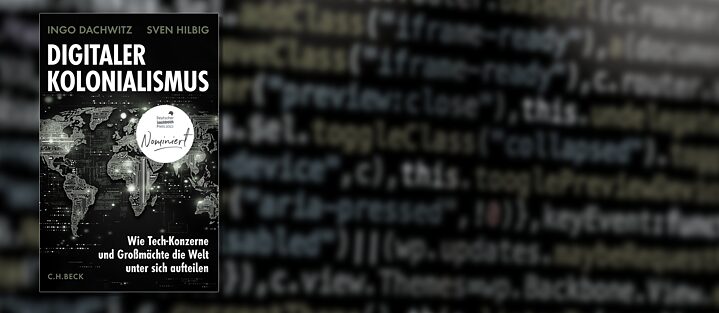
Ingo Dachwitz, Ingo & Sven Hilbig, „Digitaler Kolonialismus“ (C.H.Beck, München: 2025) © C.H.Beck

Book of the week
Digitaler Kolonialismus

Every week, we present a book from our collection that we find particularly interesting, exciting, educational, or otherwise worth reading. This week:

Ingo Dachwitz, Ingo & Sven Hilbig, "Digitaler Kolonialismus" (C.H.Beck, München: 2025)

How tech companies and major powers divide the world among themselves. Nominated for the German Non-Fiction Prize 2025.

Innovative, powerful, ruthless – few stories are told as often as that of the unstoppable rise of tech companies to the top of the globally networked world. But one chapter is left out: the price that the Global South pays for it. Tech journalist Ingo Dachwitz and globalization expert Sven Hilbig shed light on this blind spot and highlight the global consequences of digital colonialism as well as existing approaches for a more equitable digitalization. One thing is certain: AI will not fix it.
Translated withDeepL.com(free version)

Top