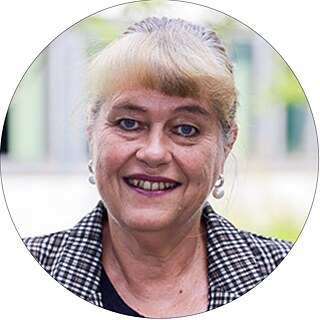
We are pleased to invite you to a hybrid lecture with renowned language teaching researcher Prof. Dr. Marion Grein. Take part virtually via Zoom or in presence at the Goethe-Institut Montreal.
This talk examines how children acquire languages naturally, and how this process differs fundamentally from language learning as we know it in foreign language education. Many children grow up speaking two or even three languages – often without formal instruction. This talk explores how children acquire languages naturally and how this process differs fundamentally from language learning in educational contexts.
Central to this distinction is the development of the prefrontal cortex, which is responsible for executive functions such as planning, inhibition, and conscious reflection. In early childhood, this brain area is not yet fully matured – a fact that facilitates implicit, intuitive language acquisition, but also limits the effectiveness of explicit learning strategies.
Research shows that the more languages a child “speaks”, the stronger the brain becomes: multilingualism enhances overall cognitive performance, including problem-solving, metalinguistic awareness, and mental flexibility. This cognitive advantage has long-term benefits for academic success and lifelong learning. And, finally, attention is given to translanguaging approaches, which value and actively integrate learners’ entire linguistic repertoires as a resource for learning a new language.
Associate Professor Dr. Marion Grein, Doctor of Philosophy, is head of the Masters Programme German as a Foreign / as a Second Language at the University of Mainz, Germany. She is an accomplished linguist with a background in comparative linguistics (English, German, Japanese). Her research is in language and neurosciences. Currently, she is working on learning styles and learning with digital media.