Jazz 2025
The Year of The Voice(s)
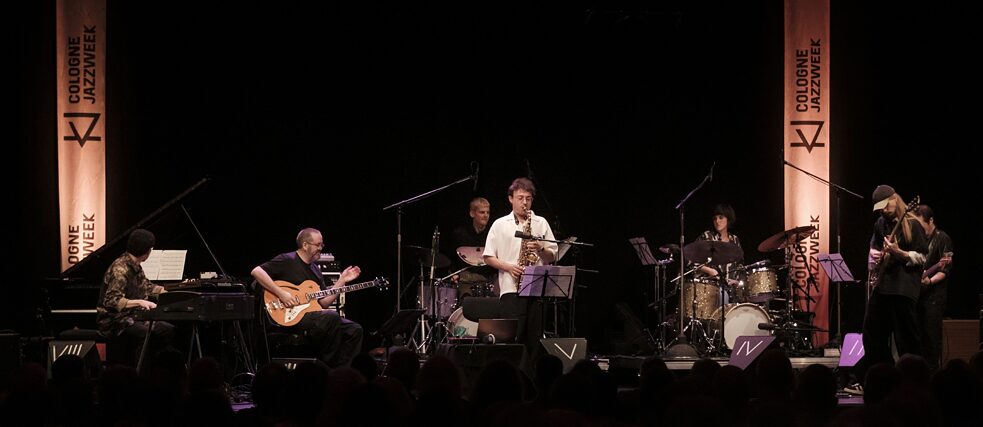
Alongside international collaborations and a strong emerging generation of artists, debates about participation, working conditions and visibility shaped the scenes in all federal states. Musically and socially, 2025 was a year of diverse voices for jazz.
By Dr Fanny Opitz
“I found home, a place where I felt comfortable (…) in singing and in jazz, this improvised music from America that stands for freedom and rebellion, but also for beauty, purity, hatred, dirt, emotional depth – in other words, for everything that makes us human,” writes singer and songwriter Uschi Brüning in her autobiography So wie ich. A defining figure in the East German jazz scene, even before the fall of the Berlin Wall, she demonstrates that in jazz, the voice has always been far more than mere sound: it is an expression of attitude, identity and the freedom to make one’s own story heard even in times of crisis. She received the German Jazz Prize for her life’s work in 2025.
The voice, not only as an artistic tool but also as a symbol of belonging and social positioning, took centre stage in 2025. The federal state music councils declared it “Instrument of the Year”, a distinction that resonated strongly within the jazz world. Alongside Uschi Brüning, another vocalist received a prestigious award: Lauren Newton – an influential figure in international free vocal improvisation – was awarded the Albert Mangelsdorff Prize at Jazzfest Berlin.
Theme of the Year: The Voice
Drummer and composer Eva Klesse forged a powerful connection between vocal expression and the evolving jazz scene. Named the German Jazz Prize’s Artist of the Year, she brought her socially critical concept album Stimmen, released in late 2024, to the stage in 2025, including a performance at Jazzahead!, the international trade fair in Bremen. The album highlights the experiences of marginalised and discriminated individuals and key activists, transforming their stories into a musical appeal for diversity, tolerance and courage.Greater Visibility for Underrepresented Voices in Jazz
Alongside projects such as Stimmen, which explore diversity through aesthetics, the question of equitable participation in jazz continued to play an important role in socio-political discussions in 2025. Eva Klesse, one of the few women holding a professorship in an instrumental field, offers a sharp critique of the situation, backed by some hard facts: “Less than 4% of all jazz instrumental professorships in Germany are held by women. Even if you include professorships for singing, we’re still in the single digits, under 10%. It’s worth letting those numbers sink in. And this is only the tip of the iceberg in terms of discrimination and inequities in many areas.”Encouragingly, a series of outstanding personalities across different generations helped raise the visibility and presence of underrepresented groups on stage and in music policy in 2025. These include pianist and composer Julia Hülsmann, whose influence extends far beyond her own ensembles. For many years, she has shaped the German jazz scene as both a professor and bandleader. In 2025, she was made an honorary member of the German Music Council.
Large ensembles led by female musicians also attracted attention, including clarinettist Rebecca Trescher with her tentet and sextet, the young ten-piece Volo led by saxophonist Sofia Will and the Monika Roscher Big Band. Swiss bandleader Sarah Chaksad, who works closely with German musicians, also showed how large ensembles are becoming more diverse and how international collaborations are opening new creative spaces – most notably with her performance at Jazzfest Bonn. Chaksad brings together musicians from different generations and incorporates unusual instruments into the jazz context – for example, the goat horn, played by Norwegian musician Hildegunn Øiseth. Similarly, Berlin-based Turkish composer and multi-instrumentalist Başak Yavuz and her international outfit Ne Var Ne Yok, blend jazz and contemporary music with Oriental sounds.
For the first time under new director Bettina Bohle, a panel discussion at the 19th Darmstadt Jazzforum focused on the often overlooked social issue of caregiving in musicians’ families. Saxophonist Alexandra Lehmler spoke with striking frankness about the challenges of parenthood and the realities of working life. Meanwhile, Berlin-based musician Maria Reich is further highlighting these often invisible aspects of the profession through her crowdfunding campaign Care Works.
Jazz Education in Focus and a Strong Year for Emerging Talent
Stylistically adventurous, internationally networked, yet firmly rooted in local scenes, the emerging German jazz community gained greater visibility in 2025. This was evident both in remarkably mature debuts, such as Zen Garden by saxophonist and composer Max Treutner, and also in the work of established young musicians who strengthened their collaborations, particularly through duo projects like Under the Same Stars by Shuteen Erdenebaatar and Nils Kugelmann, and Cameo by Johanna Summer and Jakob Manz. Young artists also featured more prominently in the lineups of major festivals, including bassist Felix Henkelhausen, who opened Jazzfest Berlin with his project Deranged Particles. In the context of formal institutions, saxophonist, composer and bandleader Theresia Philipp sent out an important signal. As the new artistic co-director of the Bundesjazzorchester (Bujazzo), she brings a fresh, young dimension to one of Germany’s central training ensembles. With her focus on collaboration and musicians’ well-being, she represents a modern approach to nurturing emerging talent.Important initiatives also emerged in jazz education in 2025. The Deutsche Jazzunion’s Jazzpilot*innen project was awarded the German Jazz Prize in the Music Mediation and Participation category. Since 2020, the initiative has worked to make jazz and improvised music accessible to a wider audience – through school projects, kindergarten visits and innovative consulting and training programmes. Jazzpilot*innen is also filling a gap at established music institutions and festivals. For Camille Buscot, managing director of the Deutsche Jazzunion, the project operates “at the intersection of improvisation, political education and society”. It demonstrates how “people from different backgrounds and cultures come together through making music”, and in doing “shapes the German jazz scene in a completely new way”.
Losses and Farewells in 2025
2025 was also a year of significant losses. With the passing of Klaus Doldinger, an era came to an end, not just for jazz, but also for the millions of TV viewers who knew his music without realising it. For crime-show fans around the world, jazz was a decades-long presence in the theme tune of Tatort, which Doldinger composed. Pianist Christoph Spendel, whose pedagogical work shaped an entire generation of musicians, died suddenly during a concert, and clarinettist Theo Jörgensmann, a central figure in the free improvisation scene, also passed in 2025. Jazz journalist and chronicler Siegfried Schmidt-Joos, who died in February, leaves a void as an authoritative voice in the jazz world.Berlin, Cologne and New Locations
Berlin and Cologne remained key drivers of jazz in Germany in 2025. Cologne Jazzweek, held for the fifth time, once again highlighted the city’s national significance. Over the past ten years, Cologne has “undergone an exemplary development”, says festival initiator Janning Trumann – from the founding of the Kölner Jazzkonferenz in 2015 and transformation of Stadtgarten into the European Centre for Jazz and Contemporary Music to the establishment of Cologne Jazzweek in 2021. With the German Jazz Prize awarded in 2024 and 2025 and the upcoming European Jazz Conference in 2026, “Cologne’s recognition nationally and across Europe has never been clearer”.In Berlin, efforts to structurally strengthen the jazz scene continued in 2025. The House of Jazz – Centre for Jazz and Improvised Music is currently in its pilot phase. According to harpist and composer Kathrin Pechlof, who oversees the project’s strategy and concept: “The fragile structures of the free scene show, especially in times of crisis, that institutionalisation can be an important tool for resilience.” Since 2023, content for the future centre has been showcased at various locations under the banner “Zentrum Under Construction”. “Even during this pilot phase, we have been able to make an impact – through a residency programme, innovative concert formats, as a platform for discourse and as a catalyst for artistic development.” Pechlof is confident that in 2026 “the question of location will be finally resolved”. The centre is a joint initiative of the Deutsche Jazzunion, IG Jazz Berlin and Till Brönner, supported during its pilot phase by the state of Berlin and the Federal Government Commissioner for Culture and Media (BKM). Its goal is to create a stable institutional anchor that permanently combines presentation, research, production and education – initiated and run by musicians themselves.
Cities in eastern Germany also made important contributions to the jazz scene. In Halle (Saale), the festival A-Minor, organised by Jazzkollektiv Halle, received national recognition for the first time. The city will also host the Jugend jazzt competition for the second time in 2026. This year’s Brandenburg Jazz Prize went to saxophonist and composer Wanja Slavin. Another significant regional award was the Jutta-Hipp Prize from the Saxony Jazz Association. This year’s recipients included Marina Schlagintweit and her large ensemble (for composition) and Stephan Deller with his trio MOTUSNEU (for improvisation). Eckard Schleiermacher and the Saxstall Pohrsdorf cultural centre also received honorary prizes.
The SWR Jazz Prize, one of Germany’s most prestigious jazz awards, recognised an exceptional artist again this year with vibraphonist Christopher Dell.
Germany’s Jazz Scene – Global and Connected
Germany’s jazz scene continues to be internationally oriented, reaching beyond the United States. Munich-based Mongolian singer Enji, who has achieved success in Germany, Asia and the US, emerged as a key jazz voice in 2025 with Sonor, an album that invites listeners to fully engage with the listening experience. For their 25th anniversary, Trio Ivoire – a collaboration between pianist Hans Lüdemann and Ivory Coast balafon master Aly Keïta – released Resurrection, an album that further explores Afro-European jazz fusion. Similarly, trumpeter Volker Goetze’s project Sargal blends jazz with the traditions of West African griots in a duo with kora player Ali Boulo Santo Cissoko. European collaborative projects look set to grow: Jazzahead! has named Sweden as the guest country for 2026.German artists and other artists who were influential in shaping the German jazz scene were prominently featured in the 2025 DownBeat Critics Poll. In the August issue of DownBeat, German composer Ingrid Laubrock, who has lived in the US for many years, was named Rising Star Composer and her ensemble a Rising Star. Other artists received notable mentions: Nils Wogram and Shannon Barnett (both as Trombonist of the Year), Silke Eberhard (Alto Saxophonist of the Year) and Christopher Dell and Taiko Saitō (Vibraphonist of the Year).
Fighting Self-Exploitation and Precarity: Focus on Fair Pay
Financially, 2025 was a difficult year for many jazz musicians. Inflation continued to put significant pressure on jazz professionals in Germany, impacting festivals, venues, ensembles and solo artists alike. Visa regulations posed an additional challenge. The still high costs of US visa applications placed a particular burden on young musicians and further complicated international touring.To highlight these issues, the Deutsche Jazzunion endorsed the German Music Council’s joint recommendation on minimum fees in 2025. For projects funded at least 50 percent by the federal government, a minimum fee of 300 euros per day will apply. This recommendation sends a strong political signal in support of fair working conditions. Berlin drummer and newly appointed chair of the Deutsche Jazzunion, Michael Griener, also used International Jazz Day on April 30 to call for a “strengthening of infrastructure”, including rehearsal spaces, jazz clubs and festivals as well as scholarship programmes. According to Griener, funding must be significantly increased to prevent “self-exploitation and precarity”. The urgency of these demands was underscored by the APPLAUS award, which went to Dortmund’s domicil, highlighting the pressing need for stable structures to maintain a vibrant jazz scene across the country.
In 2025, it became clearer than ever that amplifying diverse voices is key to maintaining an artistically free and globally connected jazz scene in Germany. Jazz is not just a musical form; it is also a space to explore issues of participation, fairness and sustainability – making it profoundly relevant to society as a whole.