Anaesthesia of the Heart

In 2025 and 2026, the Goethe-Institut in Brussels dedicated a transdisciplinary programme to humour as a form of cultural expression. Creatives from the fields of art, theatre, illustration, literature, music, film, science and philosophy were invited to explore the paradoxes of humour together.
About the project
Humour can act as a social bond – or break apart old rigidities: Far beyond satire, caricature or irony, humour often appears in contexts of artistic activism, as a strategy of resistance or civil disobedience. Queer or BIPoC artists, for example, show how humorous art can not only be an escape from a hopeless situation, but can also make people resilient and resistant, especially in illiberal contexts.
However, "humorous" statements can also have the opposite effect: they can exclude, harm and undermine. We are currently witnessing how new right-wing movements, in particular, are continuously undermining democratic processes with ostensibly amusing posts on the internet. As a form of cultural expression, humour therefore often entails major ambivalences. The program "Anaesthesia of the Heart" focuses on precisely these tensions.
Areas of tension
- Can humour help us live with the world's many contradictions?
- What does humour as a cultural strategy tell us about the current state of the world?
- Is there still room for humour in polarised societies?
- And if new technologies such as artificial intelligence make it harder to recognise humanity, should we pay more attention to humour as a deeply human form of communication?

Teilnehmende Künstler*innen
Projekt-Highlights
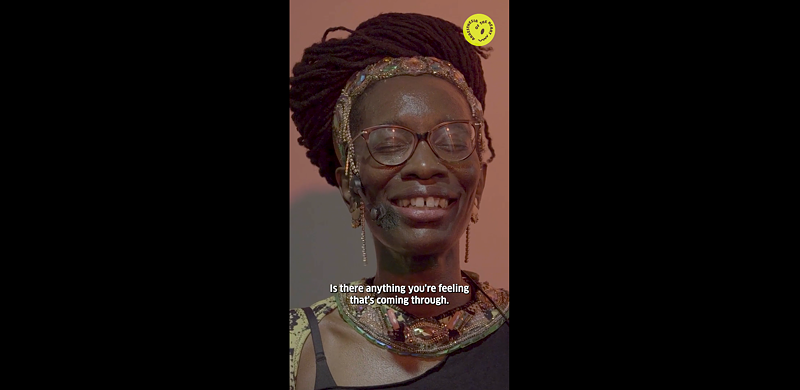
Hawah Bunduka
dance workshop | On foot: sensing carnival @ Africa is/in the Future
Carnivalesque humour as a form of humour seen as a cultural practice, has always embodied liberal, anti-heirarchichal tendencies. In the Western canon, the carnivalesque is discussed specifically within literary and aesthetic discourses. On the first day of Africa is/in the Futurefestival 2025 in Brussels, the focus was on traditions of Black carnival as a decolonial and liberating somatic practice.
© Goethe-Institut Belgien
Nadine Redlich
Festival | Grafixx Festival Opening 2025
In collaboration with Grafixx Festival and dasKULTURforum Antwerp, Goethe-Institut Belgium has invited Düsseldorf-based comic artist Nadine Redlich to exhibit. As part of the festival, she showed new works dealing with the figure of the Giant Baby.
© Goethe-Institut Belgien
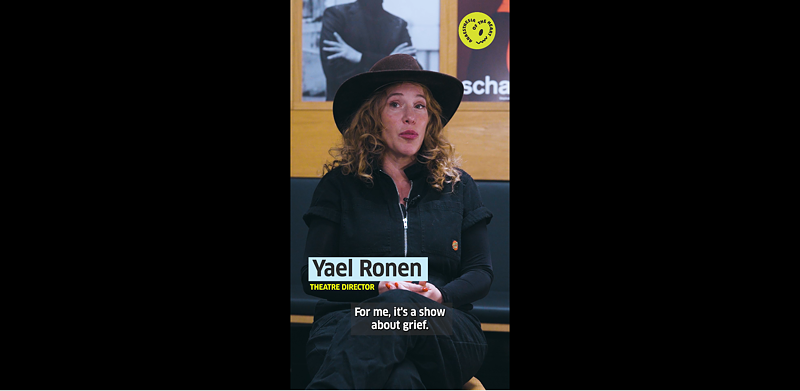
Yael Ronen
Theater | Bucket List
A man wakes up on a Saturday morning and finds that the world around him has changed beyond recognition. His reality has been dismantled. Everything he thought he knew and believed in seems to have been shattered. Nothing is as it was before.
In this musical hallucination about an overwhelming present, songwriter Shlomi Shaban and director Yael Ronen, together with the ensemble and a three-piece band, use music as a tool to delve into the abysses that our bodies may remember better than our forgetful brains.
Film © Goethe-Institut Belgien, Image Credits of Bucket List © prospero.tv & Théâtre de Liège


