With
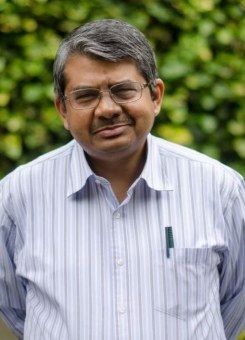
Prof. Dr. Rahul Mukherji
Head of Department of Political Science
Deputy Director | South Asia Institute | Heidelberg University
Chair
Prof. Dr. Amitabh Kundu
Distinguished Fellow
Research and Information System for Developing Countries (RIS) | New Delhi
The substantive art of India’s democracy is ridden with many challenges. Does India’s liberal democracy, amidst unprecedented diversity, have the capacity to serve the citizen? How was a poverty stricken democracy since her birth in 1947 with a most diverse populous governed? Influential scholars in the west have opined that India was a British imperial construction that would soon disintegrate. How then was citizenship produced in a country that embraces and often takes pride in diversity? Citizenship and governance are deeply intertwined, governance can engender order and economic growth, it can engender rights such as the freedom of expression and basic human needs. India is the world’s third largest economy in terms of economic purchasing power parity (PPP), its growth rate is amongst the highest. Interestingly, India’s economic growth is driven to a much greater extent by the internal rather than the global economy. This poses us to think that rapid economic growth is possible in a post-colonial and diverse liberal democracy. India also presents a paradox, how can a country with slightly more than a quarter of its citizens living below the 1.25 USD/day poverty line in PPP be called a democracy? Political-bureaucratic interactions leading to a tipping point can reveal how new institutional paths get consolidated, despite substantial opposition.
Rahul Mukherji is Professor and Head of the Department of Political Science, located within the South Asia Institute in Heidelberg University. He is also the Deputy Director of the South Asia Institute. Rahul Mukherji holds a PhD in Political Science from Columbia University and has taught at the National University of Singapore, the Jawaharlal Nehru University (New Delhi), Hunter College (New York), and the University of Vermont (Burlington). He serves on the board of journals such as India Review, Pacific Affairs and Governance. His two recent books are Political Economy of Reforms in India (Oxford University Press, 2014), and Globalization and Deregulation: Ideas, Interests and Institutional Change in India (Oxford University Press, 2014). His current research is focused on the role of the state in the process of development.