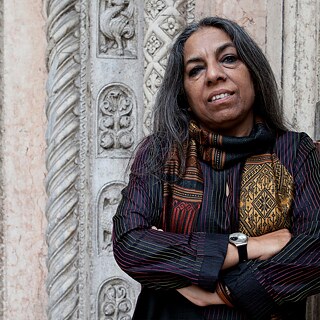
Urvashi Butalia is an independent feminist researcher and writer based in Delhi. Co-founder of India’s first feminist publishing house Kali for Women in 1984, she is currently Director of Zubaan, an imprint of Kali. She writes and publishes widely in India and abroad. Amongst her best-known publications is the award-winning oral history of Partition, The Other Side of Silence: Voices from the Partition of India (winner of the Oral History Book Association Award 2001 and the Nikkei Asia Award for Culture 2003) and an edited volume Partition: The Long Shadow. She has several awards to her credit including the Padmashree and the Goethe Medaille.
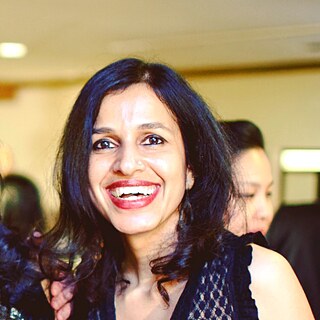
Madhavi Menon is Professor of English and Director of the Centre for Studies in Gender and Sexuality at Ashoka University. She is the author of several books on Shakespeare and queer theory, and editor of the highly-acclaimed Shakesqueer: A Queer Companion to the Complete Works of Shakespeare (2011). Her most recent books are Infinite Variety: A History of Desire in India (2018), and The Law of Desire (forthcoming later this year).
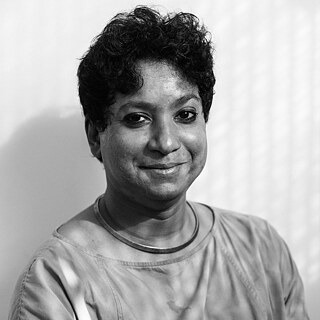
Anindya is a transfeminist, transgender rights and social justice activist based in Calcutta, India whose relationship with transfeminisms has spanned about two decades. In 1998 she co-founded Pratyay Gender Trust, one of the early community led collectives in India that became a support space for gender non-conforming and transgender persons facing harassment, stigma and violence for their gender identity/ expression. Pratyay today focuses on issues surrounding systemic discrimination surrounding Transgender Persons' Right to Work, Economic Justice and Inclusion. She has been deeply involved with sexualities, gender, anti-homophobic/transphobic violence and a significant part of her work is focussed on collectivisation of transgender persons across India, advocating with policy makers and building synergies across other human rights movements.
Meena Kandasamy
Theme: ‘Reflections on caste annihilation, feminism and linguistic identity’
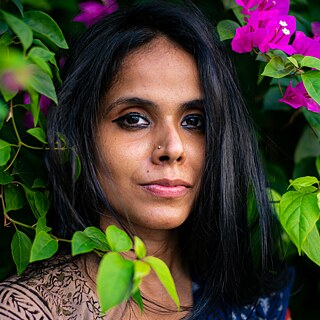
Meena Kandasamy is an anti-caste activist, poet, novelist and translator. She has always been interested in deconstructing violence, understanding the trauma caused by caste, gender, and ethnic oppressions, and spotlighting the militant resistance against these powerful systems. She explores these topics in her poetry and prose, most notably in her books of poems such as Touch (2006) and Ms. Militancy (2010), as well as her three novels, The Gypsy Goddess (2014), When I Hit You (2017), and Exquisite Cadavers (2019). Activism is at the heart of her literary work; she has translated several political texts from Tamil to English, and previously held an editorial role at The Dalit, an alternative magazine documenting caste-related brutality and the anti-caste resistance in India. Her novels have been shortlisted for the Women’s Prize for Fiction, the International Dylan Thomas Prize, the Jhalak Prize and the Hindu Lit Prize. She holds a PhD in sociolinguistics, and was recently Gallatin Global Faculty in Residence at New York University (NYU) where she co-taught a course on feminist writers from the neo-colonial world.Her op-eds and essays have appeared in The White Review, Guernica, The Guardian and The New York Times.
Romit Chowdhury
Theme: ‘What do masculinities have to do with public transport in cities?’
Romit Chowdhury is a Senior Lecturer in Sociology at Erasmus University College in Rotterdam, where he primarily teaches courses in Urban Sociology and Gender Studies. He has published on masculinities in the contexts of urban life and mobilities, men's rights movements, feminist methodology, sexual violence, care-giving, and men doing feminist research and activism in India.
Dr. Sharful Islam Khan obtained his MBBS in 1992 from Dhaka Medical College, Masters in Health Social Science from Mahidol University, Thailand, and his PhD in Sociology/Anthropology from Western Australia in 2004. Since 1997, he has been working in icddrb and now works as a Scientist and Head of Program for HIV and AIDS. His research entails addressing HIV vulnerabilities among marginalized populations including Males having sex with males, transgender women, female sex workers and people who inject drugs, alongside general populations. His primary expertise lies in qualitative research. He is a member of the Social Research Advisory Group of the Asia Pacific Coalition on Male Sexual Health (APCOM), and serves as Secretary General of the Asia-Pacific Network of the International Forum for Social Science in Health. He provided his technical expertise and guidance at various forums such as Gender and Rights Advisory Panel of the Department of Reproductive Health and Research at WHO, and expert committee on Sexual Health Indicators, Sexuality Counseling Guideline, WHO, Geneva. He also teaches in various local and overseas universities as Visiting Professor such as Mahidol University, Thailand, Osaka Prefecture University, Japan, Malmo University, Sweden, and Curtin University, Australia and Baldwin Wallace University, Ohio, USA. His areas of expertise include gender, masculinity, sexuality, sexual health and HIV and AIDS. He published numerous scientific articles and book chapters which elicited profound insights about sexuality and masculinity, and gender dynamics.