Organised in joint collaboration with Department of German, University of Mumbai
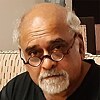
Discussants: Prof Rajendra Dengle and Romit Roy
Respondent: Prof Vibha Surana
Followed by Reading of excerpts from Faust in five languages
Presented by students of German Department, University of Mumbai
Johann Wolfgang von Goethe’s Faust is a tragic play and the best-known version of the Faust story. It was published in two parts: Faust Part One (Faust: der Tragödie erster Teil) and Faust Part Two (Faust: der Tragödie zweiter Teil). 4612 lines long, the play is a closet drama, meaning that it is meant to be read rather than performed.
Part One was preliminarily completed by Goethe in 1806. The 1808 publication was followed by the revised 1828–1829 edition, which was the last to be edited by Goethe himself. Goethe finished writing Faust Part Two in 1832, the year of his death.
In contrast to Faust Part One, the focus here is no longer on the soul of Faust, which has been sold to the devil, but rather on social phenomena such as psychology, history and politics. The second part formed the principal occupation of Goethe’s last years and appeared only posthumously in 1832.
Faust is the protagonist of a classic German legend based on the historical Johann Georg Faust (c. 1480–1540). The erudite Faust is highly successful yet dissatisfied with his life, which leads him to make a pact with the Devil at a crossroads, exchanging his soul for unlimited knowledge and worldly pleasures. The Faust legend has been the basis for many literary, artistic, cinematic, and musical works that have reinterpreted it through the ages. "Faust" and the adjective "Faustian" imply sacrificing spiritual values for power, knowledge, or material gain.
Recently, the relevance of Faust has come under critical lens. It is time to take a fresh look at this profound masterwork with deep philosophical implications and social criticism. It is time to ask the Gretchenfrage today: Why read Faust? Why read Faust now?
Prof Rajendra Dengle and Romit Roy make a discursive intellectual inquiry, Prof. Vibha Surana will respond.
The play is a closet drama, meaning that it is meant to be read rather than performed. In session I, the students of Department of German, University of Mumbai will read excerpts from Faust Part I in German, English, Bangla, Hindi and Marathi, curated by Vibha Surana and Mihir Kulkarni.
From 1979 to July 2021, he then taught at JNU at the Centre of German Studies (CGS), School of Language, Literature & Culture Studies, where his teaching focussed on literary theory, history of German literature, modern German literature, phenomenology of literary communication and cultural studies.
His research interests were mainly in the philosophy of language, comparative literature of German and Marathi, and literary translation.
Doctoral and postgraduate scholarships from the German Academic Exchange Service (DAAD) took him to the universities of Bielefeld, Bonn, Heidelberg, Bayreuth, Wuppertal and Freiburg.
He worked as Secretary of the Goethe Society of India from 2004 to 2010 and was responsible for the publication of its yearbook. Dengle has translated numerous publications and literary texts from Marathi into German.
Selected Translations:
Müller, Hertha: Der Mensch ist ein großer Fasan auf der Welt (Kaanch Ke Ansoo), together with Namita Khare, Vaani Prakashan, Delhi, 2014.
Müller, Hertha: Atemschaukel (Bhookh Ka Vyakran), together with Namita Khare, Vaani Prakashan, Delhi, 2014.
Romit Roy
@ Romit Roy
Romit Roy studied German at the Centre of German Studies, School of Languages, Jawaharlal Nehru University, and New Delhi. After finishing his M.Phil. he joined the Department of English and Other Modern European Languages (DEOMEL) at Visva-Bharati University, Santiniketan, where he has been teaching German since 1990. In 2014, Romit and his colleagues teaching modern European Languages started the Centre for Modern European Languages, Literatures and Culture Studies (CMELLCS) and undergraduate and postgraduate programs (BA Hons.) in French, German, Italian and Russian were introduced.
Romit’s research interests include, apart from German literature, culture and language, the oeuvre of Theodor W. Adorno, especially his writings on music. The musical writings of Rabindranath Tagore, as well as his internationalism and pacifism that served as the philosophical foundation of the idea of Visva-Bharati are areas of interest for Romit. Romit also writes and speaks on the music of two eminent esraj-artists of Santiniketan, Late Pandit Aseshchandra Bandyopadhyaya and Late Pandit Ranadhir Roy.
Library MMB
Dr Sir J J Modi Memorial Hall, Ground floor, K R Cama Oriental Institute Building 136 Bombay Samachar Marg, Opposite Lion Gate Fort Mumbai 400023 India
Location
Library MMB
Dr Sir J J Modi Memorial Hall, Ground floor, K R Cama Oriental Institute Building 136 Bombay Samachar Marg, Opposite Lion Gate Fort Mumbai 400023 India