Logo Goethe-Institut

Max Mueller Bhavan | India Pune

Seed Stories Residency
PUNE

17th to 21st November 24
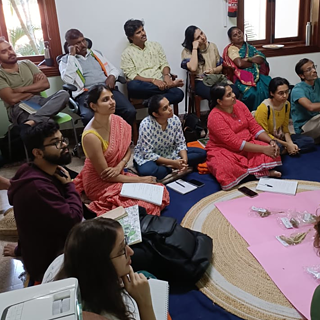
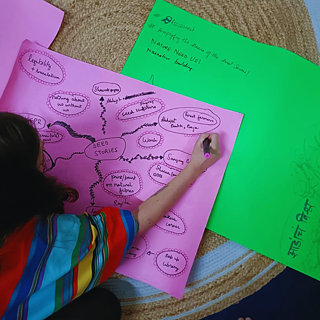
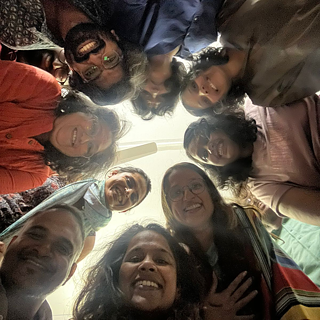
The artist residency programme hosted at Max Mueller Bhavan and RRBCEA Pune aimed to foster a rich dialogue between seed savers, experts and artists, shedding light on the vital role of native seeds and their stories, especially in the context of the ongoing climate crisis. It served as an opportunity to explore, reimagine, and amplify the narratives of seed conservation through creative collaborations and deep engagement with the land and its keepers.

Residency ©Goethe-Institut Pune

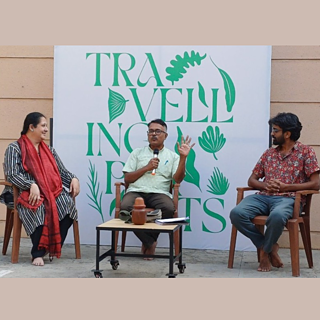
  • What is Native?

    Plants have migrated across continents, influencing ecosystems, cultures, and human life. This discussion explores the concept of "native" species in a world of constant plant movement and adaptation. The panel discussion by Dr. Aparna Watve, Dr Mahesh Shindikar and Abhijit Patil explored plant ecology, biodiversity, and cultural significance.

    What is Native? ©Goethe Institut Pune ©Goethe Institut Pune

  • NGCPR: Why seeds?

    Why Seeds? By Sagar Datir Explores the role of NGCPR (Navroji Godrej Centre for Plant Research) in plant conservation and how seeds play a significant role in doing that. He and his team Pavan Kumatkar, Balkrishna Awale, Ravi Rainak gave insights into plant identification, seed collection and seed germination.

    NGCPR: Why seeds? ©Goethe Institut Pune ©Goethe Institut Pune

  • BAIF: Seeds, soil, health, human?

    The session featured discussions with Sanjay Patil, Mamta Bhangre, and Balu Ghode from BAIF on seed diversity and community resilience. It highlighted the connection between soil health, human well-being, and local crop preservation. Key topics included living seed banks, local culture's role in conservation, and how market linkages and cyclical economies support sustainable agriculture, emphasizing collective action in seed conservation.

    BAIF: Seeds, soil, health, human? ©Goethe Institut Pune ©Goethe Institut Pune

  • Dr. Gurudas Nulkar: History of Food

    Dr. Gurudas Nulkar, explored the history of food, beginning with the formation of the planet and the hydrological cycle’s vital role in sustaining life. The session traced the origin of agriculture, highlighting how seeds accidentally sparked the rise of civilization. Key topics included the pros and cons of surplus production, the politics surrounding seed control, and the growing climate crisis and inequality. Dr. Nulkar concluded with a thought-provoking discussion on the way forward in addressing these challenges.

    Dr. Gurudas Nulkar: History of Food ©Goethe Institut Pune ©Goethe Institut Pune

  • Ketaki Ghate​: Oikos and Restoration

    Ketaki Ghate from Oikos discussed ecosystem restoration, addressing key questions like what defines a mature ecosystem and what constitutes degraded land. She outlined the principles, planning, and execution of restoration programs, emphasizing the importance of private land in conservation efforts. Ghate highlighted the benefits of slowness in restoration work and provided insights into the available documentation of Oikos, showcasing their ongoing contributions to ecological restoration and sustainable practices.

    Ketaki Ghate​: Oikos and Restoration ©Goethe Institut Pune ©Goethe Institut Pune

  • Artists' Response

    The program was exceptionally well-organized. Throughout the residency, numerous significant topics were addressed by esteemed speakers. The careful selection of these speakers was crucial to the program’s success. I am confident that I will create meaningful artwork by the end of this program. - Vaishali Oak

    The passionate and compassionate guests who engaged with us have planted a seed of curiosity within me. - Jayraj Patil

    Artists' Response ©Goethe Institut Pune ©Goethe Institut Pune

Artists

Follow us