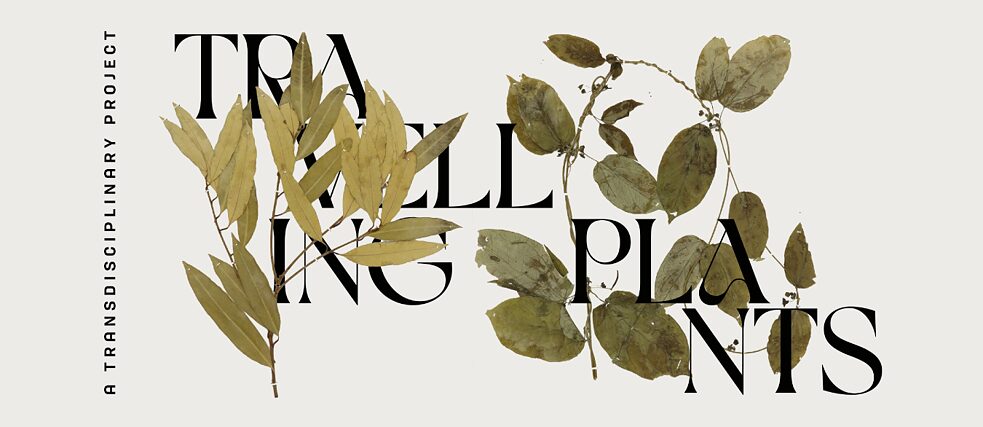
Travelling Plants is a transdisciplinary art project led by the Goethe-Institut, in collaboration with the Alliance Française of Madras and the French Institute of Pondicherry (IFP).
The central focus of Travelling Plants is the Herbarium at the Institut Français de Pondicherry (IFP) which was established by Pierre Legris, a member of the Forestry Commission of France in 1956. Over the years, its growth has been propelled by the dedicated efforts of successive researchers and students, as well as acquisitions from various herbaria. In order to build awareness of this space, with relation to contemporary socio-cultural, political, and environmental concerns globally, the idea of creating an interactive project with artists, researchers, scientists, and others came about.
The herbarium contains over 27,875 specimens belonging to 257 families and 4,700 species. It has many specimens, of trees particularly, from the Western Ghats and the Eastern Ghats, as well as other regions of India and the world. The HIFP includes about 880 endemic species of trees, shrubs, herbs and climbers, and is rich with seven types of specimens - which include angiosperms, gymnosperms, pteridophytes, fungi, and algae - organised according to scientific classifications.
Five artists invited from India, Sri Lanka, France, and Germany stayed in Pondicherry and study the Herbarium through March 2024, with the idea of exploring varied personal and collective lenses while looking at biodiversity, and discussing new and inclusive ways to deal with our environment. The history of what is migratory and/or indigenous, pertaining to all life forms, has shaped the way civilisations have grown, evolved, and even disappeared. Colonisation and its aftermath can be studied as one part of this history that rearranged resources across trade routes and lands of conquest.
As they engaged with the material, the artists were supported by the curator, in-house researchers, and other facilitators in finding ways to literally and conceptually unlock the stories that appealed to them that were presented through their individual practices.