Logo Goethe-Institut

Max Mueller Bhavan | India

Beyond Bias

Beyond Bias © Goethe-Institut / Max Mueller Bhavan

Generative AI shapes the tools of tomorrow, but it risks replicating today’s biases and inequities. Can we imagine a future where generative AI truly reflects the diversity of human experiences? By creating representative datasets and fine-tuning models, Beyond Bias paves the way for tools that are both culturally sensitive and technically innovative.

About the project

AI systems are mirrors of their training data. If we don’t take action now, the generative AI models that will shape tomorrow’s creative tools will continue to perpetuate the biases, limitations, and inequities embedded in digital representation today.

In response, Goethe-Institut, in collaboration with Gooey.AI, is proud to announce a varied initiative that reimagines a future where generative AI embraces and reflects the rich diversity of human experiences. By crafting culturally representative image datasets and fine-tuning AI models, we aim to confront biases head-on and develop tools that are both culturally sensitive and technically innovative.

Through participatory research, strategic partnerships, and hands-on creation, this project seeks to champion transparency, inclusivity, and community-driven solutions. It brings together voices from creative, legal, archival, and research domains to reshape the trajectory of AI development. By working together, we will design accessible, culturally nuanced datasets and fine-tuned AI models, empowering anyone to generate new and representative visuals. This is a step toward an equitable and inclusive digital future for creators everywhere.

Our Goals

  • Engage digitally under-represented communities: Convene a diverse network of cultural, academic, and legal practitioners to address how various  communities (i.e. gender-related minorities, artisanal communities)  can be fairly represented in generative AI.
  • Forge Strategic Partnerships: Collaborate with German and Indian institutions to amplify our global impact.
  • Create Public Tools: Develop replicable AI workflows for creators everywhere to train and fine-tune AI models that are best tailored to them.
  • Empower Public Use: Make these custom AI models available for public use on Gooey.AI, huggingface and elsewhere so anyone can make art in styles previously impossible.
  • Expand Image Sets: Facilitate making under-represented image sets available to frontier AI image generation models (eg. OpenAI’s DallE, StableDiffusion, FLUX) so the next generation of GenAI tools fairly represent more cultures. 

Our Manifesto for Ethical AI

Generative AI is already reshaping culture, education, knowledge systems, and creative practices. But alongside its many potentials, there is a growing recognition that it risks mirroring and reinforcing historical inequities. The following texts manifest our principles for ethical AI development.

More on AI and Bias

Artificial intelligence shapes our digital interactions, but it’s far from neutral. From facial recognition to translation tools, biases in algorithms can perpetuate inequality. How do we address these hidden prejudices and create fairer AI systems for all?

Bias and Error

When AI Is Biased

Over the past decade, we have come to spend much of our lives in the digital sphere – a sphere that is increasingly controlled by just a handful of corporations. These companies, unavoidable for most, exert a considerable amount of control over what we can see and say, as well as the types of tools available to us.

Whether it is being used for searches or automated content moderation: Artificial intelligence is only as useful as its underlying datasets. Photo (detail): © Adobe Photo (detail): © Adobe

  • AI Stereotypes

    De-biasing Translation Tools

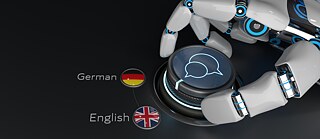
    Many people routinely use machine translation services like Google Translate to translate text into another language. But these tools also often reflect social bias.

    A white robotic hand next to a button with speech bubbles on it and the German and UK flag next to it. Photo (detail): Alexander Limbach © picture alliance / Zoonar Photo (detail): Alexander Limbach © picture alliance / Zoonar

  • Democracy in the Digital Space

    “Be Careful What You Build”

    Human rights lawyer and author Maureen Webb explains how “technical fixes” can exacerbate bias and discrimination, and how hackers are fighting to protect our democratic rights in the digital space.

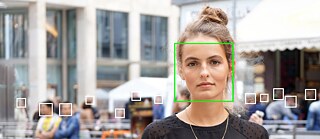
    The algorithms in facial recognition are anything but unbiased. Photo (detail): © picture alliance/Zoonar/Axel Bueckert Photo (detail): © picture alliance/Zoonar/Axel Bueckert

  • Artificial Intelligence and Elections

    It’s About Saving Democracy

    Bogus audios imitating politicians’ voices, AI-augmented robo-calling or fictional TV anchors: artificial intelligence offers a magnitude of new ways to spread disinformation. In an era of global crises, it represents a genuine threat to democracy.

    Which information is true, which is artificially generated? Spotting the difference is becoming ever more difficult as AI-augmented fake news and disinformation are spreading. Photo (detail): © Adobe Photo (detail): © Adobe

  • Artificial Intelligence

    Awful AI

    In our modern world, nothing can escape the digital revolution. The way we commute, communicate and consume is controlled by code, and that code is growing increasingly intelligent. But artificial intelligence is by no means as fair or neutral as it may seem.

    Artificial intelligence is by no means as fair or neutral as it may seem. Photo (detail): © Adobe Photo (detail): © Adobe