Logo Goethe-Institut

Max Mueller Bhavan | India

Society

Detours

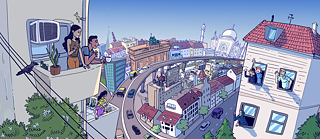
A selfie at the Brandenburg Gate, a tour of Neuschwanstein Castle – all great. But which cities, landscapes and special places in Germany are also worth seeing? Once a month, we take you to a place in Germany that you absolutely must discover!

Detours © Goethe-Institut e. V., Tobias Schrank © Goethe-Institut e. V., Tobias Schrank

Projects

  • Dreamland Deutschland?

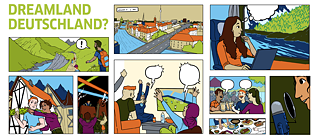
    Dreamland Deutschland? is a unique storytelling project that captures the real-life experiences of South-Asian students navigating life in Germany. Through the lens of an international panel of talented graphic artists, these stories are brought to life in both online and print formats as a graphic novel anthology.

    various scenes from Germany as comic scenes © Goethe-Institut / Max Mueller Bhavan | Pritish Bali & Anupam Arunachalam © Goethe-Institut / Max Mueller Bhavan | Pritish Bali & Anupam Arunachalam

  • Typical Germany!

    Oh so German!

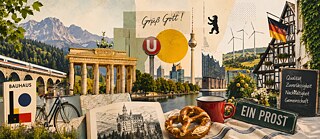
    Do bratwurst, beer gardens, and Lederhosen truly encapsulate Germany? Are fairy tales the country's secret obsession, and is every corner adorned with castles? Oh So German! offers glimpses of the many facets that compose the essence of Deutschland.

    Oh so German! © Adobe Firefly | Edit: Goethe-Institut / Max Mueller Bhavan © Adobe Firefly | Edit: Goethe-Institut / Max Mueller Bhavan

  • Portraits of Indians in Germany

    Home Away From Home

    Indian presence can be felt throughout Germany — be it the tantalizing scent of Indian cuisine permeating the air or the sight of Indian students making their way to universities. But what draws Indians to Germany, and what keeps them there? In this dossier, we explore personal stories and experiences of Indians living in Germany, including navigating cultural differences and finding success in their careers, revealing the unique challenges and rewards of living as an Indian in Germany.

    Home Away From Home © Goethe-Institut / Max Mueller Bhavan | Anupam Arunachalam © Goethe-Institut / Max Mueller Bhavan | Anupam Arunachalam

  • German City Portraits

    German cities are as diverse as the landscape that surrounds them. In a series of city portraits, we embark on a journey through Goethe's homeland. Our authors have taken a close look at things small and large which make their cities so unique and lovable.

    City Contours © Tobias Schrank © Tobias Schrank

  • European Football Championship

    It's finally happening: after over 30 years, the European Football Championship returns to Germany! From June 14 to July 14, 2024, 24 teams will vie for the coveted trophy. Discover everything about the tournament in our special, and take a nostalgic look back at quirky soccer songs, iconic fashion moments, and the historic East vs. West Germany match. Enjoy and happy kicking!

    European Football Championship © Goethe-Institut e. V./Illustration: Tobias Schrank © Goethe-Institut e. V./Illustration: Tobias Schrank

  • Simurgh Centre

    The Simurgh Centre is a cultural space for collaborations and conversations between Afghan, German, and Indian artists. We seek to support, explore and share the work of Afghans, mostly those living in Delhi, and create connections with audiences and discourse across the world.

    Simurgh Centre Goethe-Institut / Max Mueller Bhavan Goethe-Institut / Max Mueller Bhavan

  • Being Queer

    Queer Identities

    What does it mean to be queer today? Where is queer seen? Who is queer? A brief journey through queer everyday life in India and Germany.

    Illustration of Lili Elbe Illustration © Rosa Kammermeier Illustration © Rosa Kammermeier

  • Magazine

    Lockdown Lessons: Proximity and Distance

    In ways we never imagined a virus now compels the world to keep its distance and regulates the closeness we are allowed to have with others. What happens with us when cultural practices of proximity are so fundamentally questioned?

    Illustration: Proximity and Distance Photo (detail): © Nadine Shaabana Photo (detail): © Nadine Shaabana

  • Freedom

    Commemorating 75 years of India's independence with 75 contributions, Freedom brings together artists, authors and thinkers from India and Germany to explore what freedom means to individuals and societies in a modern democracy.

    Freedom © Goethe-Institut / Max Mueller Bhavan © Goethe-Institut / Max Mueller Bhavan

  • Fehler

    How do we innovate and make progress? Our answer: often by mistake. We’re celebrating mistakes and their innovative power in this magazine: a collection of both big and little mistakes in art, language, technology, and society.

  • M.A.P // A.M.P

    The project captures, documents, explores and invites music, poetry, research and discourse on the intersections of music and activism in South Asia.

    M.A.P // A.M.P © Goethe-Institut / Max Mueller Bhavan © Goethe-Institut / Max Mueller Bhavan

  • M3: MAN, MALE, MASCULINE

    The project aims to discuss current visions of masculinity across the gender spectrum in India and Bangladesh through various cultural and educational activities.​

    Männerbilder Key Visual

  • Feminism

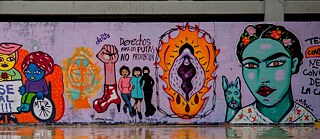
    What are the vital issues that women and feminists in South Asia and Germany today consider to be of burning importance, what are they concerned about? And what else is there still to do? This is a showcase of people who are involved in the field of culture and who are dealing with the hottest feminist issues and debates of the moment.

    2021 International women’s day graffiti Photo (detail): Jordi Boixareu © ZUMAPRESS.com Photo (detail): Jordi Boixareu © ZUMAPRESS.com

  • Standstill

    The earth rotates, everything is in constant motion, change is a necessity. It’s high time for a magazine dedicated to stillness: a collection of pieces from international artists and writers in homage to standstills and their poetic beauty.

    A television photographed in 2006, still from “Germany’s Most Beautiful Railways” Photo: Goethe-Institut Photo: Goethe-Institut

  • Inherited Memories

    Three generations have passed since the Partition of Bengal. Inherited Memories focuses on memories of the third generation post-partition, how it affects millions of people still today, shapes their minds and views of "the other Bengal" and what role the culture of memory plays in coming to terms with the passed on traumata.

    Inherited Memories Slider © Goethe-Institut © Goethe-Institut

  • Hannah Arendt

    Fifty years after her death, Hannah Arendt’s thinking is more relevant than ever. In this issue, we explore her life and work from various perspectives and invite readers to reconsider her questions about freedom, responsibility, and judgement in light of today’s challenges. In doing so, we ask: what does it mean today to think and act in the spirit of Arendt?

    Illustration: Hannah Arendt reclining with a lit cigarette in her right hand Illustration: © Eléonore Roedel Illustration: © Eléonore Roedel

Articles

  • German-German history

    Ein Ossi im perfekt wiedervereinigten Land

    Author Valerie Schönian, who was born in the German state of Saxony-Anhalt is only familiar with walls dividing the country from films. Nevertheless, she consciously identifies as east German and, in her writing, explores how different perspectives in east and west Germany can be seen as an asset.

    The ”OST“ (east) inscription on the roof of the Volksbühne in Berlin is removed with a crane Photo (edited): © picture alliance | Jörg Carstensen Photo (edited): © picture alliance | Jörg Carstensen

  • Video Games from Germany

    Typical German?

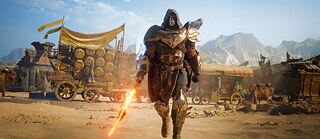
    Germans like to play games. 53 percent of people over the age of 16 regularly play video games. And with a turnover of almost six billion euros, the gaming industry is now a significant economic factor. But which games come from Germany? And what makes them “typically German”?

    A scene from the game ‘Atlas Fallen’ with a figure in the foreground and a passing caravan in the background. © Deck13 Interactive © Deck13 Interactive

  • Recyling and waste separation

    Germany - a Recycling Star?

    At first glance, Germans recycle their waste like world champions. But what is behind the “Recycling World Champion Germany”? On what we create every day: waste.

    The image shows an old slide. It shows the garbage collection in Dortmund. In the foreground, a person dressed in orange is sweeping a street. In the background a garbage truck turns the corner. Photo (Detail): picture alliance / imageBROKER | klaus Rose Photo (Detail): picture alliance / imageBROKER | klaus Rose

  • LGBTQ+ friendly cities in Germany

    A queer journey through the cities

    Many German cities are today proud of their vibrant queer community. There are bars, clubs, events and initiatives that offer queer people a safe space. The ways to get there were very different.

    CSD Leipzig 2023. Participants with Pride Flag Photo (detail): © mauritius images / SOPA Images Limited / Alamy / Alamy Stock Photos Photo (detail): © mauritius images / SOPA Images Limited / Alamy / Alamy Stock Photos

  • Five typical German habits

    That's how it's done here

    No sense of humour, always overly punctual, taciturn and a little reserved – one nationality immediately pops into your head when you hear these descriptions: the Germans. The list could go on and on – here we look at five habits that are seen as “typically German”.

    Celebrating at the Oktoberfest 2024 in Munich Photo (detail): © picture alliance/dpa | Karl-Josef Hildenbrand Photo (detail): © picture alliance/dpa | Karl-Josef Hildenbrand

  • Five inventions from Germany

    Milestones

    Germany, the land of poets and thinkers – and inventors. Many groundbreaking ideas that still shape our everyday lives today come from Germany. Here are five pioneering inventions made in Germany.

    Paraglider in the sunset Photo (detail): © mauritius images / Konstantin Yolshin / Alamy / Alamy Stock Photos Photo (detail): © mauritius images / Konstantin Yolshin / Alamy / Alamy Stock Photos

  • The Early Days of Radio

    “Attention, Attention”

    It is more than 100 years since the radio began to conquer the world. We have listened to the first sentences transmitted by wireless telegraphy: a journey back in time to the earliest beginnings of radio technology and radio entertainment.

    London in the early 1930s: women listening to the radio in Hyde Park. Photo (detail): © picture alliance / ullstein bild Photo (detail): © picture alliance / ullstein bild

  • Berthold Franke

    Legend, Heimat, Traffic Jam

    From the darkest chapter of the 1930s and unlimited speeding across the German countryside to kilometre-long congestion – Berthold Franke looks back on almost one hundred years of (West) German autobahn history and deep into the German soul.

    Legend, Heimat, traffic jam – the German autobahn © Unsplash / Arkadiusz Radek © Unsplash / Arkadiusz Radek

  • German-German history

    Negotiations in the shadows

    From the early 1960s to the end of the 1980s, thousands of GDR prisoners were ransomed by the Federal Republic of Germany (FRG). It was a deal that benefited both sides. But how did the process work? An article on a unique aspect of German-German history.

    Picture of a cell of the former women's prison Schloss Hoheneck. Photo (detail): © picture alliance/dpa | Hendrik Schmidt Photo (detail): © picture alliance/dpa | Hendrik Schmidt

More Topics

  • Dresdner Sempergalerie © Staatliche Kunstsammlungen Dresden, David Brandt © Staatliche Kunstsammlungen Dresden, David Brandt

  • Binge Fever Title Remote © Colourbox / Image editing Goethe-Institut Los Angeles © Colourbox / Image editing Goethe-Institut Los Angeles