Everyday Life in Germany: Game Edition
“Don’t Get Cross – It’s Just a Games Night”
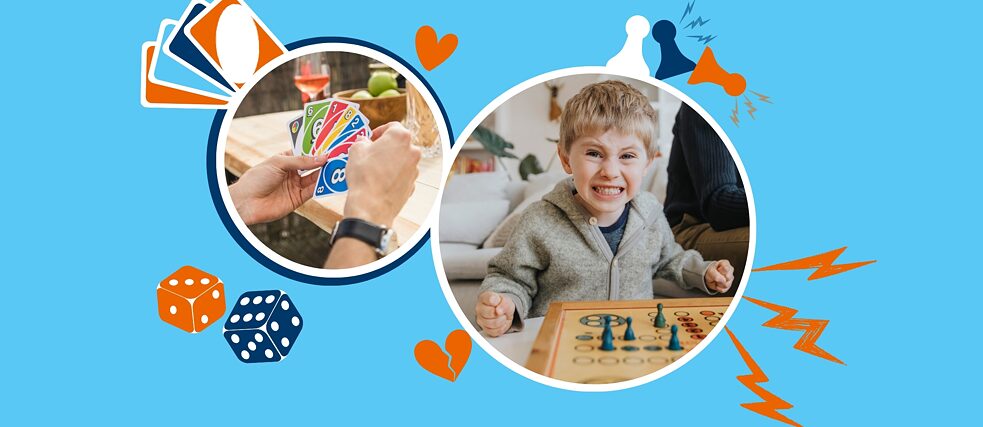
Games are the same everywhere – and yet never quite alike. Between “Mensch ärgere Dich nicht” (Man, Don’t Get Angry) and “Bargis”, one can discover not only how much a games night is shaped by culture, but also how familiar the foreign can feel. A journey into the world of games with our author Ahmad Kalaji.
By Ahmad Kalaji
It’s summer, my favourite season. I stroll through the streets of Cologne, accompanied by birds chirping, while my thoughts drift back to the time before I came to Germany. I’ve been living here for ten years now, and sometimes I think I’ve gotten to know the country at the games table like nowhere else. Between Mensch ärgere Dich nicht and Bargis, between Sahra and games night, I’ve learnt how different closeness can look – and how similar it can sometimes feel.
Let the Games Begin
Syria, 10 p.m. on a Thursday evening. The doorbell rings incessantly at my grandmother’s house, as one family member after another arrives. Soon, everyone is spread across the kitchen, hallway, living room and terrace, until finally the Sahra (سَهْرَة) begins – the evening gathering that often lasts late into the night.The evening starts as it always does: welcoming coffee, sweet cake, and conversations about everyday life, politics and society. But at some point, the tension rises until the magical words are finally spoken: “Shall we play?” Suddenly the room transforms. Chairs are shifted around; a large round table is cleared. Everyone bustles about until each finds their place. A ritual that belongs to the Sahra.
All’s Fair in Play and in Love
At the far end of the room, by the balcony door, four players are seated at a large wooden table playing Trex, a strategic card game from the Levant and a staple of the Sahra. My eldest aunt is pitted against my uncle, my mother against my cousin. My cousin, despite his young age, is allowed to join in – his years of practice have paid off. At another table, my grandfather is waiting patiently for his opponent. His Tawleh, a game similar to backgammon, is ready, the shisha glowing quietly beside him. With a mischievous smile he says: “I’ve never lost at Tawleh. Get ready!”My grandmother, on the other hand, loved Bargis (برجيس), a game similar to Mensch ärgere Dich nicht, played on a cloth board with metal figures and seashells. Sometimes it turned into proper tournaments, with everyone competing for the evening’s grand prize. Everyone sat on the floor together, children and adults forming the audience, cheering and loudly commenting on every move.
One rule was clear: you may cheat, as long as you don’t get caught. If you’re caught, you’re out. If you get away with it, you can boast about it afterwards. Cheating was part of the game – it heightened the excitement and showed a certain cleverness.

Is anyone cheating here? | Photo (Detail) © mauritius images / Cavan Images / Dreet Production
The Game Marathon: A Serious Affair
It was 2016 when I experienced my first Christmas in Germany. Our flat smelled of freshly baked biscuits. The doorbell rang, my host mother came in – a cycling bag in one hand, a big shopping bag in the other. “Children, I’ve got new games for us!” she called with a wide smile, putting the bag down, despite the living room already holding a large wooden cabinet full of hundreds of games – also inherited from her. What followed were three days of playing and eating.There Must Be Order
Games nights in Germany are different from those in Syria. Everything runs calmly and orderly. The table is prepared, cups and plates set aside, the biscuits placed in the middle. Then the “Game of the Year” comes out, reading glasses perched on noses. The purpose of the gathering is to play. At precisely 6 p.m. the games night begins: the doorbell rings, drinks are served, there’s a short chat. Then the same magical phrase is spoken as back in Syria on that special evening: “Shall we play?”“I’ll Read Out the Instructions”
My host mother, her friends, my brother and I sit down together. My ten-year-old host sister refuses to play – out of fear of losing. Two people bend over the rulebook and read it aloud, slowly and clearly, taking turns. Everything must be correct. The most important thing here are rules, rules, and more rules. Cheating is strictly forbidden and severely punished. But despite all the seriousness, there’s plenty of laughter too.For me, games are an important part of life in Germany – especially on long train rides that seem endless. Wizard, Elfer Raus, or Uno are just as indispensable here as on camping holidays, particularly when it rains. Games often act as icebreakers when people don’t know each other yet – played with or without a drink in hand. Games nights here are planned and scheduled, with the game itself at the centre. It’s about fun, and about competition.
New Game, New Home
When I think of Germany, I remember all these moments in which playing games gradually made me part of the culture and society. It isn’t just language that opens doors to a new home – shared experiences do so as well. Games bring people together, make them laugh, sometimes cry or quarrel – and connect them in ways words alone never could.Be it Mensch ärgere Dich nicht or Bargis, the noisy chaos at my grandmother’s or the quiet order at my host mother’s – both are part of me, my memories, and my cultures, which meet somewhere between German games night and Sahra. Each game reminds me anew that closeness can be at home anywhere – regardless of language, rules or origin.