Remembrance culture among young people
Collective memory of the pandemic
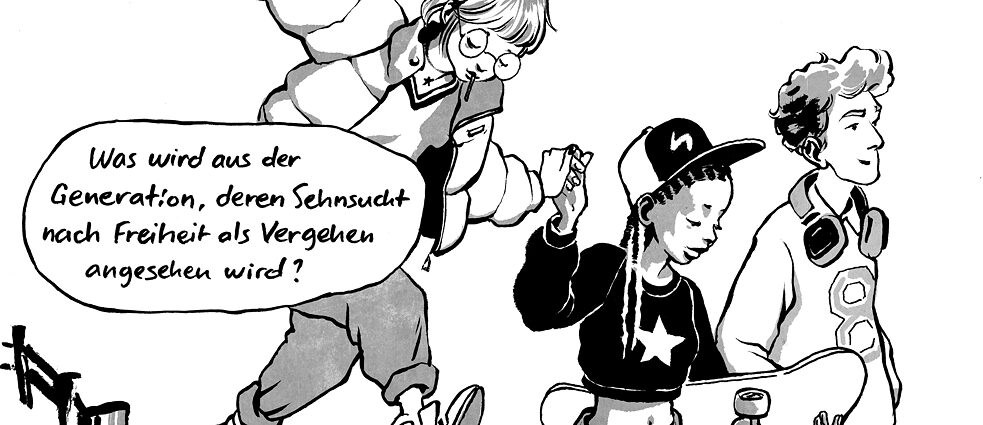
Today, children and adolescents are growing up in the midst of restrictions on physical contact and bans on recreational activities. What will they remember once it’s all over? How will their experiences shape the collective memory? In her comic, the illustrator Beatrice Davies looks for answers.
For 18 months or so, children and young people in Germany have only been able to meet certain friends and peers, have had lessons at home, occasionally in school for a change, sometimes wearing a mask in the classroom and sometimes not – the rules are always changing. They are not even standardised across the 16 federal states, rules and regulations vary from district to district. Who still understands?
Travel plans, concerts, events continue to be cancelled, and the hidden danger of getting infected and infecting others persists. What do these experiences do to children and young people, to their daily routine, and how will their experiences shape the collective memory? The illustrator Beatrice Davies goes in search of answers.
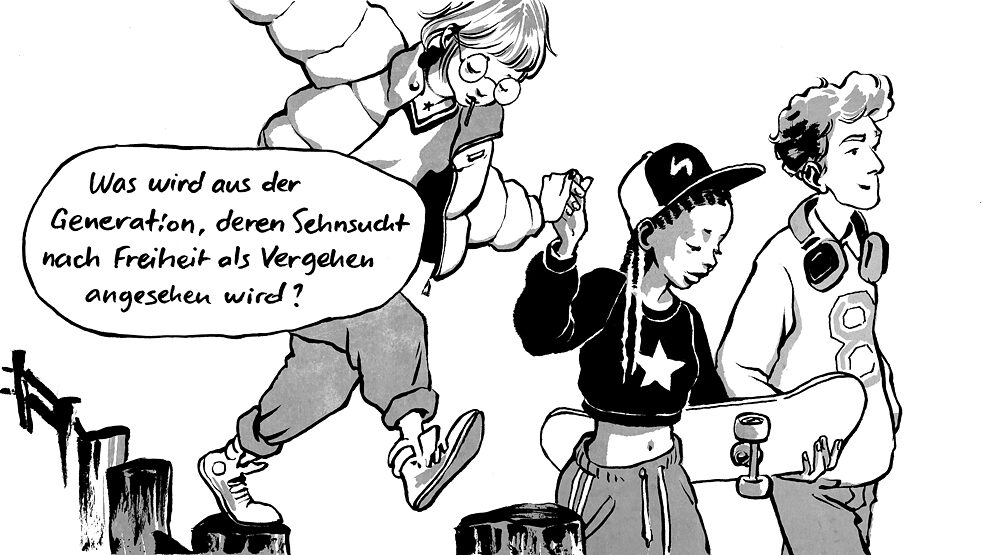 “What will happen to the generation whose desire for freedom is considered a crime?” | Illustration: © Beatrice Davies
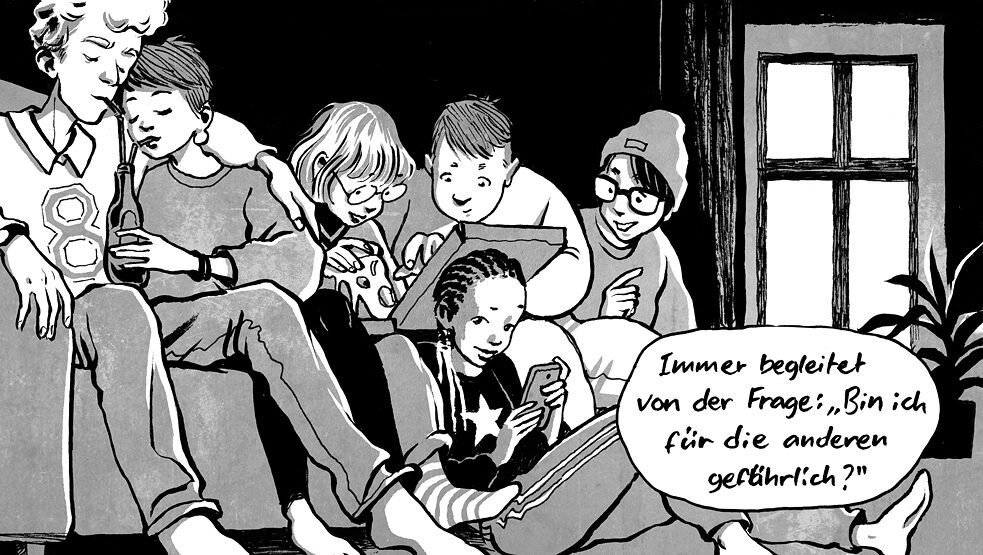 “Always accompanied by the question: Am I a risk to the others?” | Illustration: © Beatrice Davies
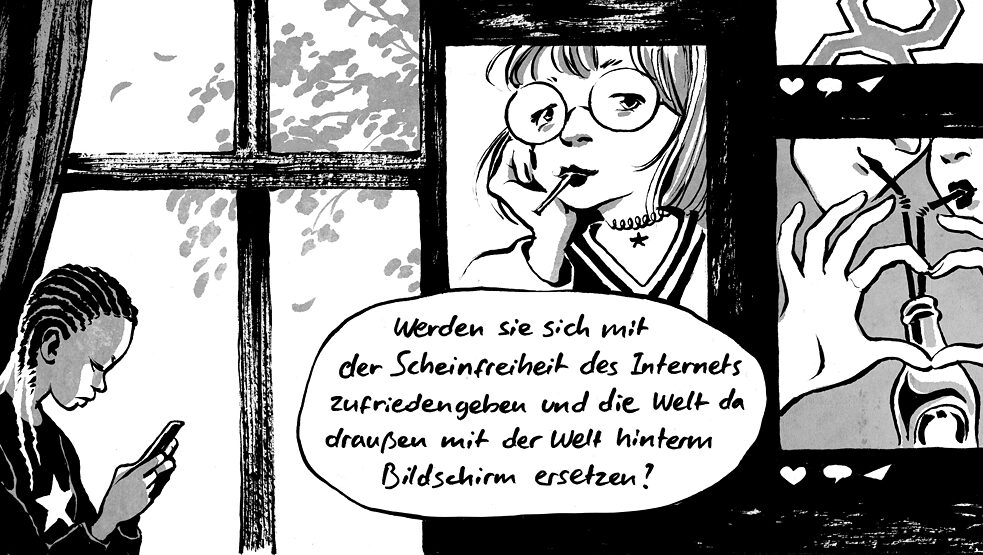 “Will they be content with the fake freedom of the internet and substitute the outside world with a world behind the screen?” | Illustration: © Beatrice Davies
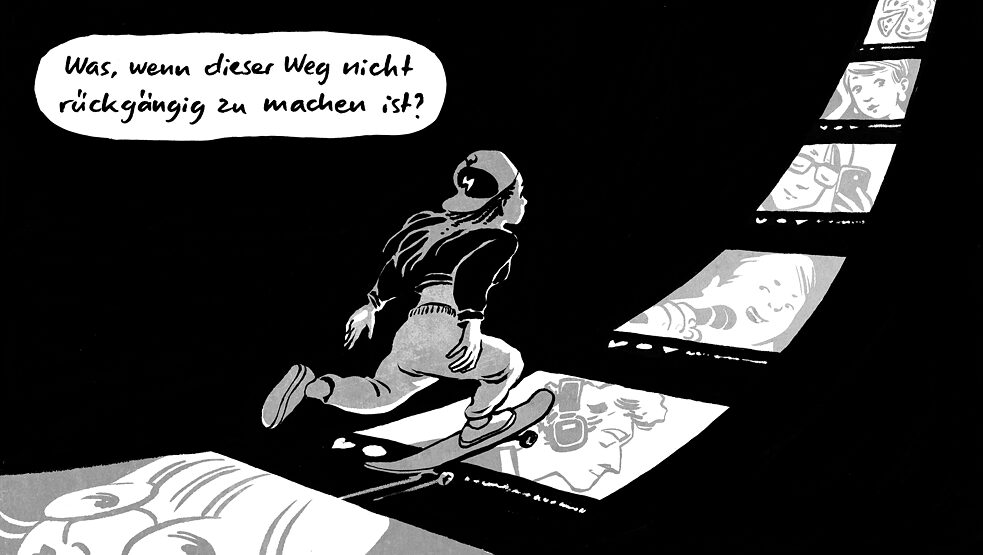 “What if this path is not reversible?” | Illustration: © Beatrice Davies
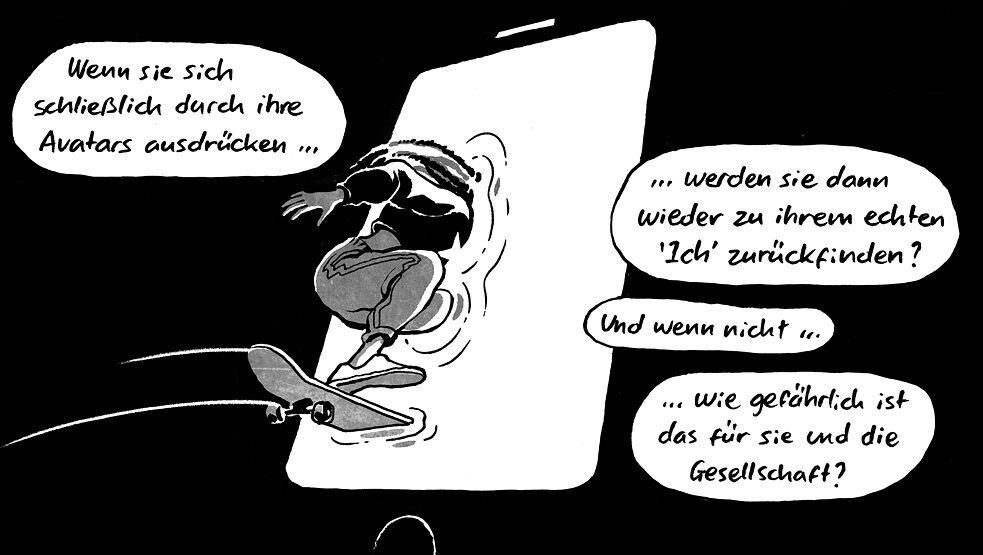 “If they end up expressing themselves through their avatars … does that mean they’ll find their way back to their true selves? And if not … how dangerous is that for them and for society?” | Illustration: © Beatrice Davies
Will young people ever meet in the “real world again”?