From Real Life to Gaming
How to Gamify a Dark Point of History

“What’s the best historical game you’ve ever played?”
Speaking in a general sense, most of you would choose a series like Civilization, or Assassin’s Creed. No doubt these are good answers. But there are a few problems here.
By Pruthvi Das
The former is a strategy game with Gandhi as a warmonger. The latter is an action-adventure game that believes falling into haystacks from a highly elevated point is a safe stunt to pull off. But both are equally fun games to play.
In essence, we could sum up the objectives of these games: they neither want to offer a historical experience nor educate you about history. They just want to entertain you. In some cases, these games take the liberty to alter the historical content heavily for the sake of entertainment. Hence, some of the bizarre elements regarding history that you’d find.
So maybe the question should be rephrased into something like this:
What’s the best game based on real-life historical events you’ve ever played?
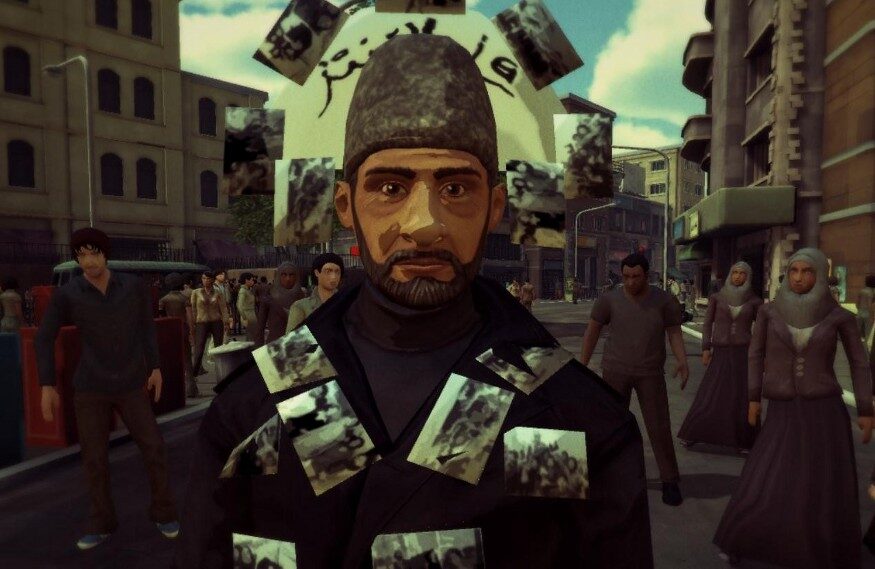
No punches were pulled during the course of the story. The game thrusts the player in the shoes of a journalist, Reza Shirazi. You’re first introduced to a monologue in remembrance of his friend, Babak. That is quickly cut short when reinforcements arrive, and Reza is forced to scrounge for a bunch of schematics. Regardless of the player’s choices in that moment, Reza ends up being arrested and charged with conspiracy, murder, and aiding the revolutionaries.
Majority of the game is told in retrospect of events before and during Black Friday while the actual game takes place within the confines of the interrogation room in Evin Prison. Here, Reza is tortured and interrogated by the warden, Asadollah Lajevardi, who was infamously called the ‘butcher of Evin’.
Now, the majority of the events surrounding these characters are fictionalized. But the game is based on the real-life events that transpired in 1979. Some of these characters could be considered a careful representation of revolutionaries with different ideals and beliefs at the time. With that said, it was remarkable to learn about how a religiously diverse community can fight together for the same cause.
What I love about the narrative is that if you stripped the choice-based elements, then you are essentially a neutral character forcibly torn between two sides of the revolution — one that advocates violence, and the other with peace. I really felt that the developers chose not to pre-define Reza’s personality and instead leave that to us. It felt impactful for I got to explore and comprehend the horrors the citizens were forced to put up with.
But the game doesn’t just centralize around these characters. The introduction sets in stone the entire tone of the game — it was violent, disheartening, and downright unfair at times to see how things played out. The phenomenal aspect is the empirical storytelling as a documentary through the eyes of a journalist; the chant of the crowds, the boycotting of Western influences, the photography elements inspired by the actual archived photographs taken at the time, Babak’s commentary on the situation as I took each step forward in the streets of Iran, the music that complemented the setting and the mood — all of it set a stage for what the game could provide as a game of ‘awareness’. No stone was left unturned.
Bringing these elements together with a tandem of narrative interactivity and personal conflict without going overboard on the sensitivity of the subject is in and of itself a mammoth task; I commend the developers for pulling it off perfectly. It’s something I wish we saw more of but the likes of which we won’t likely see again. Here’s what I mean.
We’ve got games like the Wolfenstein series, which put the player in a reality where the Nazis took over and came up with all sorts of weird, inhumane, sci-fi technology.
Yet, it brings me back to the point of what such games entail: They are solely for entertainment, nothing more.
They want to jump into haystacks from higher grounds. They want to kill Nazis with the LaserKraftWerk in their Da’at Yichud Power Suit. Yet, the idea of walking players through a historical event sounds unappealing to some.
But it isn’t just the idea of preserving legacies and talking about them. It’s that we would be preserving ideologies or events we could use as examples to learn from — either as a precaution or as an inspiration… or both! This game proves that you can engage the audience in even the most delicate subject matters. Games can be an established ground for communication on such matters but only if more developers took the risk of speaking on them whilst taking utmost care and caution in handling the information they get. It is all the more reason for people to advocate for games like Black Friday.
These are some events that most folks have either little knowledge about or, may I dare say, have forgotten. The Oversteegen duo (Freddie and Truus) or the Jallianwala Bagh massacre, to name a couple. Hell, we could even shift our focus to more modern events, such as the infamous Nice truck attack or the shootings at Orlando or Las Vegas. With more cinematic and experimental games being accepted whole-heartedly among the gaming communities, it would be a great opportunity to gamify these events and see what direction that takes among the audience.
If we could make movies about them, if we could dedicate songs to them, then I don’t see why we can’t turn them into interactive experiences.
In any case, 1979 Revolution: Black Friday proves itself to be a great interactive documentary that any narrative-based studio should take a page from. What are your thoughts?