Rohini Devasher
Glasshouse Deep
Single channel video with sound, duration 14 minutes 21 seconds, 2021
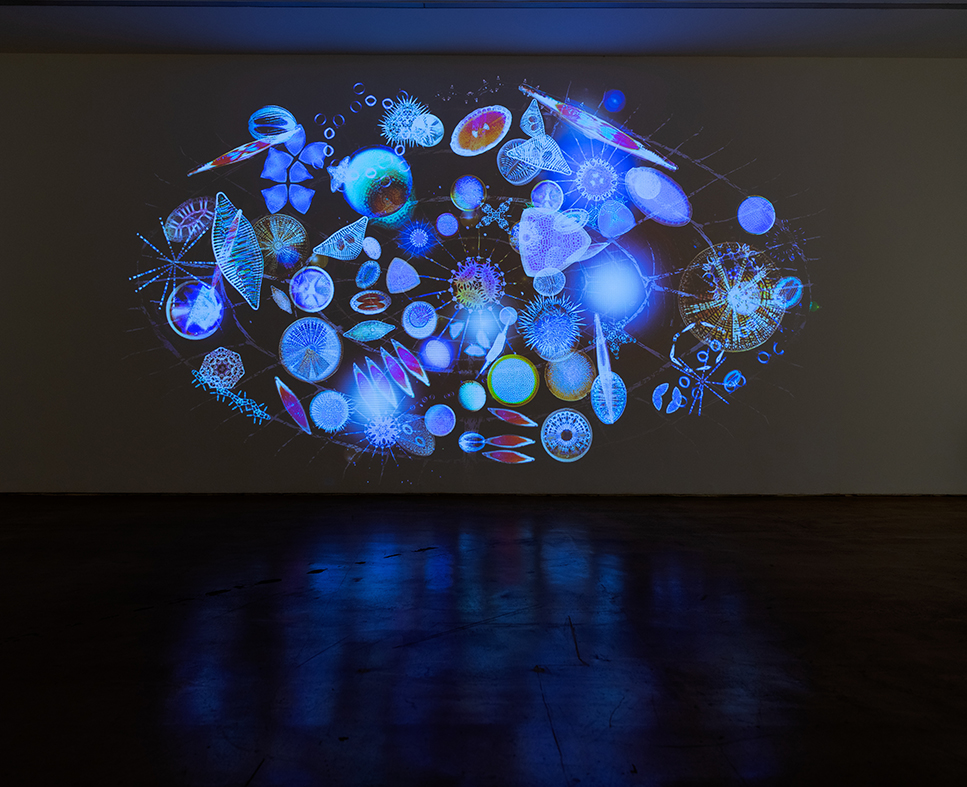
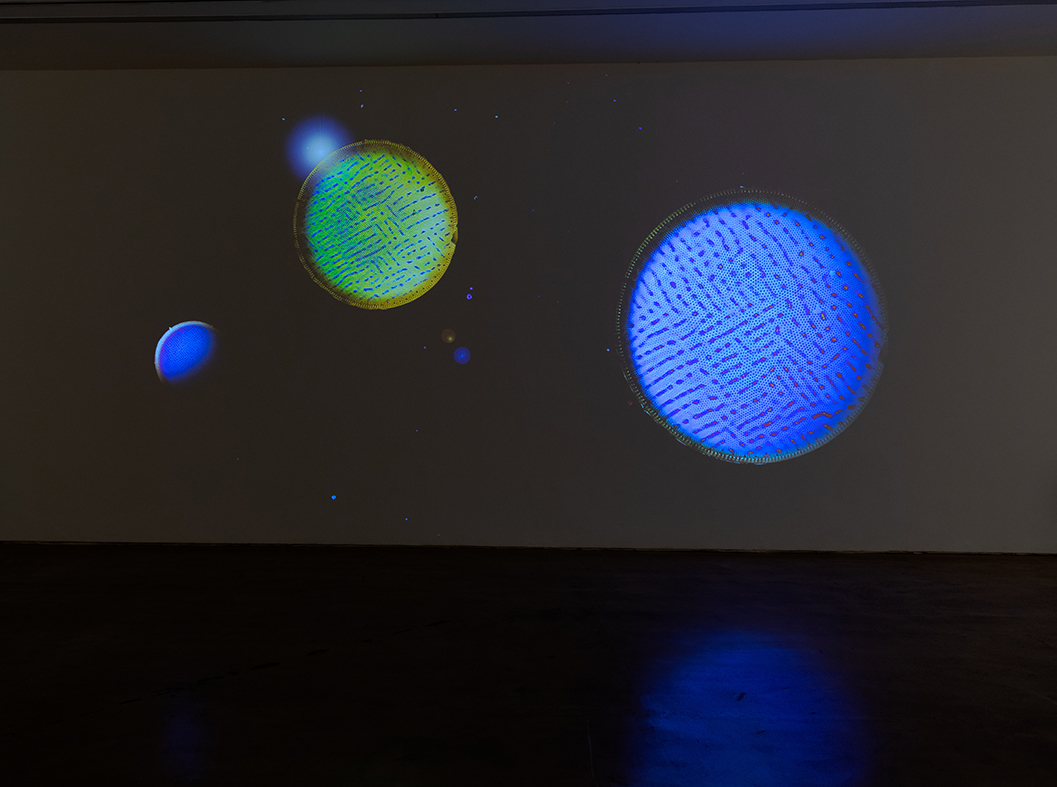
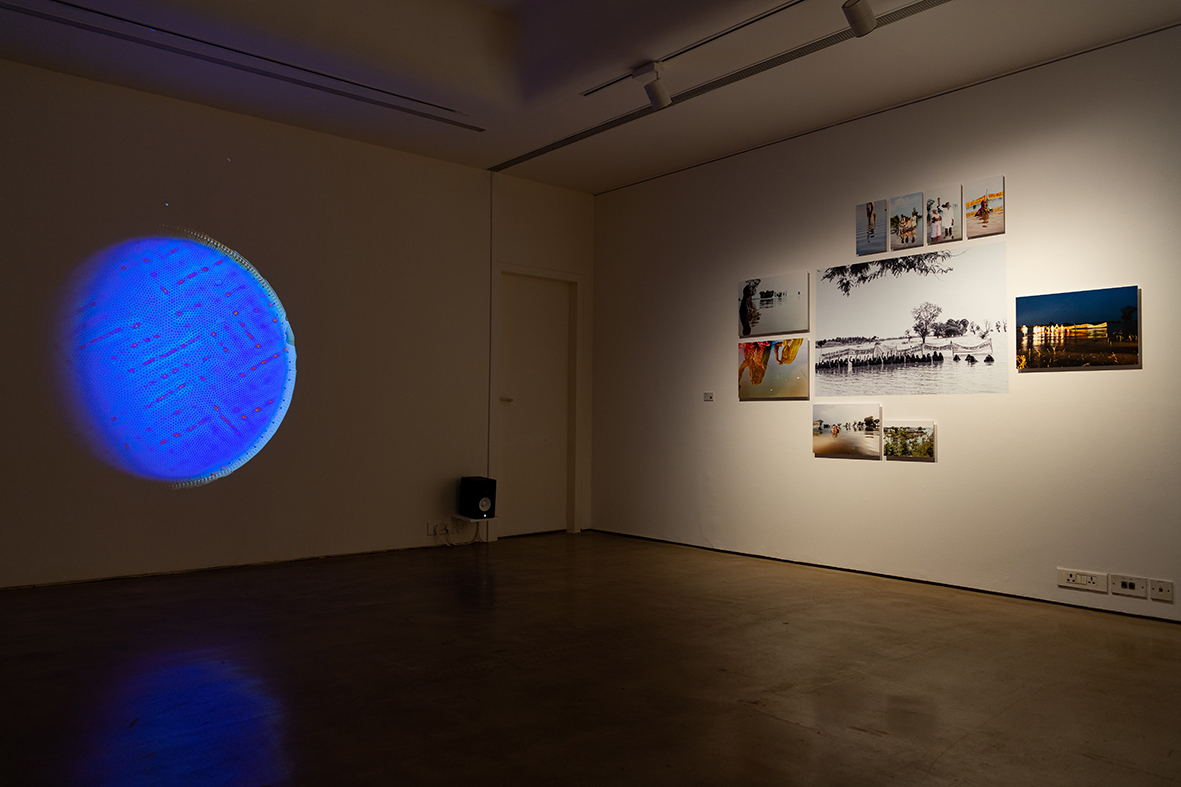
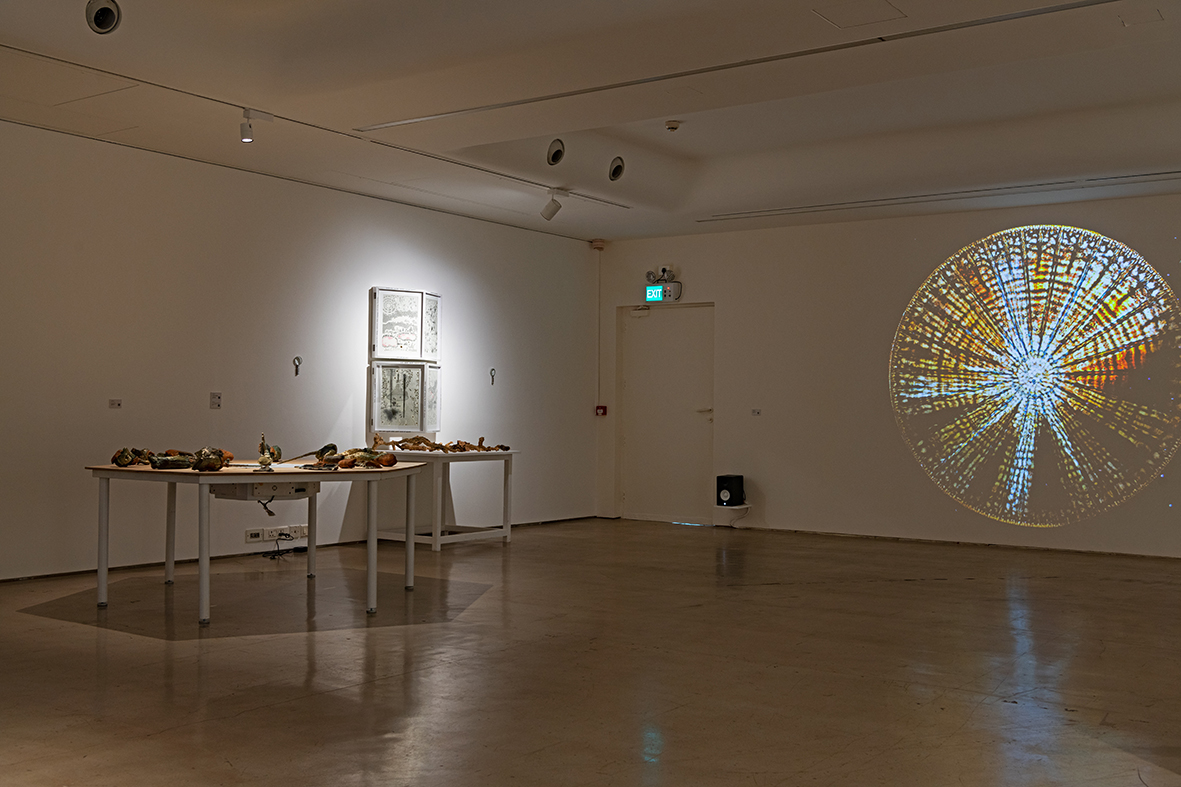
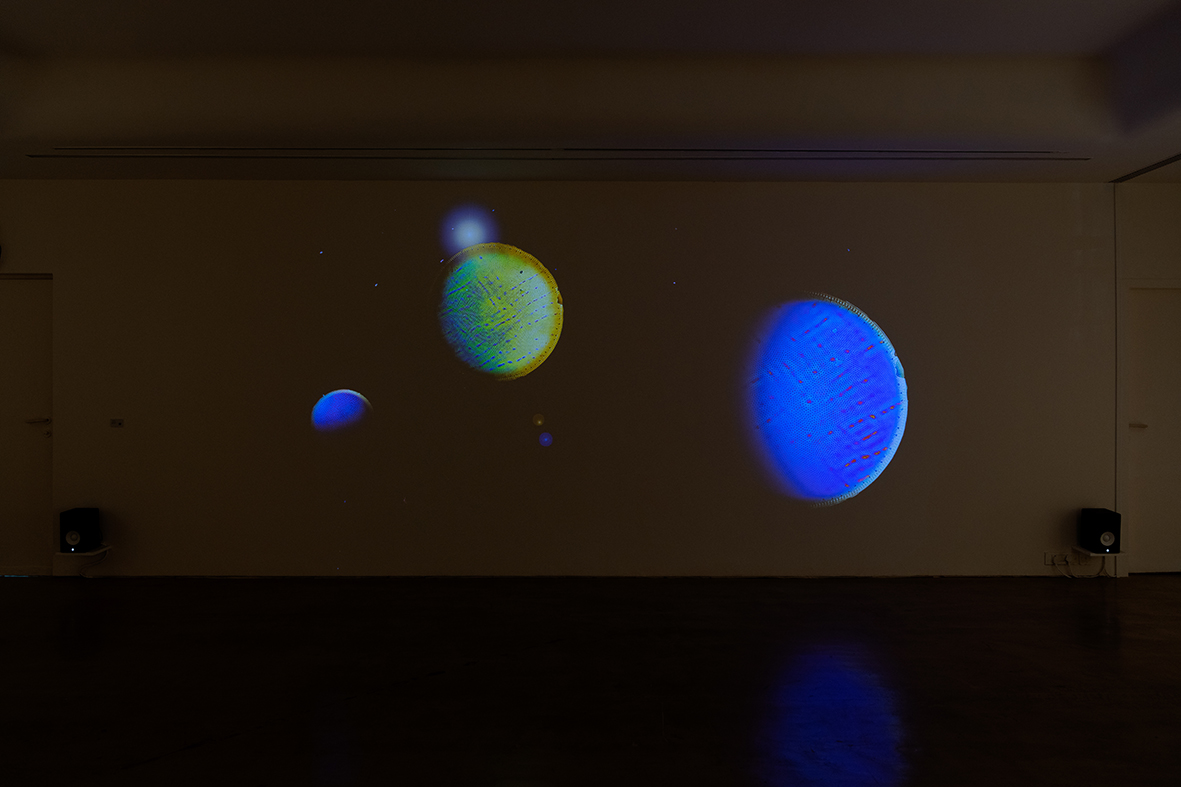
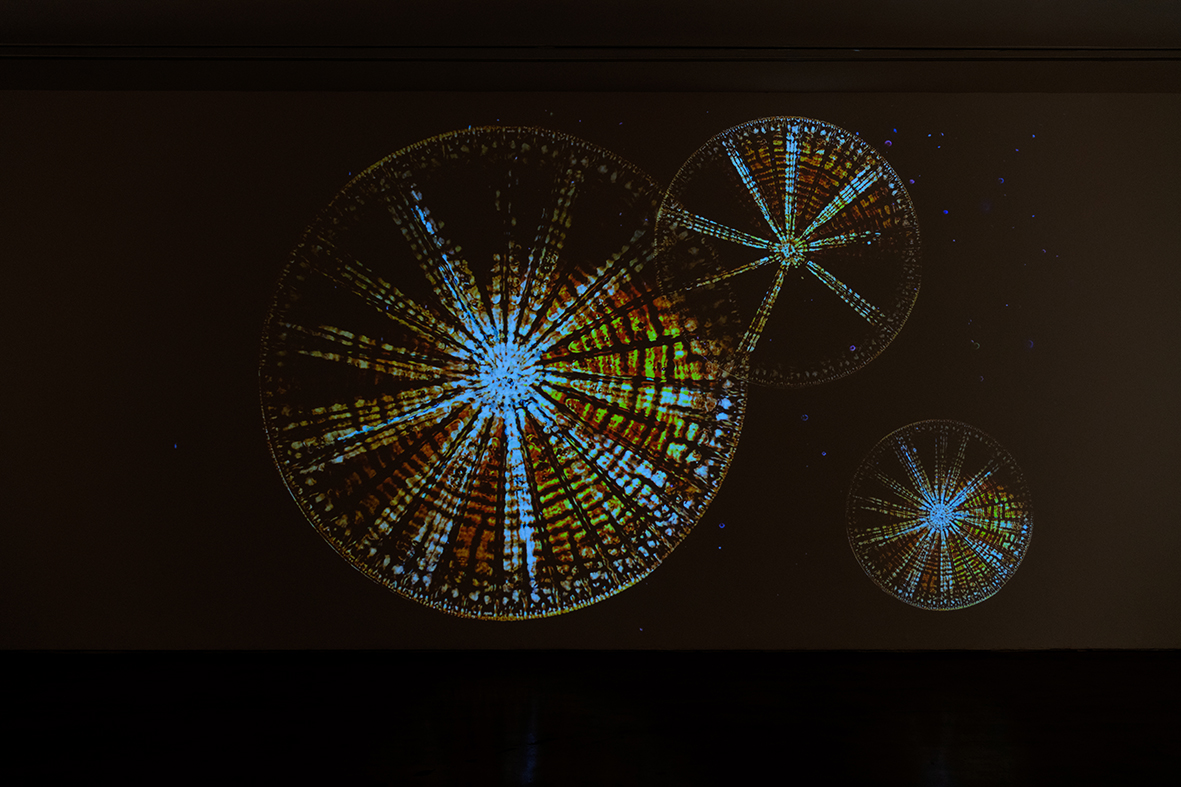
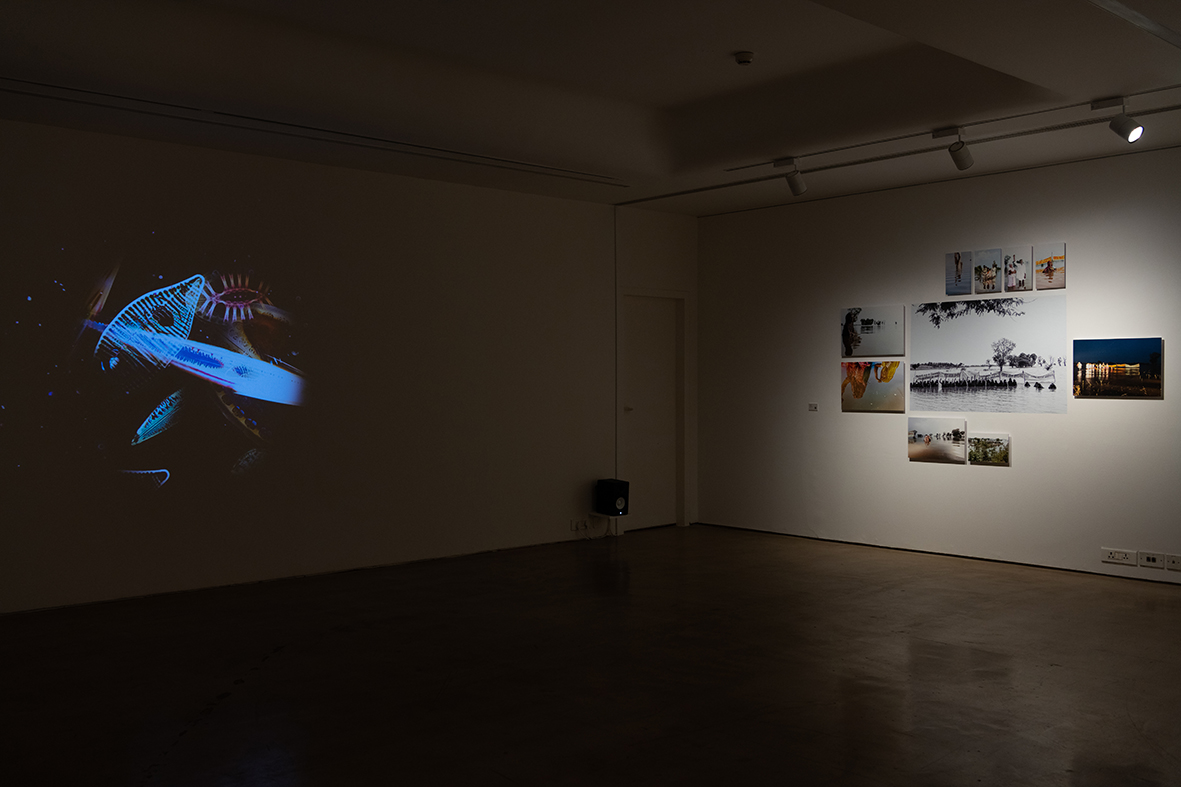
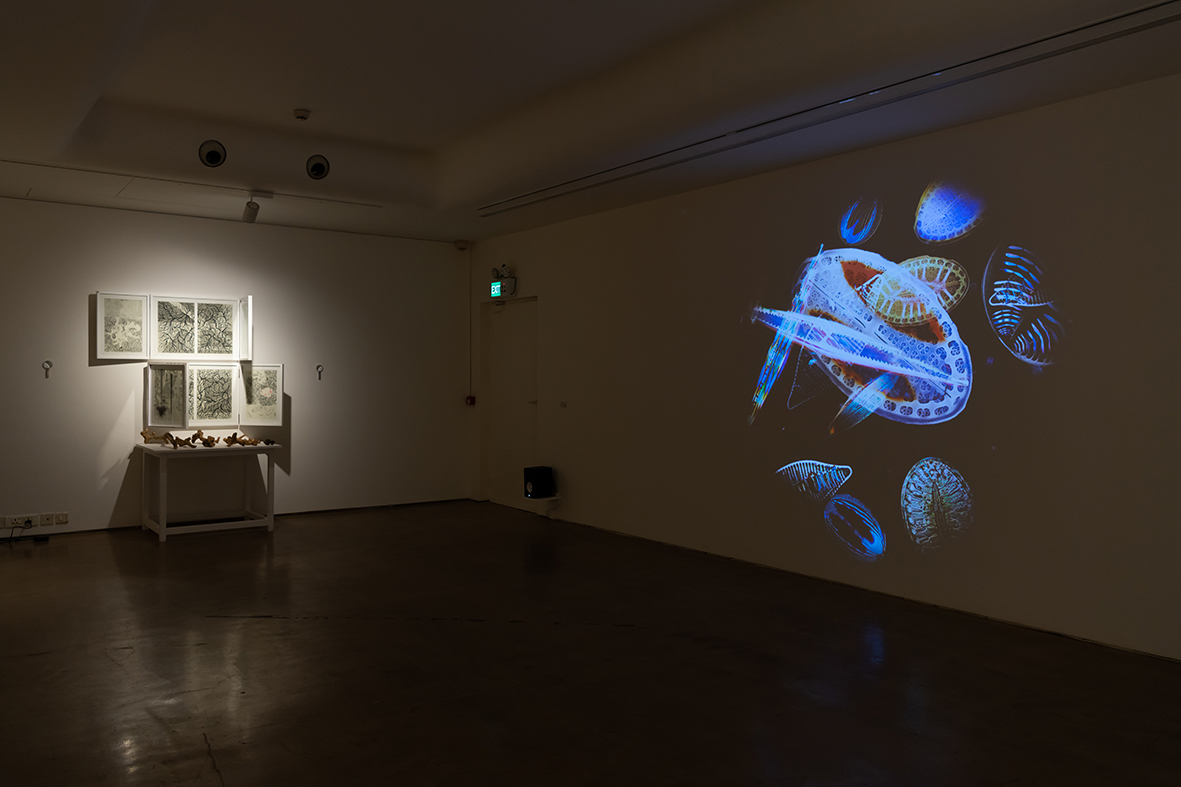
Glasshouse Deep is a journey into the minute world of the strange deep, where the very small assumes a planetary scale. Reflective, refractive, luminous, each organic/entity(s) temporal evolution is layered with the motion of a trajectory through points in space. Speculative migrations both vertical and horizontal follow orbits that telescope inwards and outwards.
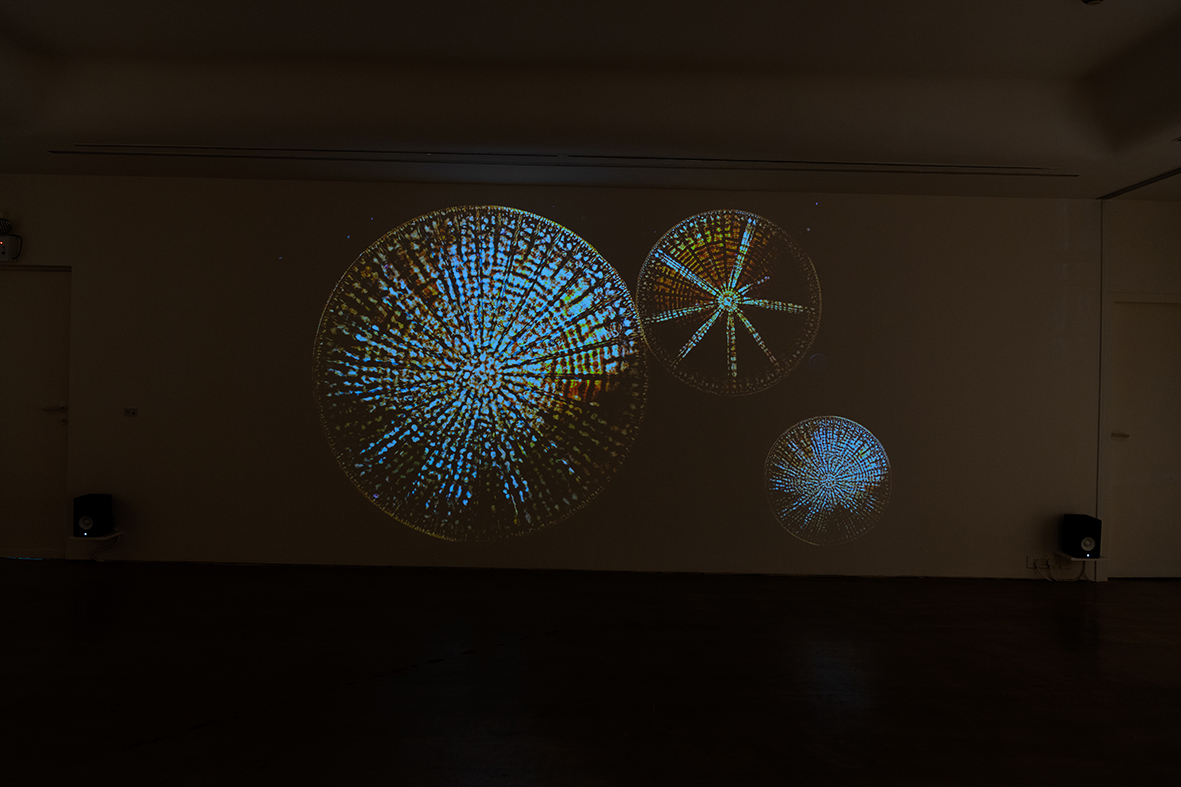
The organics that populate the Glasshouse Deep claim ancestry from plants but of the minute kind, single-celled algae - diatoms. Like plants they turn sunlight into chemical energy through photosynthesis, but unlike plants diatoms also mysteriously possess a urea cycle, a feature that they share with animals. This incredible hybridity has been attributed to the incorporation of genes from their ancestors and by horizontal gene transfer from marine bacteria. Extraordinary in their diversity of form, planktonic, adnate and stalked, diatoms are chimeras with glass exoskeletons, exhibiting the most intricate bilateral and radial symmetry. A symmetry that is seen is other equally unexpected spaces as well. In the digital domain, video feedback demonstrates that some systems have the ability to spontaneously organize themselves into increasingly complex structures.
Glasshouse Deep is the latest in a suite of works that employ video-feedback to explore processes of growth and evolution through a technological matrix. The work aims to discover and extend the underlying laws and processes, arising from fundamental physics and chemistry, which govern growth and form in biological systems and it’s mirroring in the digital sphere.
Light is a central protagonist. The intensity and spectral quality of light induces migration and behavioral photo protection in diatoms. Video feedback occurs when a loop is created between a video camera and a television screen or monitor. This dynamic recursive flow of light between camera and monitor generates startling and beautiful forms. Disks of expanding and contracting light reveal oscillating points/dots, gradually dislocating radiating pinwheels and star bursts exhibit complex patterns and colour, flowing outward from the center, demonstrating that at every higher level of complexity, there is greater potential for new structure and change.
The work combines images and research of diatom specimens sampled at different times of the year and during different seasons by scientists Minji Lee and Sanjoon Park from the KIOST. These images form the base upon which layers of video-feedback build intricate and delicate forms that explore the structural coloration of diatoms that gives them their other names ‘jewels of the sea’ or ‘living opals’.
Location: Gallery MMB, Goethe-Institut / Max Mueller Bhavan Mumbai
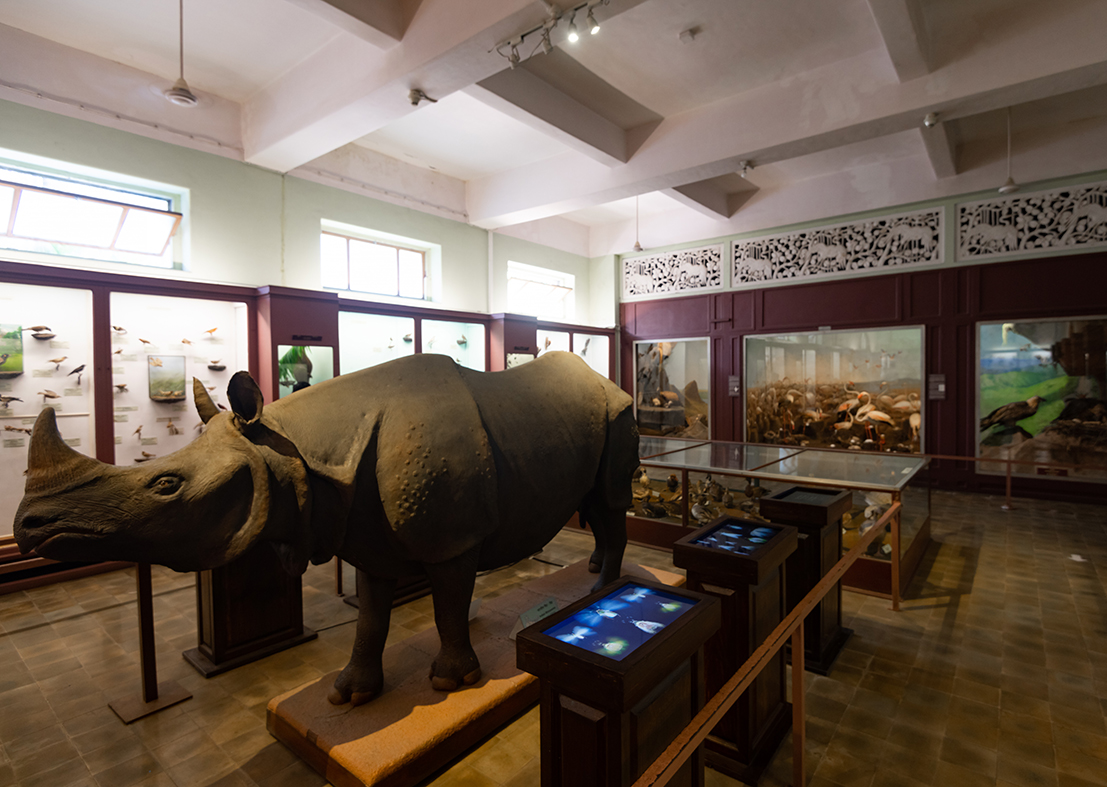
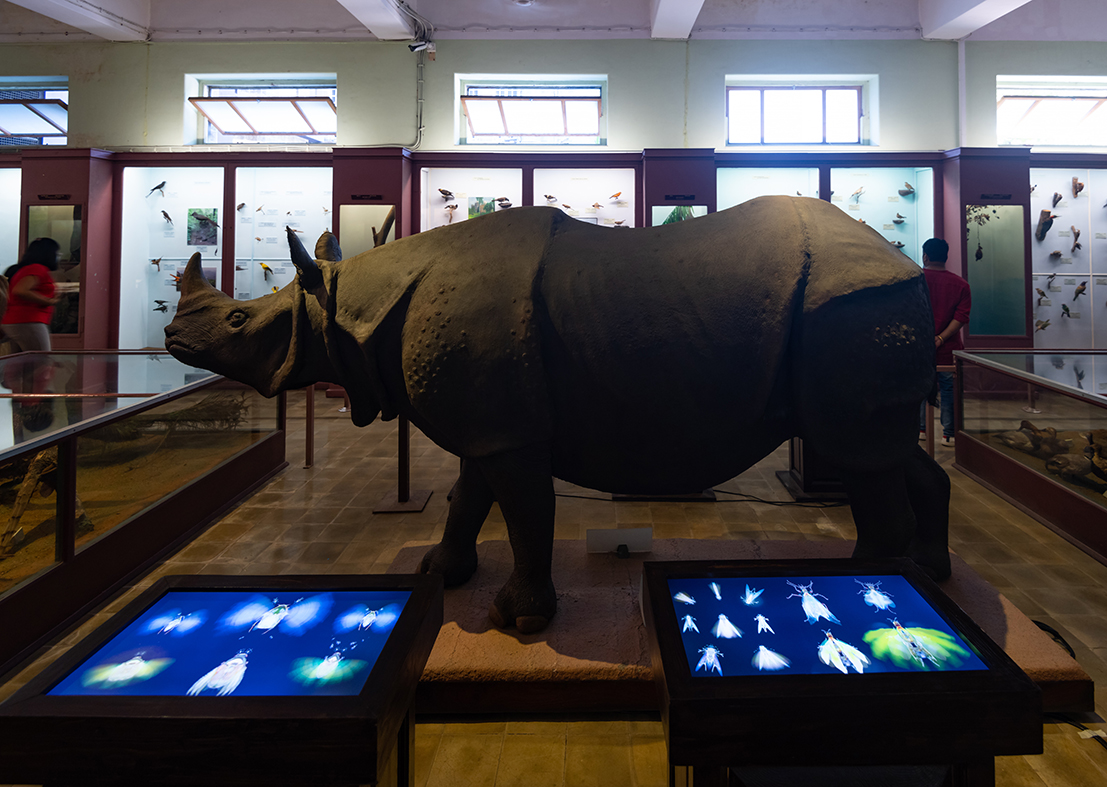
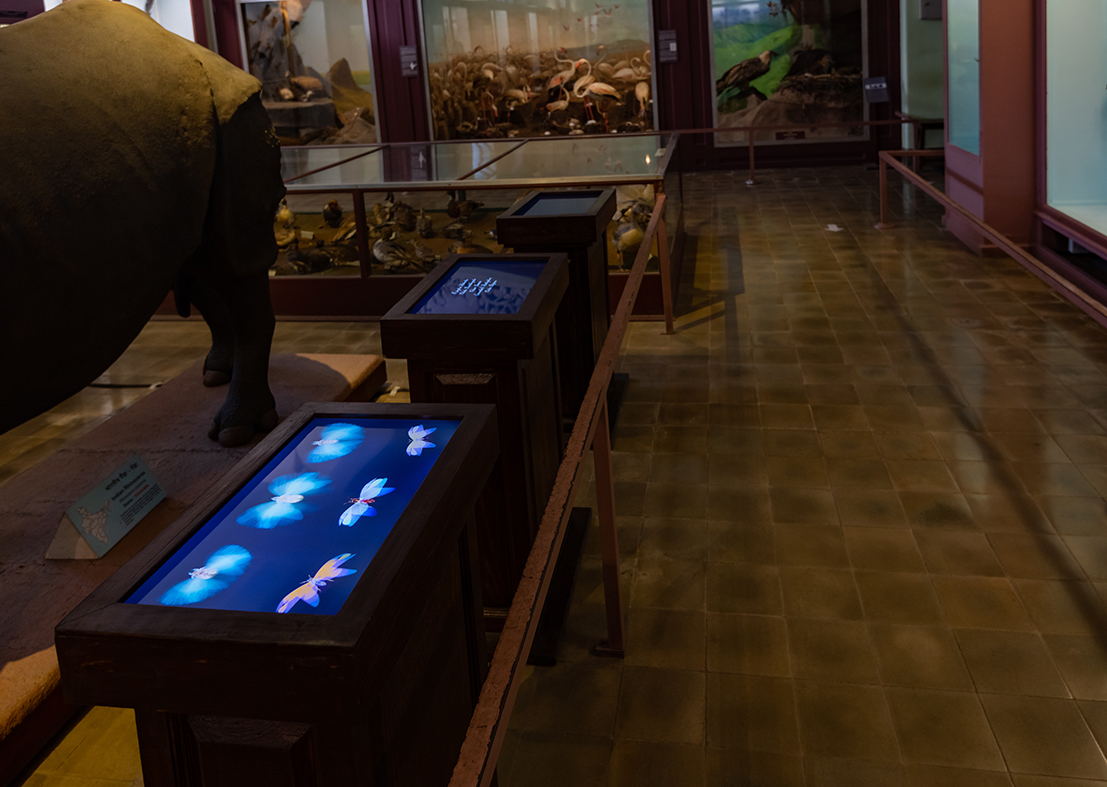
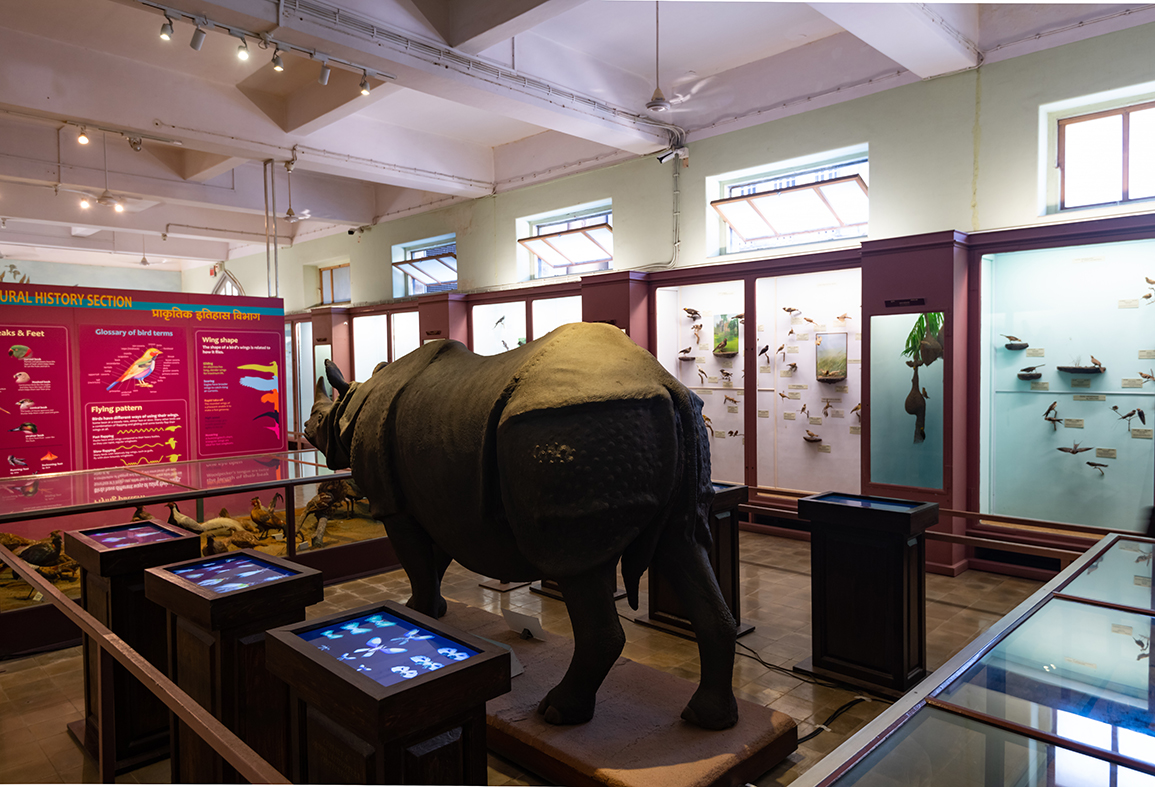
Hopeful Monsters
6 channel video installation
2018
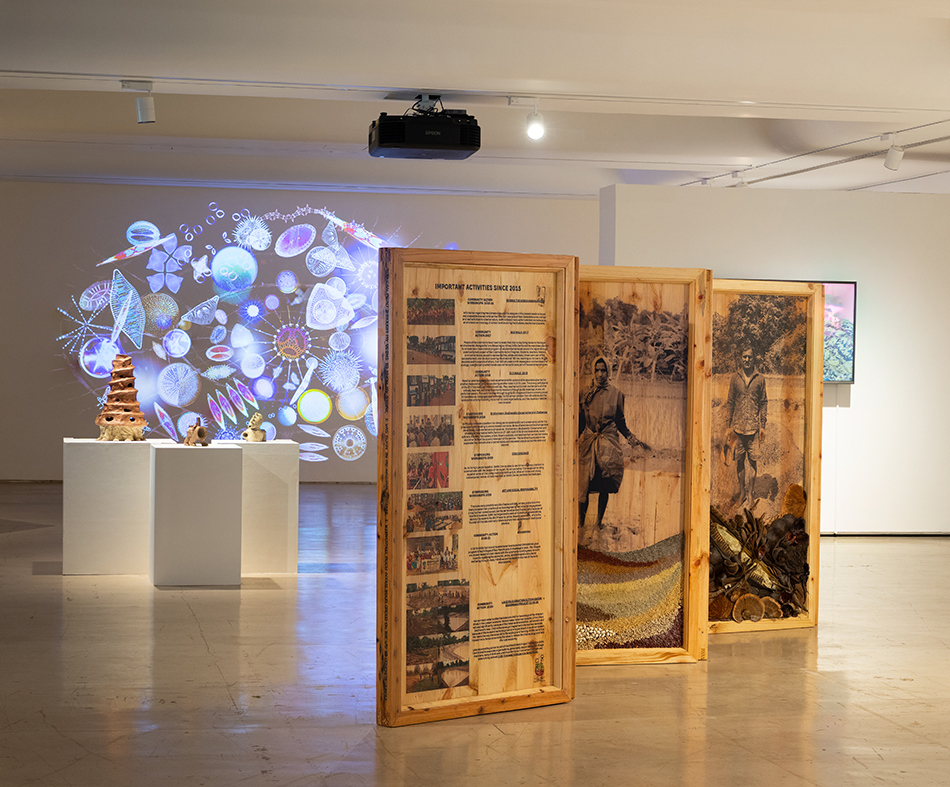
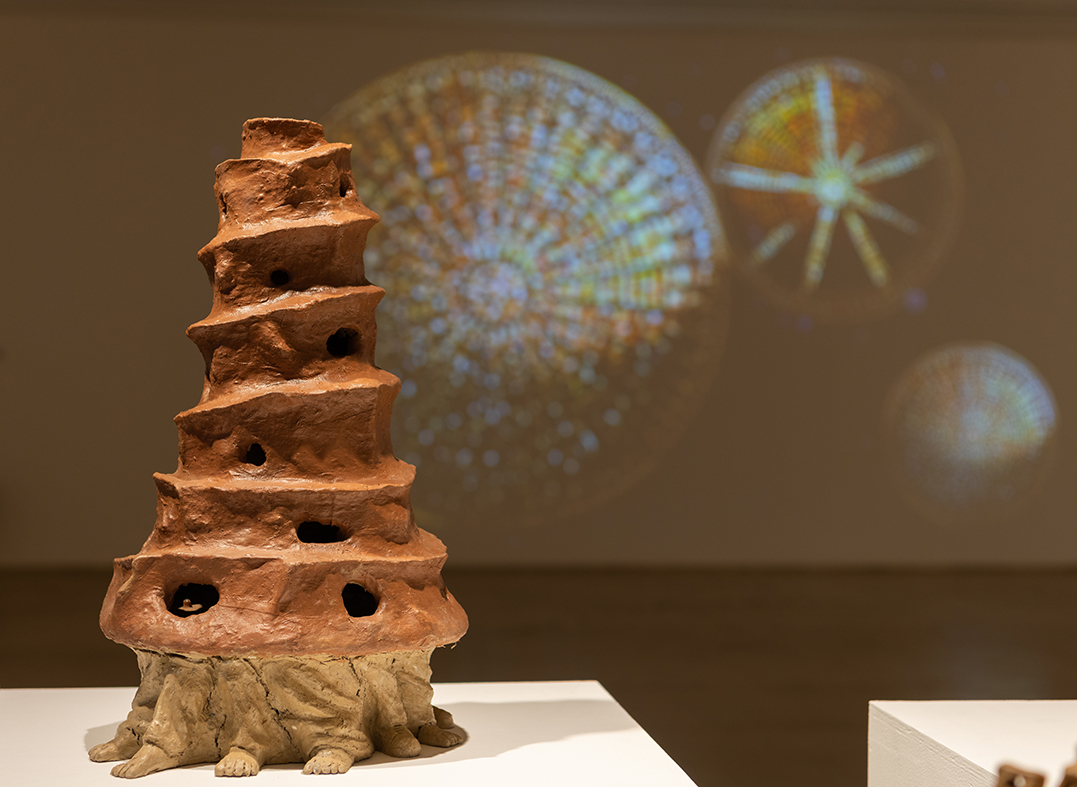
“I don’t think we’re looking at a plant,” Whitby says, tentative, at one status meeting, risking his new relationship with the science division, which he has embraced as a kind of sanctuary. “Then why are we seeing a plant, Whitby?” Cheney, managing to convey an all-consuming exasperation. Why are we seeing a plant that looks like a plant being a plant. Doing plant things, like photosynthesis and drawing water up through its roots. Why? That’s not a tough question, is it, really? Or is it? Maybe it is a tough question, I don’t know, for reasons beyond me. But that’s going to be a problem, don’t you think? Having to reassert that things we think are the things they are actually are in fact the things they are and not some other thing entirely. “Because,” Cheney says, lowering his voice, “if that’s a tough question, don’t we have to reclassify all the really tough questions?”. - Jeff Vandermeer, Acceptance: Southern Reach Trilogy Hopeful Monsters takes its title from the theory of macro-mutation or large mutations first proposed by German geneticist Richard Goldschmidt (1878-1958). Goldschmidt proposed that mutations occasionally yield individuals within populations that deviate radically from the norm and referred to such individuals as hopeful monsters. Under the right environmental circumstances, these may become fixed, and the population will found a new species.
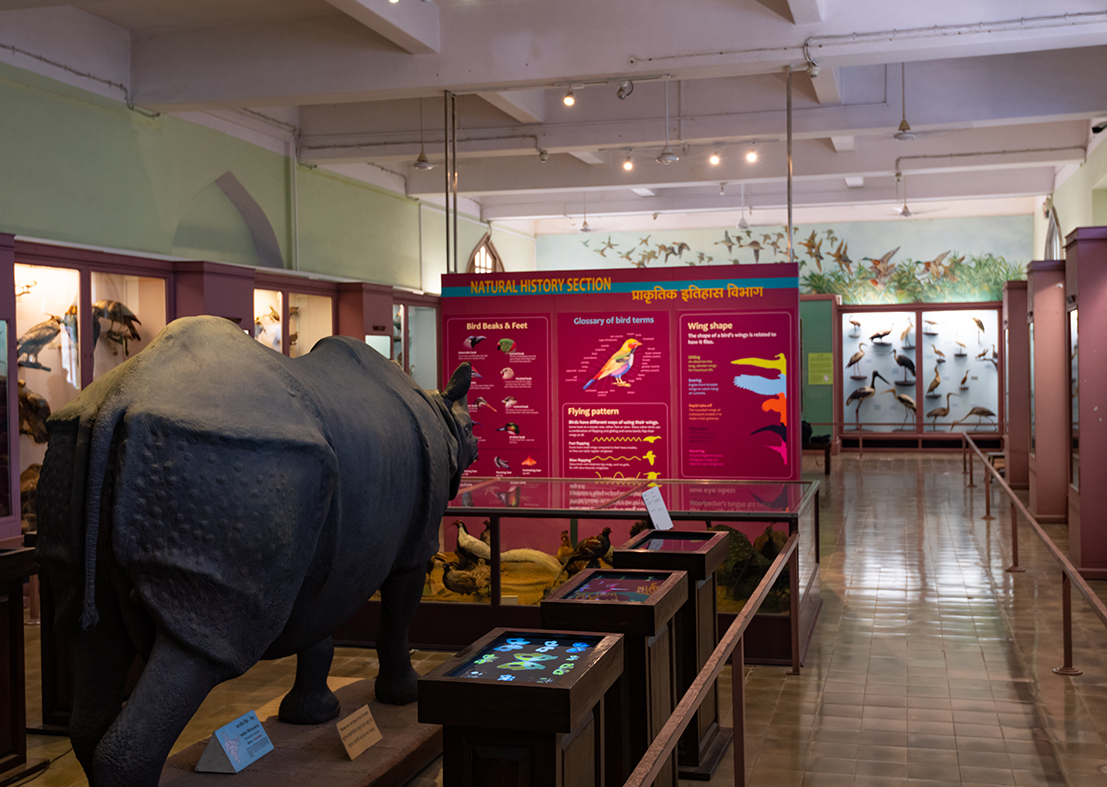
Location: Natural History Section, CSMVS
About the artist
@ Rohini DevasherThe artist and amateur astronomer Rohini Devasher has chased solar eclipses -- literal dialectics of negative and positive. Her current research focuses on the twin aspects of the Earth’s skies: its celestial constants on one hand and the mutable objects of the atmosphere on the other. Most recently she spent 26 days on board the High Trust an oil tanker which spanned the Pacific Ocean. This journey reinforced the role of ‘observation’, and the ‘field’ or ‘site’ in her practice. Her films, prints, sounds, drawings, and mappings of the antagonism of time and space; walk the fine line between wonder and the uncanny, foregrounding the 'strangeness' of encountering, observing and recording both environment and experience. In August 2021, Devasher and Pallavi Paul co-founded Splice, an artistic and curatorial collaborative practice.
Devasher’s work has been shown at the Rubin Museum, New York (2021), the Sea Art Festival, Busan (2021), the 14th Sharjah Biennial Leaving the Echo Chamber (2019), Kaserne Basel (2019) Museu d'Art Contemporani de Barcelona (MACBA) (2018), 7th Moscow Biennial (2017), the Spencer Museum of Art USA (2018,16), MAAT Museum of Art and Technology, Lisbon (2016), ZKM, Karsruhe (2016), Bhau Daji Lad City Museum in Mumbai (2016, 2018) Singapore Art and Science Museum (2016), Whitechapel Gallery, London (2016), and the 5th Fukuoka Asian Art Triennial (2014), the 1st Kochi Biennale (2012), among others.
Projects with Splice include Wilted Time as part of the Alserkal Fall program, Dubai (2021) Hungry for Time, curated by Raqs Media Collective at the Vienna Academy of Fine Art, Not an Imitation, Project 88, Mumbai
Devasher is currently the Embedded Artist in Residence at The Open Data institute (ODI)