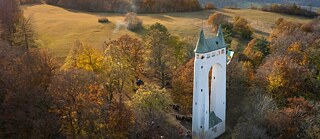
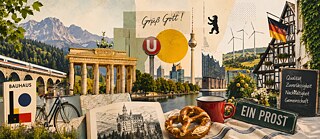
A selfie at the Brandenburg Gate, a tour of Neuschwanstein Castle – all great. But which cities, landscapes and special places in Germany are also worth seeing? Once a month, we take you to a place in Germany that you absolutely must discover!
Surprising but real: Germany’s Wadden Sea is so unique it’s one of the few places in the world where you can walk across the seabed at low tide! Whether it’s ancient forests, volcanic lakes, or alpine peaks, Germany’s landscapes often hold unexpected surprises.
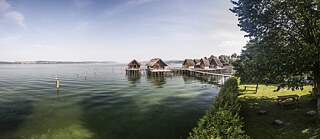
Detours | Pile dwellings in Unteruhldingen
A Journey Back in Time at Lake Constance
Lake Constance isn’t only the perfect place for an idyllic holiday – it also gives you the chance to immerse yourself in a bygone era: the pile dwellings of Unteruhldingen take us back in time to the Neolithic and Bronze Ages.
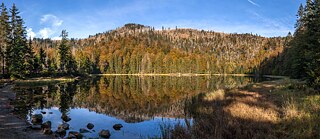
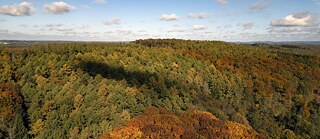
In the Bavarian Forest National Park, hiking enthusiasts will experience a kind of nature that can be found virtually nowhere else in Germany these days: over 350 kilometres of trails take you through forests, peat bogs and up to mountain peaks.
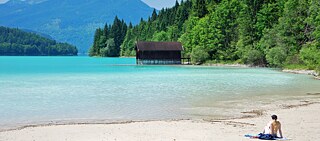
A Caribbean panorama in the Alps, how is that possible? It can hardly be thanks to the weather, and is definitely not because of the easy ocean access. And yet it is not without good reason that Lake Walchensee is dubbed the “Bavarian Caribbean”. So why not pop on your flip flops and your shades – and let’s take a look at what our local Caribbean has to offer.
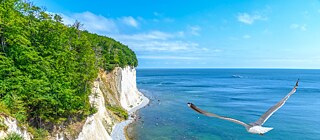
Untamed nature, fascinating vistas: Germany’s smallest national park on the Baltic Sea island of Rügen offers some great views – not only for Instagram. And with a bit of luck, you might even discover some pirate treasure here.
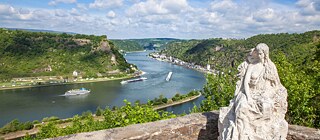
Anyone who comes here – whether by mountain bike or on foot – will quickly fall in love with this region of culture, nature and wine on the River Rhine: it’s a very easy place to spend time.
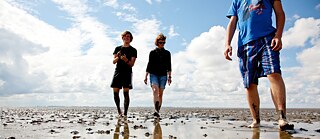
Germany’s northern coast has been shaped by the wind, the currents and the tides, creating the Wadden Sea. It provides a habitat for some unique wildlife and offers an opportunity to head out in pursuit of the “small five”.
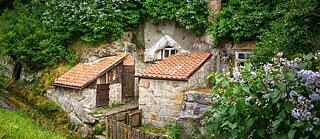
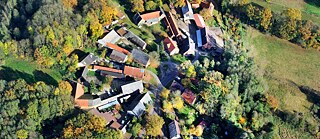
What’s the solution when housing is in short supply? Once upon a time in the village of Langenstein in Germany’s Harz region, people decided simply to carve themselves caves in the sandstone rock. Some of these homes can still be visited to this day – and actually look pretty cosy.
Sustainable and communal forest management – in an era of forest dieback and climate change this sounds like just the innovation we need for the future. Yet this was already common practice in Germany’s Siegerland region in the sixteenth century.
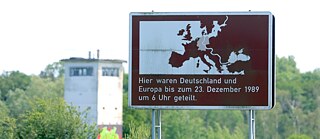
Experience the history of divided Germany by bike: the “four-state-border route” – part of the Iron Curtain Trail – follows for the most part the former border between West and East Germany. Today, the country’s first joint nature conservation area following reunification can be found along a line that in the past was marked by barbed wire fencing.
Did you know that Augsburg has more bridges than Venice, reflecting centuries of unique engineering? German cities tell stories through their buildings, from medieval squares to modern landmarks, showing how history and innovation coexist.
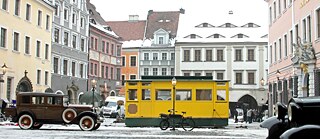
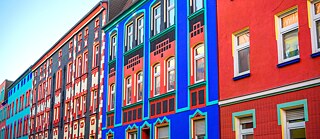
Görlitz. Never heard of the place? Well, it’s true that it isn’t exactly the first town recommended to people visiting Germany. And yet it has something to offer that no other town in Germany can match – not even Berlin, which is said to have it all.
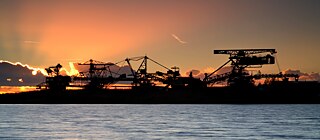
When the coal mines were shut down, little remained in the village of Gremmin but an immense hole and some abandoned construction equipment. Yet out of the desolate landscape grew something new: Ferropolis, the city of iron.
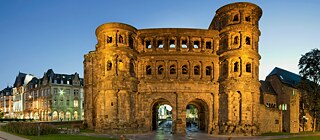
A holy robe, a black gate, Roman apple wine and some celebrity family history that hardly anyone knows about: do you need any more reasons to visit Trier?
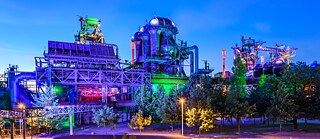
A conglomeration of pipes, tanks, steps and plants: a visit to Landschaftspark Duisburg-Nord is a fascinating adventure. There can hardly be a more enjoyable way to experience the history of the Ruhr region.
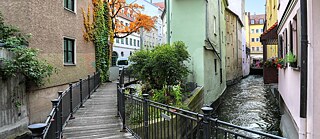
It’s hard to believe, but Augsburg has more bridges than Venice, not to mention wonderful fountains and countless small streams running through the city! The Romans built the first aqueduct and the Augsburgers later perfected the water system – a prime example of Swabian engineering skill in Bavaria’s oldest city.
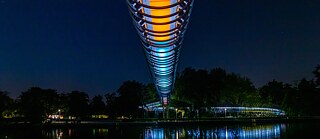
There’s no need to travel to London or Venice to cross one of Europe’s most impressive bridge constructions. Simply go to Oberhausen instead, where the “Slinky Springs to Fame” is suspended across the Rhine-HerneCanal.
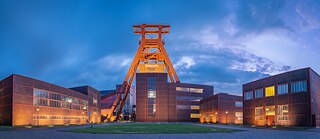
Can a disused coal mine be beautiful? Zollverein coal mine in Essen can! The Zollverein industrial complex combines architecture and nature, culture and leisure activities, the past and the future. Anyone into ice skating or swimming will definitely have a great time here.
There’s nowhere better than Berlin to take a tour by underground train – the U-Bahn – through German history. The capital’s subterranean network of tunnels is a repository of memories of the German Empire, the Second World War and Germany’s division.
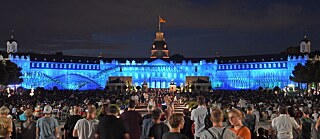
Though light shows abound, hardly any other is as spectacular as the Schlosslichtspiele light festival at Karlsruhe Palace. If you’re looking for a travel destination with the wow factor this summer, Karlsruhe is the perfect choice!
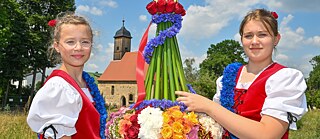
Fun Fact: Sorbs, a small Slavic ethnic group, have preserved their language and customs in Germany for over a thousand years. Across the country, many traditions and local festivals keep alive centuries-old stories and rituals.
The name alone is puzzling: what on earth is meant by the word “Zipfelbund”? And what might a Zipfel Passport, Zipfel Prize and Zipfel Pact refer to? But be warned: you will need quite a bit of time if you want to see everything.
In Germany, many cultures and traditions live side by side. However, most Germans are virtually unaware of one ethnic group that has lived here for centuries: the Sorbs. They primarily live in the east of the country, in Lusatia.
It was long considered unthinkable for women or Muslims to take part in a Christian passion play – but it’s certainly possible in Oberammergau nowadays. This local spectacle attracts visitors from all over the world.
The Wendland region in the German state of Lower Saxony is a great place for fans of the Middle Ages, as many of the villages here are still arranged in just the same way they were in the twelfth century. But what does that mean? Above all, that they are round.
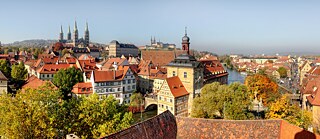
German cities are as diverse as the landscape that surrounds them. In a series of city portraits, we embark on a journey through Goethe's homeland. Our authors have taken a close look at things small and large which make their cities so unique and lovable.
Do bratwurst, beer gardens, and Lederhosen truly encapsulate Germany? Are fairy tales the country's secret obsession, and is every corner adorned with castles? Oh So German! offers glimpses of the many facets that compose the essence of Deutschland.